Rhamnus persica
Boiss.
iNaturalist· cc-by-nc
(c) Arya Aras, some rights reserved (CC BY-NC), uploaded by Arya Aras
Description
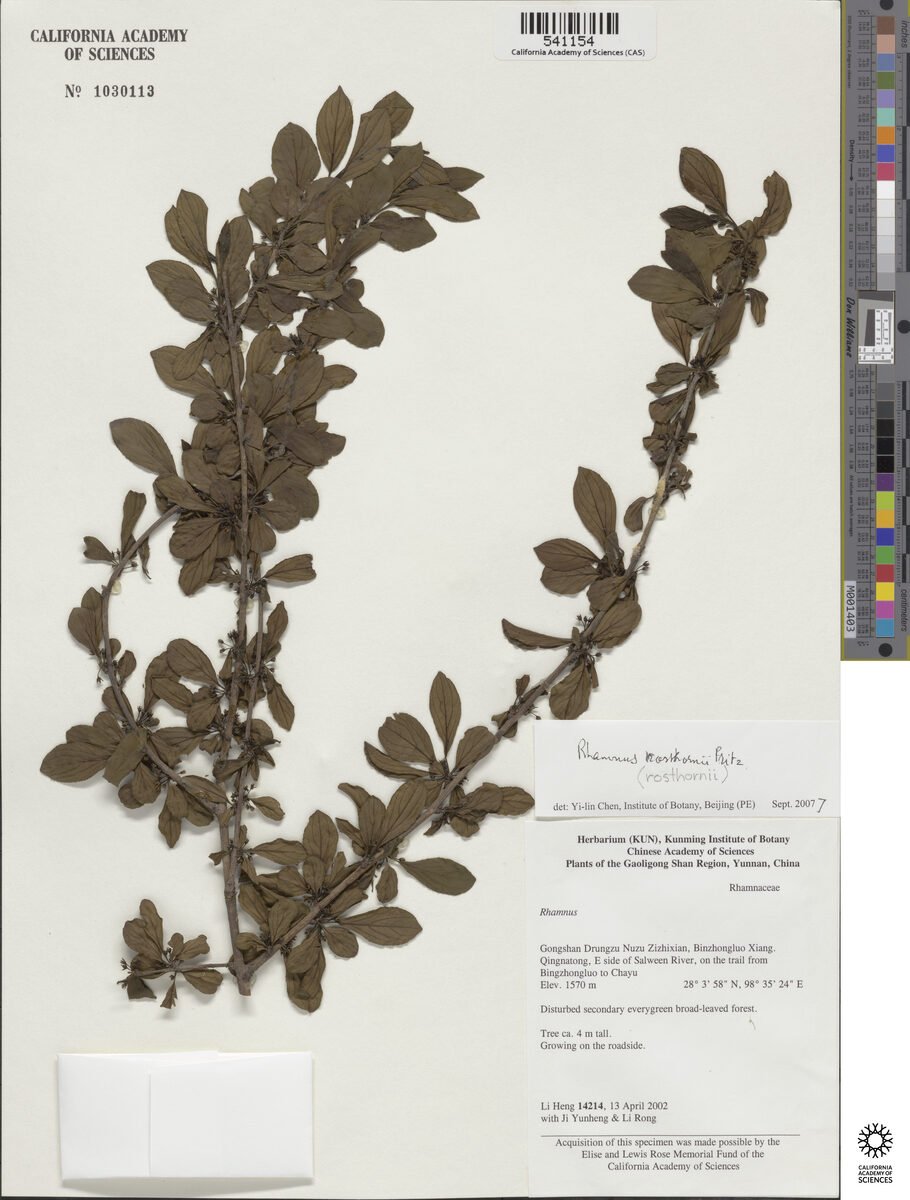
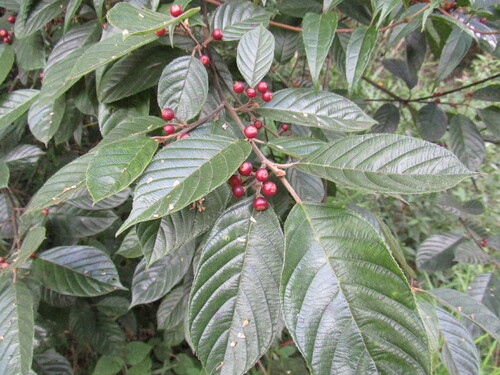
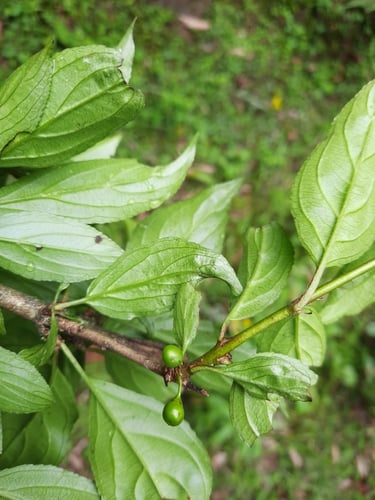
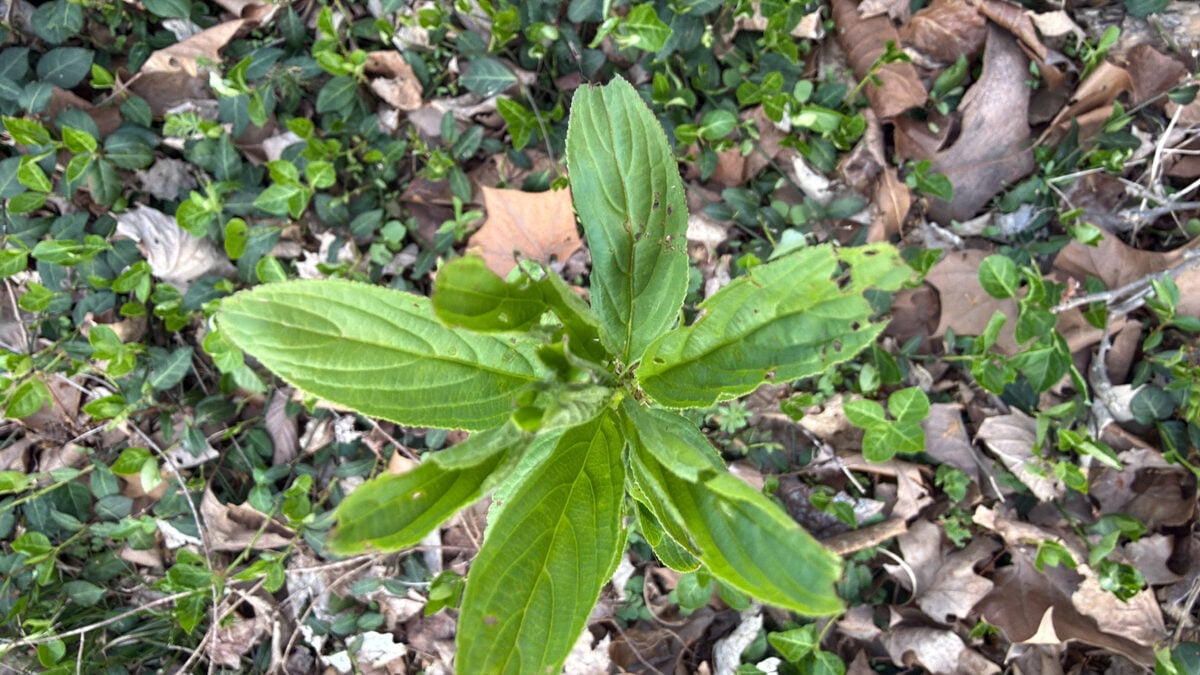
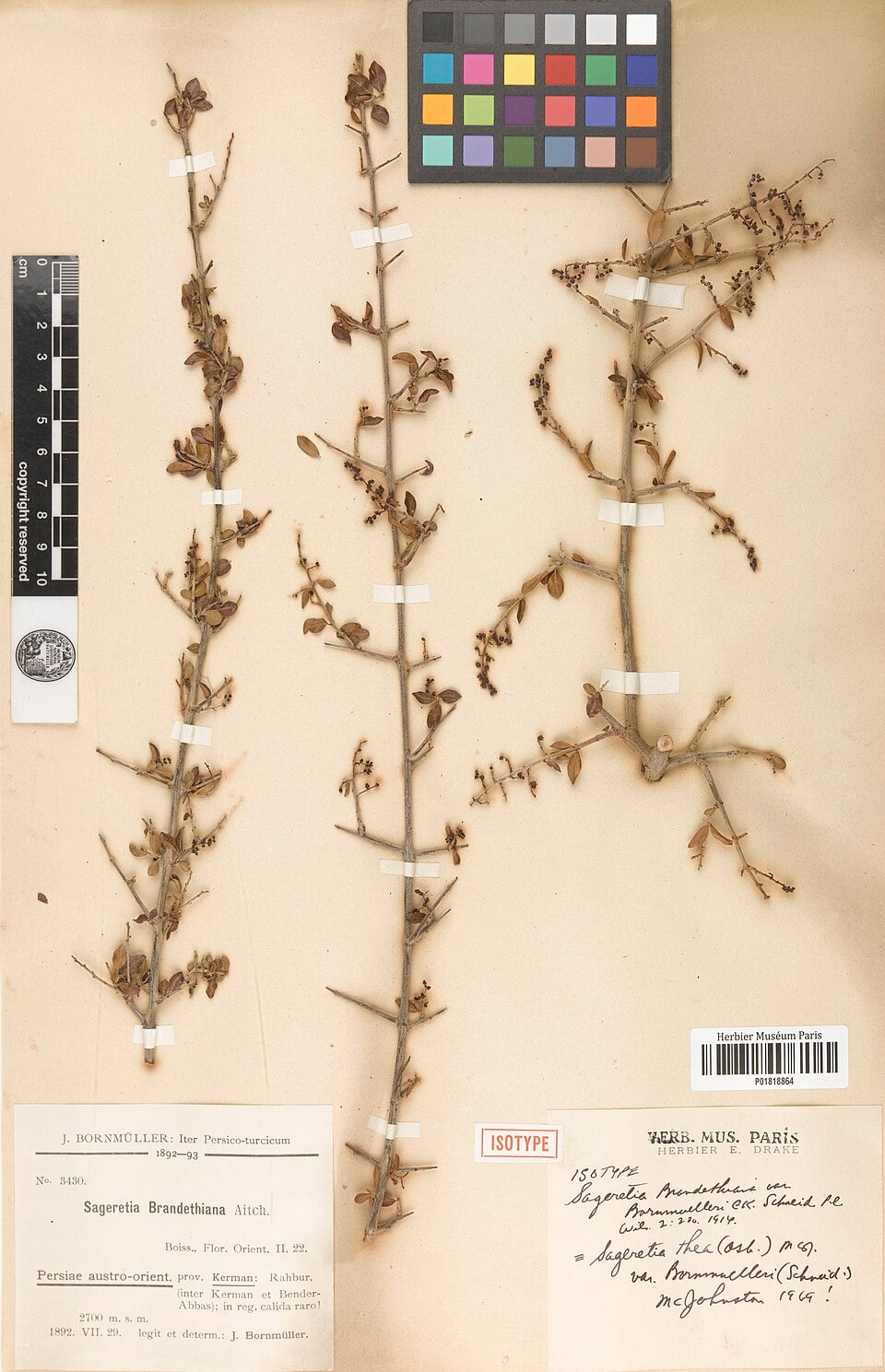
A shrub. It can bend over or lie along the ground. The branches are short and end in a spine. The young branches have small hairs. The leaves are 5-20 mm long by 4-8 mm wide. They can be spoon shaped. They have a velvety covering on both surfaces. The fruit are in groups of 2-4. They are almost round and 3-4 mm long. There are 2-3 seeds.
Edible Uses
The fruit is eaten raw and has a pleasant sweet flavour, but should be consumed in moderation as it can be emetic.
Medicinal Uses
None known
Distribution
It is a temperate plant. It grows in the lower Himalayas up to 1,000 m above sea level.
Where It Grows
Afghanistan, Asia, Europe, Himalayas, India, Iran, Middle East, Pakistan, Turkey, Türkiye,
Propagation
Seed is best sown in autumn in a cold frame. Stored seed requires 1–2 months of cold stratification at around 5°C and should be sown as early in the year as possible in a cold frame or outdoor seedbed. Prick seedlings into individual pots when large enough to handle and grow on in a greenhouse or cold frame through their first winter. Plant out in late spring or early summer the following year. Cuttings of half-ripe wood can be taken in July/August in a frame, mature wood cuttings from the current year's growth in autumn in a frame, and layering in early spring.
Other Uses
The wood is hard, close-grained, and very ornamental.
Notes
There are over 100 Rhamnus species. Rhamus persica Lawson is Rhamnus prostrata Jacq. ex Parker;
References (5)
- Flora of Pakistan. www.eFloras.org
- Hedrick, U.P., 1919, (Ed.), Sturtevant's edible plants of the world. p 555 (As Rhamnus persica)
- Plants for a Future database, The Field, Penpol, Lostwithiel, Cornwall, PL22 0NG, UK. http://www.scs.leeds.ac.uk/pfaf/
- Singh, H.B., Arora R.K.,1978, Wild edible Plants of India. Indian Council of Agricultural Research, New Delhi. p 69
- Upreti, K., et al, 2010, Diversity and Distribution of Wild Edible Fruit Plants of Uttarakhand. Bioversity Potentials of the Himalaya. p 183