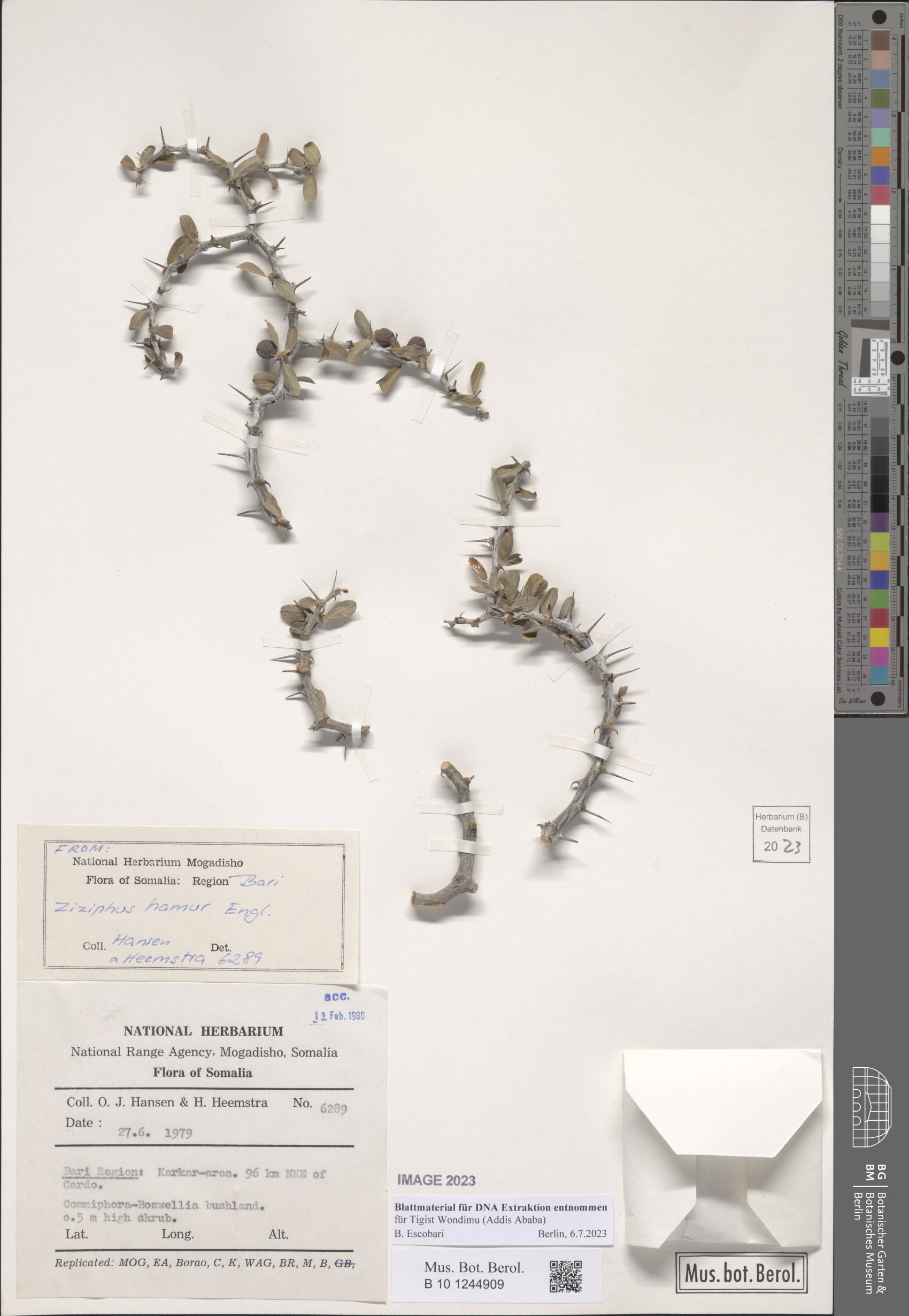
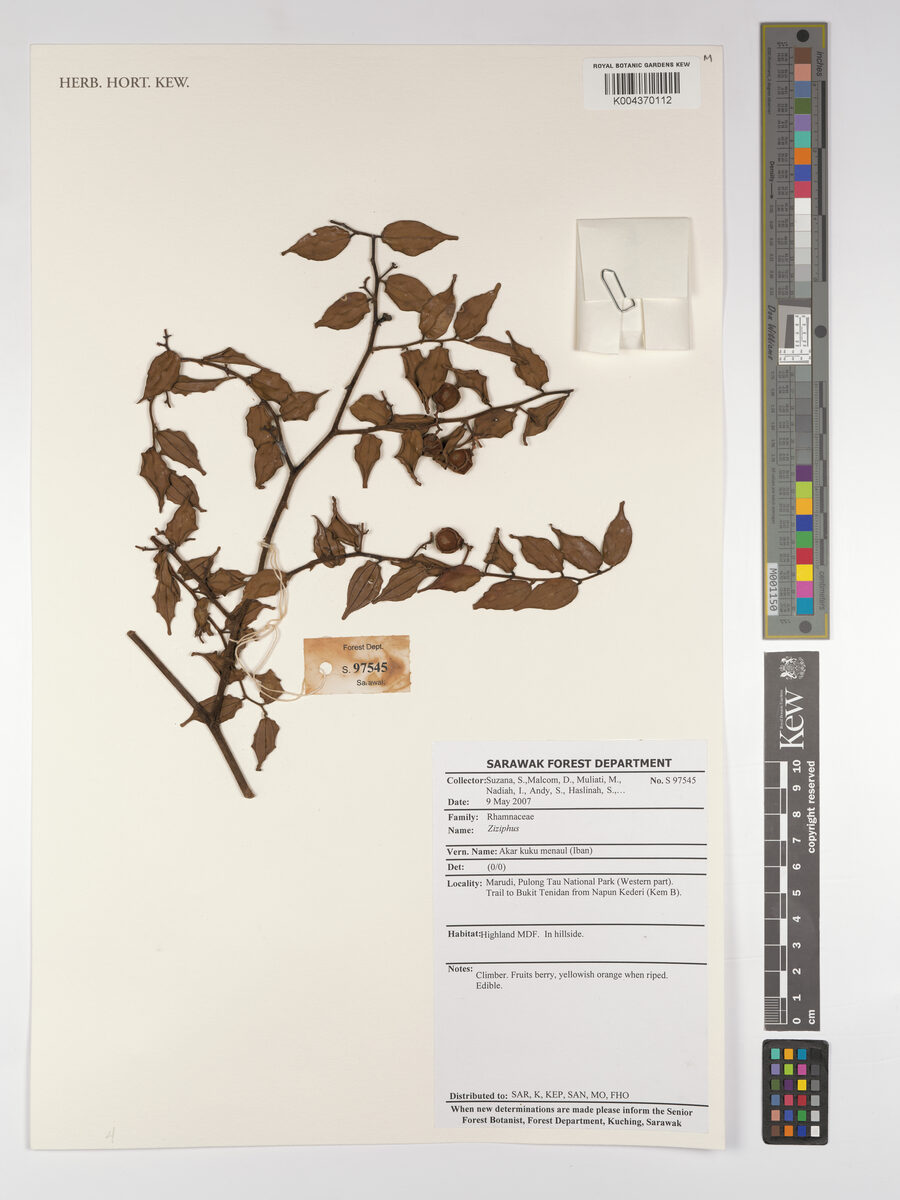
Scutia myrtina
(Burm. f.) Kurz.
Dry-my-throat, Cat thorn
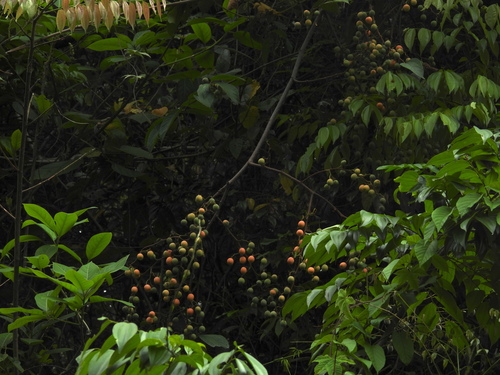
iNaturalist· cc-by-sa
(c) Andrew Gillespie, some rights reserved (CC BY-SA), uploaded by Andrew Gillespie
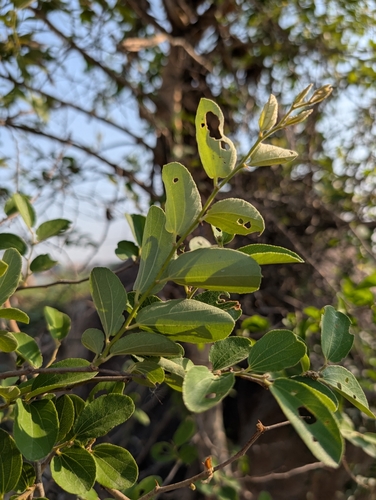
iNaturalist· cc-by-nc
(c) Craig Peter, some rights reserved (CC BY-NC)
Summary
Source: WikipediaScutia myrtina is a species of plant in the family Rhamnaceae. It is commonly known as cat-thorn.
Description
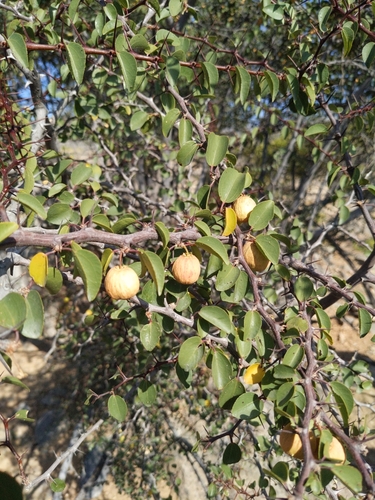
A shrub, small tree or climber. As a tree is grows to 6 m high. It usually has many stems. The trunk is rough with corky bark. The branches are slender. The twigs are smooth. The branches have small, strong, curved thorns in the axils of leaves. The leaves are smooth, shiny and leathery. They are nearly opposite one another. They are often 1-2.5 cm long but can be 7 cm long. They vary from oblong to egg shaped and the tips can be rounded or pointed. The edges of the leaves are often rolled backwards. There are 5-8 pairs of secondary veins. The leaves are shiny on top and duller below. They have short stalks. The flowers are small and greenish-white. They have a sweet scent. They occur in small short bunches in the axils of leaves. The fruit are egg shaped and very small (0.5 cm). The fruit are green when young and turn red or black when ripe. They have a thin layer of flesh and 2 stones. The fruit are edible.
Edible Uses
The ripe fruits are eaten raw, especially by children, though they dry the throat. The roots are used in soups, and the leaves are also edible.
Traditional Uses
The ripe fruit are especially enjoyed by children. They dry the throat. The fruit are eaten raw. The roots are used in soups.
This uses section is brief — help expand it
Medicinal Uses
Several species in the genus Scutia have been used in traditional medicine, such as the Ayurvedic system from India.
Distribution
A tropical plant. It grows from sea level to 1,200 m in South Africa. It grows on coastal sand dunes. It also grows on the edge of evergreen forest. In Kenya it grows from sea level to 2,700 m altitude. It can grow in arid places. In Yunnan. It occurs in the Western Ghats in India.
Where It Grows
Africa, Asia, Burundi, Central Africa, China, Congo, East Africa, Eswatini, Ethiopia, India, Indochina, Kenya, Madagascar, Malawi, Mozambique, Myanmar, Rwanda, SE Asia, Seychelles, South Africa, Southern Africa, Sri Lanka, Swaziland, Tanzania, Thailand, Uganda, Vietnam, Zambia, Zimbabwe,
Cultivation
Plants are easily grown by seeds. It is grown as a hedge plant.
Other Uses
Grown as a hedge plant.
Other Information
The fruit are eaten especially by children.
Notes
There are 3 Scutia species.
Nutrition
| Part | Moisture | kJ | kcal | Protein | Vit A | Vit C | Iron | Zinc |
|---|---|---|---|---|---|---|---|---|
| Fruit | 76 | 366 | 88 | 0.6 | — | — | — | — |
Synonyms
Also Known As
Boodidha pandla, Cat thorn, Chettu, Chimat, Chobe, Droog-my-keel, Gariki, Haraang, Inguphunana, Isiphinga, Isiphingo, Isipingo, Isipingwa, Julie, Karunchoori, Kitona, Kitumbuu, Kondapariki, Kurudi, Letwa, Maguento, Mbombo, Migodha, Msiru, Mtanda mboo, Muhulanguari, Mulongari, Mutandambogo, Nyaka-biza, Ol-simewa, Osanankururi, Samburu, Sangan-gurure, Sodalie, Spindle, Sumbeyiwa, Sumboywa, Thovatti mul, Tsina, Tuvadi, Umsondeso, Umsondezi, Umugasa, Uqapuke, Uqokwane, Usondelangange
References (34)
- Ambasta S.P. (Ed.), 2000, The Useful Plants of India. CSIR India. p 562
- Bussman, R. W., 2006, Ethnobotany of the Samburu of Mt. Nyiru, South Turkana, Kenya. Journal of Ethnobiology and Ethnomedicine. 2:35
- Dale, I. R. and Greenway, P. J., 1961, Kenya Trees and Shrubs. Nairobi. p 391
- Fowler, D. G., 2007, Zambian Plants: Their Vernacular Names and Uses. Kew. p 54, 83
- Fox, F. W. & Young, M. E. N., 1982, Food from the Veld. Delta Books. p 314
Show all 34 references Hide references
- https://growwild.co.za Edible Indigenous plants
- INFOODS:FAO/INFOODS Databases
- Jardin, C., 1970, List of Foods Used In Africa, FAO Nutrition Information Document Series No 2.p 161
- Johns, T., and Kokwaro, J.O., 1991, Food Plants of the Luo of Siayo District, Kenya. Economic Botany 45(1), pp 103-113
- Kannan, M., et al, 2015, Ethnobotanical survey on wild edible plants of Kalrayan Hills, Salem District, Tamil Nadu, India. Global J. Res. Med Plants & Indigen. med. 4(12): 236-246
- Long, C., 2005, Swaziland's Flora - siSwati names and Uses http://www.sntc.org.sz/flora/
- Lulekal, E., et al, 2011, Wild edible plants in Ethiopia: a review on their potential to combat food insecurity. Afrika Focus - Vol. 24, No 2. pp 71-121
- Maundu, P. et al, 1999, Traditional Food Plants of Kenya. National Museum of Kenya. 288p
- Mbuvi, M. T. E., et al, 2019, Annonated checklist of plant species of Loita Forest Narok County, Kenya. Int. J. Adv. Res. Biol. Sci. (2019). 6(3): 54-110
- Mutie, F. G., 2020, Conservation of Wild Food Plants and Their Potential for Combatting Food Insecurity in Kenya as Exemplified by the Drylands of Kitui County. Plants 2020, 9, 1017
- Mutie, F. M., et al, 2023, Important Medicinal and Food Taxa (Orders and Families) in Kenya, Based on Three Quantitative Approaches. Plants 2023, 12, 1145
- Palgrave, K.C., 1996, Trees of Southern Africa. Struik Publishers. p 553
- Palmer, E and Pitman, N., 1972, Trees of Southern Africa. Vol. 2. A.A. Balkema, Cape Town p 1399
- Peters, C. R., O'Brien, E. M., and Drummond, R.B., 1992, Edible Wild plants of Sub-saharan Africa. Kew. p 166
- Rasingam, L., 2012, Ethnobotanical studies on the wild edible plants of Irula tribes of Pillur Valley, Coimbatore district, Tamil Nadu, India. Asian Pacific Journal of Tropical Biomedicine. (2012) S1493-S1497
- Reddy, K. N. et al, 2007, Traditional knowledge on wild food plants in Andhra Pradesh. Indian Journal of Traditional Knowledge. Vol. 6(1): 223-229
- Reddy, K.R., 1989, Additional Notes on the Wild Edible Plants of India. J. Econ. Tax. Bot. Vol. 13 No. 1 pp 125-127
- Royal Botanic Gardens, Kew (1999). Survey of Economic Plants for Arid and Semi-Arid Lands (SEPASAL) database. Published on the Internet; http://www.rbgkew.org.uk/ceb/sepasal/internet [Accessed 6th June 2011]
- Ruiters-Welcome, A. K., 2019, Food plants of southern Africa. Ph.D. thesis. Univ. of Johannesburg p 94
- Sasi, R. & Rajendran, A., 2012, Diversity of Wild Fruits in Nilgiri Hills of the Southern Western Ghats - Ethnobotanical Aspects. IJABPT, 3(1) p 82-87
- Schmidt, E., Lotter, M., & McCleland, W., 2007, Trees and shrubs of Mpumalanga and Kruger National Park. Jacana Media p 380
- Shava, S., 2000, The Use of Indigenous Plants as Food by a Rural Community in the Eastern Cape: an Educational Exploration. Masters Thesis Rhodes University. p 66
- Sivakumar, A. & Murugesan, M., 2005, Ethnobotanical Studies of the wild edible plants used by the tribals of the Anaimalai Hills, the Western Ghats. Ancient Science of Life. XXV(2) Oct-Dec.
- Swaziland's Flora Database http://www.sntc.org.sz/flora
- von Katja Rembold, 2011, Conservation status of the vascular plants in East African rain forests. Dissertation Universitat Koblenz-Landau p 181
- Wehmeyer, A. S, 1986, Edible Wild Plants of Southern Africa. Data on the Nutrient Contents of over 300 species
- Welcome, A. K. & Van Wyk, B.-E., 2019, An inventory and analysis of the food plants of southern Africa. South African Journal of Botany 122 (2019) 136–179
- White, F., Dowsett-Lemaire, F. and Chapman, J. D., 2001, Evergreen Forest Flora of Malawi. Kew. p 446
- World Checklist of Useful Plant Species 2020. Royal Botanic Gardens, Kew