Rhamnidium elaeocarpum
Reissek
Saraguaji
iNaturalist· cc-by-nc
(c) Laurent Quéno, some rights reserved (CC BY-NC), uploaded by Laurent Quéno
iNaturalist· cc0
no rights reserved
Description
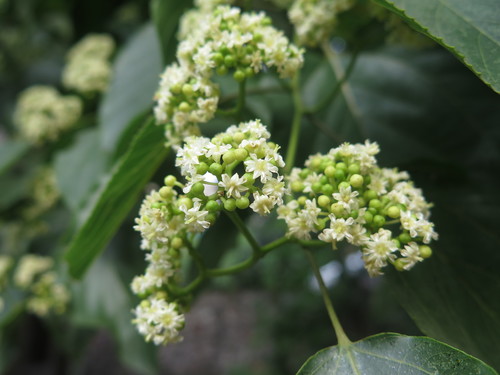
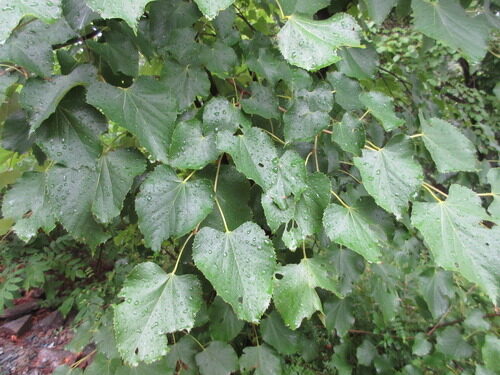
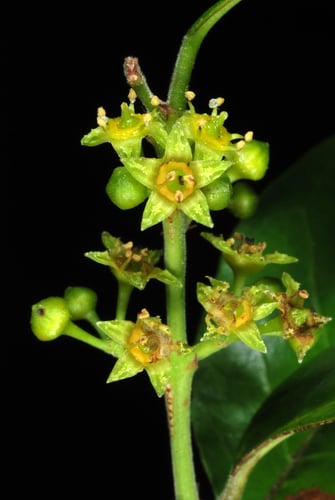
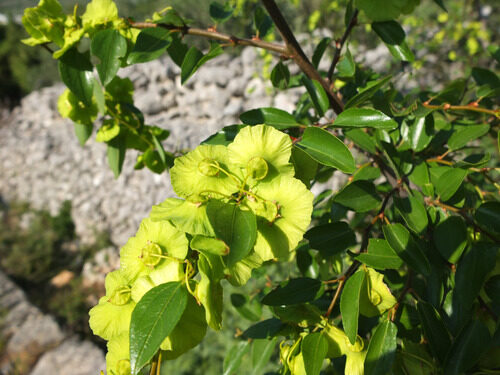
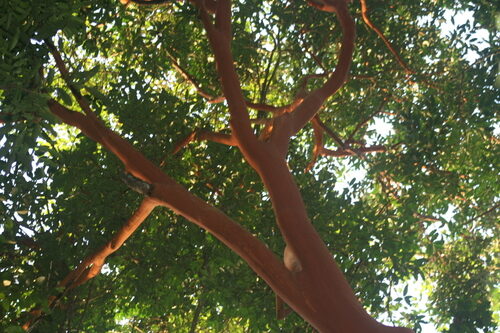
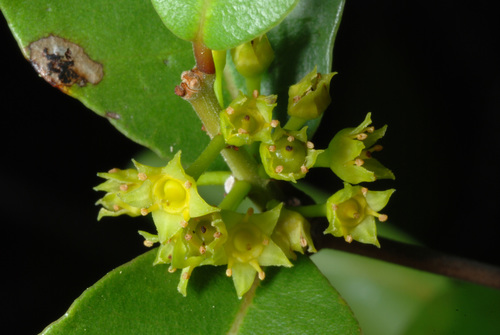
A small tree. It grows 6-16 m high. The trunk is 15-20 cm across. It loses its leaves during the year. The bark is cracked. The leaves are opposite and oval. The leaf stalk is 1-1.5 cm long. The leaves are 10-12 cm long by 4-4.5 cm wide. They taper to the tip. The veins are easy to see. The flowers are in the axils of leaves. The flowers are white. The fruit is fleshy with a hard stone inside. They are oval. The fruit are 9-10 mm across. They are black to purple. There is 1 seed.
Edible Uses
Fruit - raw. A thin, juicy pulp with a sweet, pleasant flavour. The black, ellipsoid fruit is about 12mm long, containing a single, large seed.
Traditional Uses
The ripe fruit are eaten fresh.
This uses section is brief — help expand it
Distribution
A tropical plant. In Bolivia it grows to 700 m altitude. It grows in the Atlantic rainforest in Brazil.
Where It Grows
Argentina, Bolivia, Brazil, Ecuador, Paraguay, Peru, South America,
Cultivation
Plants are grown from seed.
Propagation
Seed - best sown as soon as it is ripe in a partially shaded position in a nursery seedbed. A germination rate of almost 100% can be expected, with the seed sprouting within 5 - 15 days. When the seedlings are 3 - 5cm tall, pot them up into individual containers and they should be ready to plant out 4 - 5 months later.
Other Uses
The heartwood and sapwood are not clearly differentiated. The wood is medium-textured, heavy, hard, highly resistant to rot even when exposed to the elements. It is used for external work such as poles, posts, railway ties, bridges, building construction and hydraulic work.
Other Information
Fruit are not particularly popular.
Notes
There are 12 Rhamnidium species. They are in tropical South America.
Synonyms
Also Known As
Azeitona, Bosta-de-cabrito, Cabriteira, Cabriteiro, Cabrito, Cafe del monte, Cafezinho, Moron, Palo cafe, Pau-brasil, Sacha cafe, Saguaraji, Sagurarji-amarelo, Sobrasil-amarelo, Taruma, Tarumai, Turere
References (9)
- Bendezu, Y. F., 2018, Arboles nativos de lad Region Ucayali. Instituto Nacional de Innovacion Agraria. p 264
- Bortolotto, I. M., et al, 2015, Knowledge and use of wild edible plants in rural communities along Paraguay River, Pantanal, Brazil. Journal or Ethnobiology and Ethnomedicine. 11:46
- Bortolotto, I. M., et al, 2018, Lista preliminar das plantas alimenticias nativas de Mato Grosso do Sul, Brasil. Iheringia, Serie Botanica, Porto Alegre, 73 (supl.):101-116
- Grandtner, M. M. & Chevrette, J., 2013, Dictionary of Trees, Volume 2: South America: Nomenclature, Taxonomy and Ecology. Academic Press p 565
- Lorenzi, H., Bacher, L., Lacerda, M. & Sartori, S., 2006, Brazilian Fruits & Cultivated Exotics. Sao Paulo, Instituto Plantarum de Estuados da Flora Ltda. p 277
Show all 9 references Hide references
- Reis, S. V. and Lipp, F. L., 1982, New Plant Sources for Drugs and Foods from the New York Botanical Garden herbarium. Harvard. p 172 (Also as Karwinskia oblongifolia)
- TodaFruta.com.br
- Vasquez, Roberto Ch. & Coimbra, German S., 1996, Frutas Silvestres Comestibles de Santa Cruz. p 192
- www.colecionandofrutas.org