Ziziphus nummularia
(Burm.f.) Wight & Arn.
iNaturalist· cc-by-nc
(c) Shiwalee Samant, some rights reserved (CC BY-NC), uploaded by Shiwalee Samant
iNaturalist· cc-by-nc
(c) Chase Mathey, some rights reserved (CC BY-NC)
iNaturalist· cc-by-nc
(c) Chase Mathey, some rights reserved (CC BY-NC)
Summary
Source: WikipediaZiziphus nummularia, commonly known as wild jujube or jharberi in Hindi, is a species of Ziziphus native to the Thar Desert of western India and southeastern Pakistan, south Iran, Afghanistan, Lebanon and Zimbabwe. Ziziphus nummularia is a shrub up to 6 metres (20 ft) or higher, branching to form a thicket. The leaves are rounded like those of Ziziphus jujuba but differ from those in having a pubescence on the adaxial surface. The plant is commonly found in arid areas, hills, plains, and agricultural fields.
Description
A shrub. It has many branches. The branches are flexible and have a velvety covering. They have grey spines in unequal pairs. The leaves are 1-2 cm long by 1-2 cm wide. They are rounded and hairy above and velvety underneath. The flowers are 3-4 mm across. The fruit is rounded and fleshy. It is 5-10 mm long and dark reddish-brown when ripe. It has 2 cells and 2 seeds. The fruit are round and reddish-brown.
Edible Uses
The small, fleshy, dark reddish-brown fruits (5-10 mm) are eaten fresh, especially by children, and are sold in local markets.
Known Hazards
Ziziphus nummularia has been used for erosion control, reducing wind damage, and allowing deposited material to stabilise, forming a microhabitat that enables other plants such as grasses to grow. The shrub sends up many suckers from the root system and can be planted to form a windbreak, sometimes in association with Crotalaria burhia. The timber is used in building construction and to make farm implements, and it also makes good fuel and charcoal. The leaves can provide forage for livestock; in India they are picked, dried, and stored, producing about 1,000 kg (2,200 lb) dried foliage per hectare. The fruits are edible, sweet, and acidic. They can be eaten raw, pickled, dried, or used to make confectionery. Rats and gerbils are also attracted to the fruit, which can therefore be used in poison baits to attract the rodents.
Distribution
A Mediterranean to tropical plant. It grows on sandy plains and sand dunes. It grow in semi-arid areas. In the Himalayas in India it grows up to 1,200 m above sea level.
Where It Grows
Afghanistan, Africa, Asia, Bahrain, Central Asia, East Africa, Himalayas, India, Indochina, Iran, Iraq, Jordan, Laos, Lebanon, Mauritania, Mediterranean, Middle East, Nepal, Nigeria, Pakistan, Palestine, Qatar, Saudi Arabia, SE Asia, Tajikistan, Thailand, Uganda, Zimbabwe,
Other Information
Fruit are sold in markets. The ripe fruit are eaten especially by children.
Synonyms
Also Known As
Adbaubordi, Anane, Bada bera, Badber, Baire, Bal, Bayar, Bhukamtaka, Birar, Bor, Bordi, Borti, Chani, Chanibor, Chanyabor, Chotti ber, Gangar, Karkanra, Jahri ber, Jangali bayar, Jangalikoli, Janglar, Jangra, Jangli bairi, Jhadiaber, Jhahrberi, Jhangugli ber, Jhar beri, Jhar-beru, Junglaber, Karkanr, Karkana, Karkunda, Kathy beer, Khetraubordi, Koker ber, Kokni-ber, Korgodi, Malaber, Mallah, Neelareegu, Pala, Palia, Rubbayd, Sukhshamaphala
References (36)
- Abbasi, A. M., Khan, M & Zafar, M., 2013, Ethno-medicinal assessment of some selected wild edible fruits and vegetables of Lesser-Himalayas, Pakistan. Pak. J. Bot. 45 (SI):215-222
- Ahmad, K. & Pieroni, A., 2016, Folk knowledge of wild food plants among the tribal communities of Thakht-e-Sulaiman Hills, North-West Pakistan. Journal of Ethnobiology and Ethnomedicine, 12:17
- Al-Qura'n, S. A., 2010, Ethnobotanical and Ecological Studies of Wild Edible Plants in Jordan. Libyan Agriculture Research Center Journal International 1(4):231-243
- Ambasta, S.P. (Ed.), 2000, The Useful Plants of India. CSIR India. p 703
- Arora, R. K., 2014, Diversity in Underutilized Plant Species - An Asia-Pacific Perspective. Bioversity International. p 90
Show all 36 references Hide references
- Barkatullah, et al, 2009, Ethnobotanical studies of plants of Charkotli Hills, Batkhela District, Malakand, Pakistan. Front. Biol. China 2009, 4(4): 539–548
- BHANDARI;
- Dangol, D. R., 2002, Economic uses of forest plant resources in western Chitwan, Nepal. Banko Janakari, 12(2): 56-64
- Dangol, D. R. et al, 2017, Wild Edible Plants in Nepal. Proceedings of 2nd National Workshop on CUAOGR, 2017.
- Dobriyal, M. J. R. & Dobriyal, R., 2014, Non Wood Forest Produce an Option for Ethnic Food and Nutritional Security in India. Int. J. of Usuf. Mngt. 15(1):17-37
- Flora of Pakistan. www.eFloras.org
- Gardner, S., et al, 2000, A Field Guide to Forest Trees of Northern Thailand, Kobfai Publishing Project. p 130
- Gautam, R. S., et al, 2020, Wild Edible Fruits of Nepal. Int. J. Appl. Sci. Biotechnol. Vol 8(3): 289-304
- GUPTA & KANODIA,
- Hamayun, M., Ethnobotanical Studies of some Useful Shrubs and Trees of District Buner, NWFP, Pakistan
- Khan, D. & Shaukat, S.S., 2006, The Fruits of Pakistan: Diversity, Distribution, Trends of Production and Use. Int. J. Biol. Biotech., 3(3):463-499
- Maheshwari, J.K., & Singh, J.P., 1984, Contribution to the Ethnobotany of Bhoxa Tribe of Bijnor and Pauri Garhwal Districts, U.P. J. Econ. Tax. Bot. Vol.5. No.2 pp 253-
- Majeed, M., et al, 2021, Gathered Wild Food Plants among Diverse Religious Groups in Jhelum District, Punjab, Pakistan. Foods 2021, 10, 594.
- Marwat, S. K., 2011, Medico-ethnobotanical studies of edible wild fruit plants species from the flora of northwestern Pakistan (D. I. Khan district). Journal of Medicinal Plants Research Vol. 5(16) pp 3679-3686
- Misra S. & Misra M., 2016, Ethnobotanical and Nutritional Evaluation of Some Edible Fruit Plants of Southern Odisha, India. International Journal of Advances in Agricultural Science and Technology, Vol.3 Issue.1, March- 2016, pg. 1-30
- Misra, S., 2020, Survey of edible plants for human consumption in south Odisha, India. Journal of Emerging Technologies and Innovative Research (JETIR) Vol. 7, Issue 12 p 292
- Norton, J., et al, 2009, An Illustrated Checklist of the Flora of Qatar. UNESCO Office in Doha.
- Prodr. fl. Ind. orient. 162. 1834
- Rajasab, A. H. et al, 2004, Documentation of folk knowledge on edible wild plants of North Karnataka. Indian Journal of Traditional Knowledge. Vol 3(4) pp 419-429
- SAXENA;
- Shah, G.L. et al, 1981, An account of the Ethnobotany of Saurashtra in Gujarat State (India). J. Econ. Tax. Bot. Vol 2 pp 173-182
- SHANKARNARAYAN & SAXENA,
- Sher, Z., Hussain, F., & Ibrar, M., 2014, Traditional knowledge on plant resources of Ashezai and Salarzai Valleys, District Buner, Pakistan. African Journal of Plant Science. Vol. 8(1), pp. 42-53, January 2014
- Singh, V. and Singh, P., 1981, Edible Wild Plants of Eastern Rajasthan. J. Econ. Tax. Bot. Vol 2 pp 197-207
- Swaminathan, M.S., and Kochnar, S.L., 2007, An Atlas of Major Flowering Trees in India. Macmillan. p 88
- Toppo, P. et al, 2016, Wild edible plants of Dhamtari district of Chhattisgarh, India. Van Sangyan Vol. 3, No. 4
- Tukan, S. K., et al, 1998, The use of wild edible plants in the Jordanian diet. International Journal of Food Sciences and Nutrition. 49:225-235
- Upreti, K., et al, 2010, Diversity and Distribution of Wild Edible Fruit Plants of Uttarakhand. Bioversity Potentials of the Himalaya. p 195
- WATT,
- World Checklist of Useful Plant Species 2020. Royal Botanic Gardens, Kew
- www.worldagroforestrycentre.org/treedb/
More from Rhamnaceae
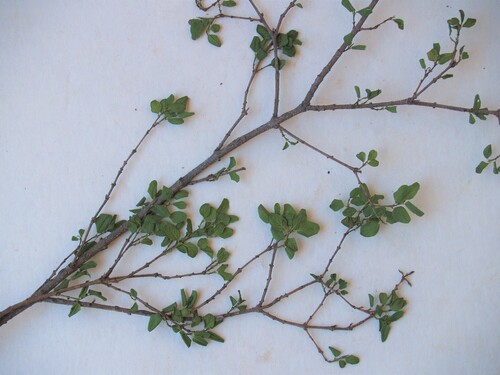
Berchemia zeyheri
Pink ivory, Red ivory
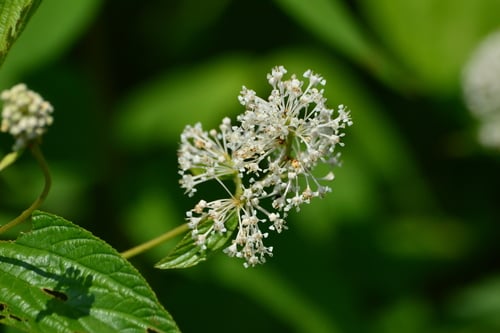
Ceanothus americanus
New Jersey tea, Red root, Jersey-tea ceanothus, Mountainsweet, Wild snowball
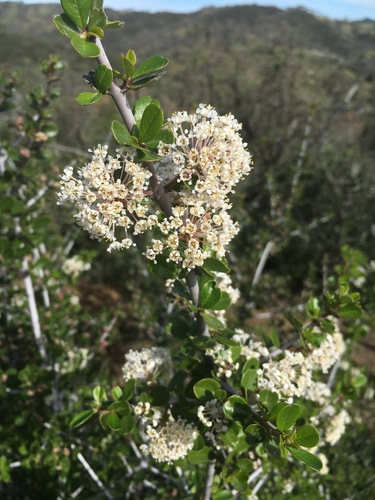
Ceanothus cuneatus
Buckbrush
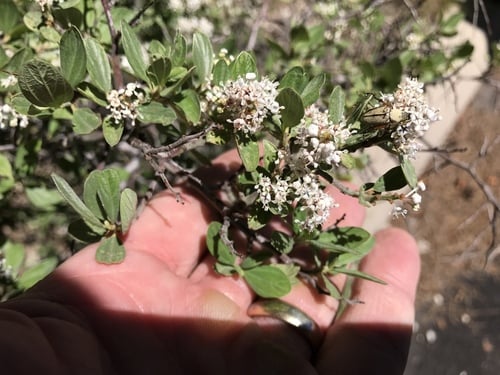
Ceanothus fendleri
Fendler's ceanothus
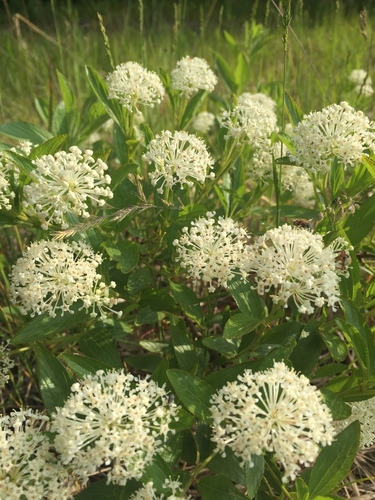
Ceanothus herbaceus
Red root, Inland Ceanothus, Smaller red-root, Jersey tea
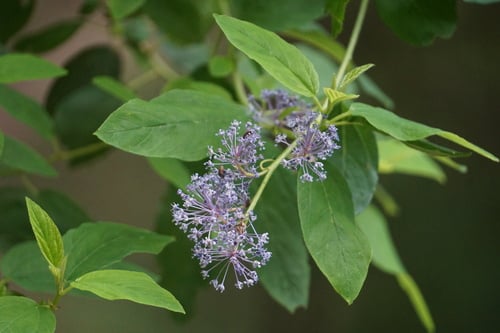
Ceanothus integerrimus
Deer brush