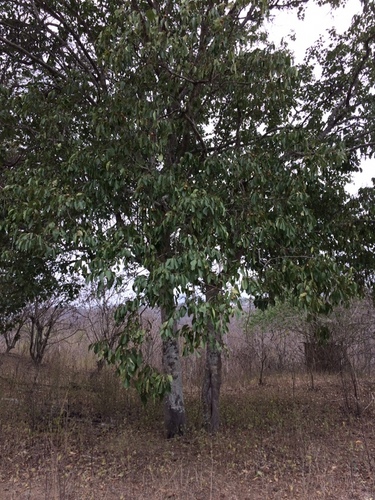
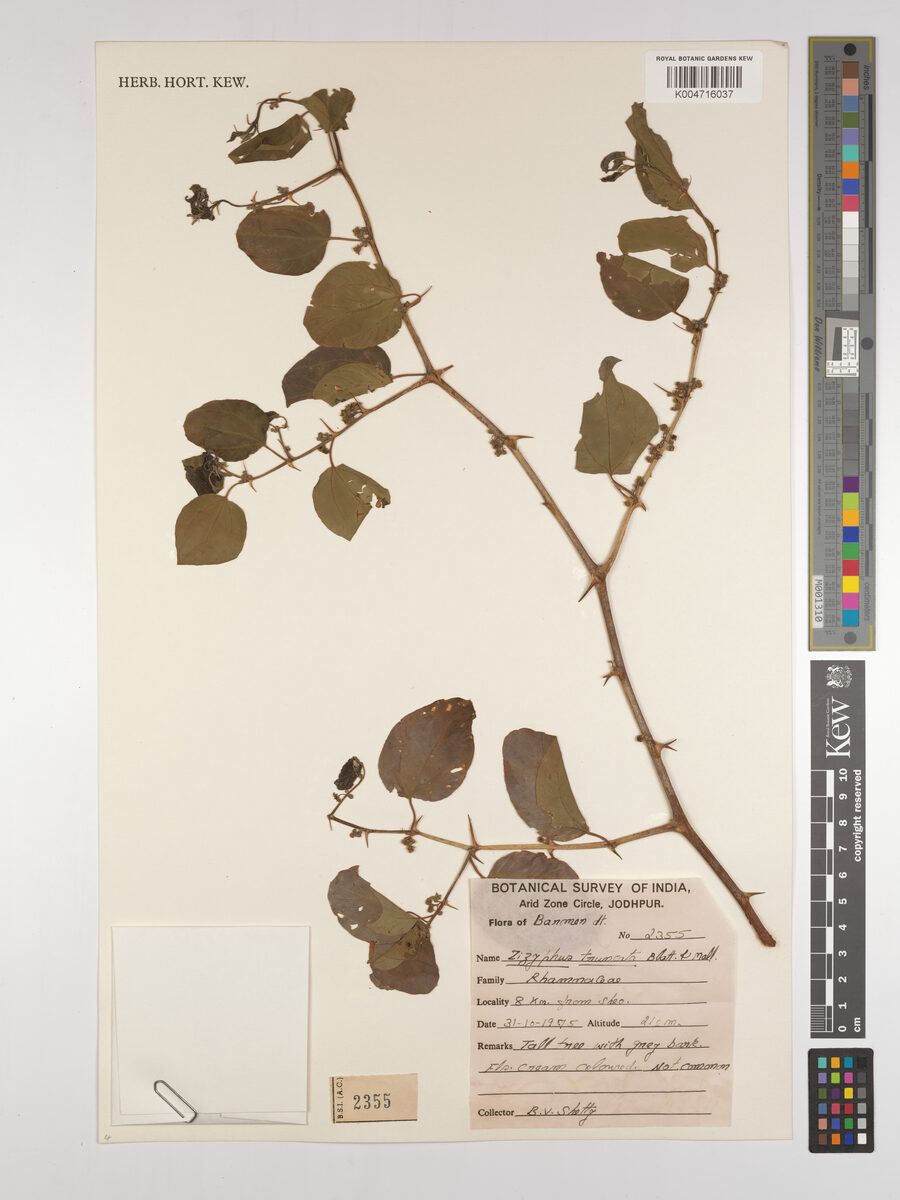
Ziziphus oenopolia
(L.) Miller
Wine Jujuba, Small-fruited jujube, Jackal jujube
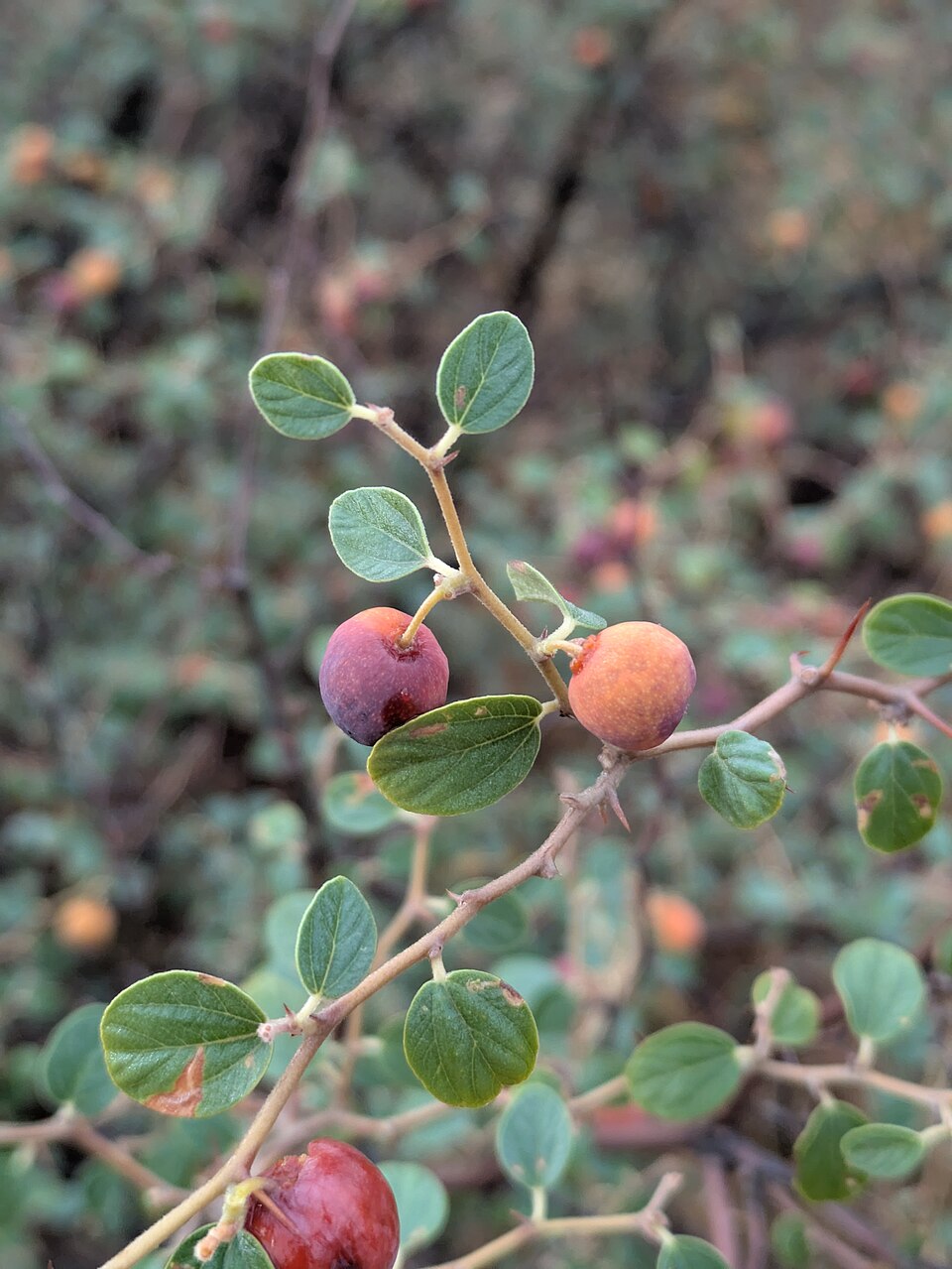
iNaturalist· cc-by-nc
(c) Dr Adil A, some rights reserved (CC BY-NC), uploaded by Dr Adil A
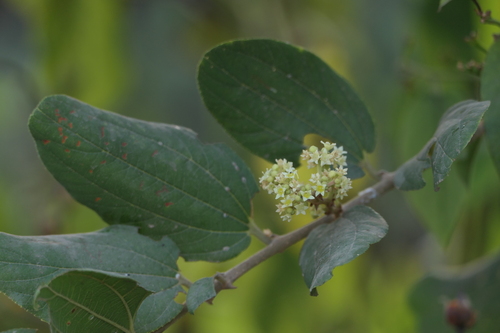
iNaturalist· cc-by-nc
(c) Dr Adil A, some rights reserved (CC BY-NC), uploaded by Dr Adil A
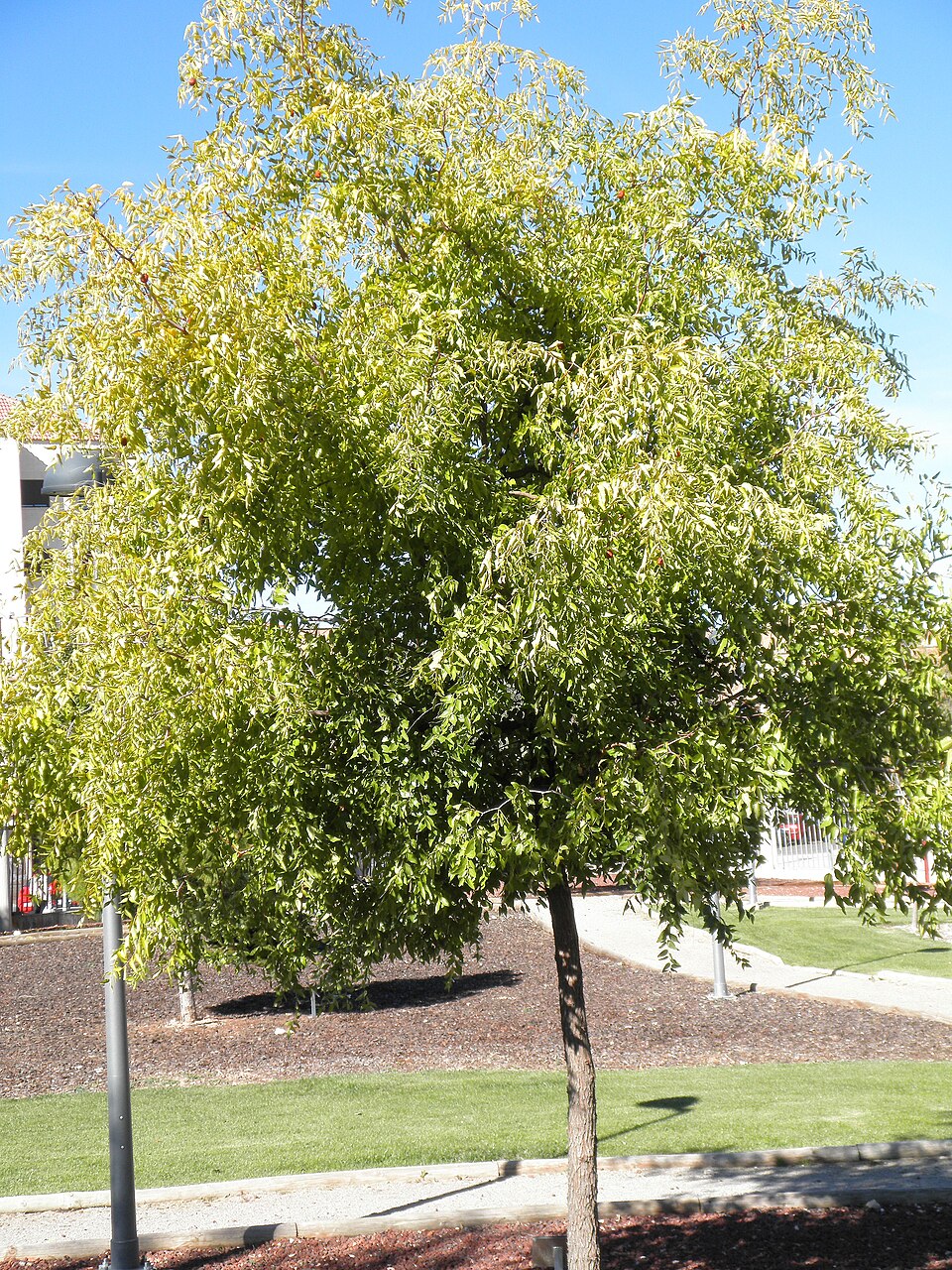
iNaturalist· cc0
no rights reserved, uploaded by Ajit Ampalakkad
Summary
Source: WikipediaZiziphus oenopolia, commonly known as the jackal jujube, small-fruited jujube or wild jujube, is a flowering plant with a broad distribution through tropical and subtropical Asia and Australasia. In India, it is mostly found in the deciduous forests of the southern part of the country.
Description
A thorny shrub. It grows about 5 m high. It has straggling branches. The leaves are short stalked. The leaves are 2.3-5.5 cm long by 1.3-3 cm wide. They are oval to sword shaped. They taper to a tip. There are teeth around the edge. Leaves are unequal at the base. The flowers are yellowish. The fruit is fleshy with a hard covering over the seed. It is oval and yellow when fully ripe. There is a thin layer of acidic flesh around the seed.
Edible Uses
Fruit - raw or cooked. Both ripe and unripe fruits are eaten. They can be dried for off-season consumption. The shiny, black, globose or obovoid-globose fruit is around 5 - 7mm long and 5 - 6mm wide, containing 1 - 2 seeds.
Traditional Uses
The ripe fruit are eaten raw. They are also dried and stored.
This uses section is brief — help expand it
Medicinal Uses
The plant produces active phytochemicals, such as phenolics, alkaloids, terpenoids, flavonoids, tannins, and carbohydrates. The plant produces cyclopeptide alkaloids known as ziziphines. The stem, bark, leaves, fruit, and roots are used in Ayurveda for the treatment of various conditions, such as ulcers, stomach aches, obesity, and asthma. The stem bark has antioxidant properties. Bark and roots are used for anti-diabetic treatments. The Konkani people of Maharashtra use the chewed leaves as a dressing for wounds. In Burma the stem bark is used as a mouthwash for sore throats, for dysentery, and for inflammation of the uterus. Research in Thailand has found that extracts of ziziphine from Ziziphus oenopolia show antiplasmodial in vitro activity against the malarial parasite Plasmodium falciparum.
Distribution
A tropical plant. In Nepal plants grow to 1600 m altitude. They grow on the edge of the subtropical forest. In Yunnan in China it grows between 600-900 m above sea level. It occurs in the Western Ghats in India.
Where It Grows
Africa, Asia, Australia, Bangladesh, Cambodia, China, Himalayas, India, Indochina, Indonesia, Laos, Malaysia, Myanmar, Nepal, Northeastern India, Papua New Guinea, PNG, Philippines, SE Asia, Sri Lanka, Thailand, Vietnam,
Cultivation
Plants are grown from seed.
Propagation
Seed - remove the flesh from around the seed then soak the seed in cold water for 6 hours. Cover the seed in seedling trays with a thin layer of river sand and keep moist. Seeds usually germinate in 2 - 3 weeks with a minimum of 75% germination. Seedlings transplant easily into black nursery soil but they have long taproots and care should be taken not to damage them. Root suckers.
Other Uses
The bark is a source of tannins. Total tannin content is only around 12%. The seeds are used to make rosaries The branches are used to make fences. The stems are used for fuel. The plant is very prickly, and is grown as a hedge to provide a barrier to keep out livestock and other grazing animals. Care needs to be taken to keep it in check, however, since it can spread rapidly to form almost impenetrable masses of prickly stems.
Other Information
Fruit are especially eaten by children.
Nutrition
| Part | Moisture | kJ | kcal | Protein | Vit A | Vit C | Iron | Zinc |
|---|---|---|---|---|---|---|---|---|
| Fruit | 79.9 | — | — | — | — | 4.5 | — | — |
| Fruit | 57.1 | — | — | 0.7 | — | 17.7 | — | — |
Synonyms
Also Known As
Akar kuku tupai, Anbulam, Arem pokuri, Aule bayar, Bahukantaka, Bak lep meuw, Banka, Ban kul, Barige, Barokoli, Bir janum, Boksi bayar, Bombori, Bon boroi, Bon kul, Boydi, Burgi, Challe, Chan-bor, Cheruthodali, Chiyakul, Chruthodali, Churai, Churi, Emardi, Eramdi, Hin eraminiya, Hurasurah, Ironi, Jackal jujube, Jangalkul, Jhurkal, Jujube buah kecil, Julie, Kanerballi, Kantakoli, Kanteikoli, Karisurimullu, Karkhandu, Kat-bor, Kontakoli, Kottaipazham, Kottavalli, Kuku lang, Kurirama janum, Leb yiew, Lep yio, Maak lep meuw, Mahkua, Mainam-nu, Makai, Mak-hkaw-hku, Makor, Meximela, Mokaiya, Njilamyin, Novelo, Paragi, Paraki, Parimi, Paringi, Paungbet, Pulichi, Sekul, Siakul, Sial kul, Soori, Sotta, Srigalakoli, Supauk-pin, Suraimullu, Suraiyilandai, Suri, Tao rung, Taw-zi-nwe, Thodalli, Tudali, Tutalimullu, Vor sangkher, Yaroni, Yeroni, Yeruni
References (62)
- Ajesh, T. P., et al, 2012, Ethnobotanical Documentation of Wild Edible Fruits used by Muthuvan Tribes of Idukki, Kerala-India. International Journal of Pharma and Bio Sciences 3(3): 479-487
- Altschul, S.V.R., 1973, Drugs and Foods from Little-known Plants. Notes in Harvard University Herbaria. Harvard Univ. Press. Massachusetts. no. 2618
- Ambasta, S.P. (Ed.), 2000, The Useful Plants of India. CSIR India. p 703
- Arinathan, V., et al, 2007, Wild edibles used by Palliyars of the western Ghats, Tamil Nadu. Indian Journal of Traditional Knowledge. 6(1) pp 163-168
- Ashton, M. S., et al 1997, A Field Guide to the Common Trees and Shrubs of Sri Lanka. WHT Publications Ltd. pdf p 318
Show all 62 references Hide references
- Avinash, B. K., Kumar, R., et al, 2013, Ethnoboptany of Tharus of Dudhwa National Park, India. Mintage journal of Pharmaceutical & Medical Science 6-11
- Bandyopadhyay, S. et al, 2009, Wild edible plants of Koch Bihar district, West Bengal. Natural Products Radiance 8(1) 64-72
- BARC, 2016, State of Biodiversity for Food and Agriculture in Bangladesh. Bangladesh Agricultural Research Council.
- Binu, S., 2010, Wild edible plants by the tribals in Pathanamthitta district, Kerala. Indian Journal of Traditional Knowledge. 9(2): 309-312
- Bodkin, F., 1991, Encyclopedia Botanica. Cornstalk publishing, p 1036
- Burkill, I.H., 1966, A Dictionary of the Economic Products of the Malay Peninsula. Ministry of Agriculture and Cooperatives, Kuala Lumpur, Malaysia. Vol 2 (I-Z) p 2349
- Cengel, D. J. & Dany, C., (Eds), 2016, Integrating Forest Biodiversity Resource Management and Sustainable Community Livelihood Development in the Preah Vihear Protected Forest. International Tropical Timber Organization p 121
- Chakraborty, S. & Chaturbedi, H. P., 2014, Some Wild Edible Fruits of Tripura- A Survey. Indian Journal of Applied research. (4) 9
- Chandrakumar, P., et al, 2015, Ethnobotanical studies of wild edible plants of Gond, Halba and Kawar tribes of Salekasa Taluka, Gondia District, Maharashtra State, India. International Research Journal of Pharmacy 6(8)
- Chauhan, S. H., et al, 2018, Consumption patterns of wild edibles by the Vasavas: a case study from Gujarat, India. Journal of Ethnobiology and Ethnomedicine (2018) 14:5
- Chowdery, T., et al, 2014, Wild edible plants of Uttar Dinajpur District, West Bengal. Life Science Leaflets. 47:pp 20-36 http://lifesciencesleaflets.ning.com
- Chowdhury, M. & Mukherjee, R., 2012, Wild Edible Plants Consumed by Local Communities of Maldah of West Bengal, India. Indian J.Sci.Res.3(2) : 163-170
- Cooper, W. and Cooper, W., 2004, Fruits of the Australian Tropical Rainforest. Nokomis Editions, Victoria, Australia. p 426
- Cribb, A.B. & J.W., 1976, Wild Food in Australia, Fontana. p 61
- Cruz-Garcia, G. S., & Price, L. L., 2011, Ethnobotanical investigation of 'wild' food plants used by rice farmers in Kalasin, Northeast Thailand. Journal of Ethnobiology and Ethnomedicine 7:33
- Datar, M. N. & Upadhye, A. S., 2016, Forest foods of northern region of Western Ghats. MACS - Agharkar Research Institute, Pune. Pp 1-160. ISBN: 978-93-85735-10-3 p 103
- Dey, A. & Mukhererjee, A., 2015, Living and Survival Amidst Hunger: Wild Edible Botanicals as a Prime Forest Productivity in the Rural Purulia District, West Bengal, India from Colonial to Present. Research Journal of Forestry 9(3): 71-86
- Dobriyal, M. J. R. & Dobriyal, R., 2014, Non Wood Forest Produce an Option for Ethnic Food and Nutritional Security in India. Int. J. of Usuf. Mngt. 15(1):17-37
- Eiadthong, W., et al, 2010, Management of the Emerald Triangle Protected Forests Complex. Botanical Consultant Technical Report. p 23
- Gard. dict. ed. 8: Ziziphus no. 3. 1768
- Harisha, R. P. & Padmavathy, S., 2013, Knowledge and Use of Wild Edible Plants in Two Communities in Malai Madeshwara Hills, Southern India. International Journal of Botany 9(2): 64-72.
- Hedrick, U.P., 1919, (Ed.), Sturtevant's edible plants of the world. p 706 (As Ziziphus napeca)
- Jadhav, R., et al, 2015, Forest Foods of Northern Western Ghats: Mode of Consumption, Nutrition and Availability. Asian Agri-History Vol. 19, No. 4: 293-317
- Jin, Chen et al, 1999, Ethnobotanical studies on Wild Edible Fruits in Southern Yunnan: Folk Names: Nutritional Value and Uses. Economic Botany 53(1) pp 2-14
- Jones D, L, 1986, Ornamental Rainforest Plants in Australia, Reed Books, p 340
- Kachenchart, B., et al, 2008, Phenology of Edible Plants at Sakaerat Forest. In Proceedings of the FORTROP II: Tropical Forestry Change in a Changing World. Bangkok, Thailand.
- Kahlon, L. K. & Singh, R., 2019, Traditional knowledge & Dynamics of edible plants of primitive tribal group ‘Paudi Bhuyan’ with changing demography migration patterns in Northern Odisha. Indian Journal of Traditional Knowledge Vol 18(1), pp 7-15
- Kiran, K. C., et al, 2019, Diversity and Seasonal Availability of Potential Wild Edible Plants from Vidarbha Region of Maharashtra State, India. Int.J.Curr.Microbiol.App.Sci (2019) 8(2): 1434-1446
- Levitt, D., 1981, Plants and people. Aboriginal uses of plants on Groote Eylandt. Australian Institute of Aboriginal Studies, Canberra. p 119
- Majumdar, K and Datta, N., 2009, Traditional wild edible fruits for the forest dwellers of Tripura, India. Pleione 3(2) 167-178
- Manandhar, N.P., 2002, Plants and People of Nepal. Timber Press. Portland, Oregon. p 487
- Misra S. & Misra M., 2016, Ethnobotanical and Nutritional Evaluation of Some Edible Fruit Plants of Southern Odisha, India. International Journal of Advances in Agricultural Science and Technology, Vol.3 Issue.1, March- 2016, pg. 1-30
- Misra, S., 2020, Survey of edible plants for human consumption in south Odisha, India. Journal of Emerging Technologies and Innovative Research (JETIR) Vol. 7, Issue 12 p 292
- Mozhui, R., et al, 2011, Wild edible fruits used by the tribals of Dimapur district of Nagaland, India. Pleione 5(1): 56 - 64
- Partha, P., 2014, Ethnobotany of the Laleng (Patra) Community in Bangladesh. Journal of Pharmacognosy and Phytochemistry. 2(6):173-184
- Pasha, M. K. & Uddin, S. B., 2019, Minor Edible Fruits of Bangladesh. Bangladesh J. Plant Taxon. 26(2): 299–313
- Phatlamphu, N., et al, 2021, Ethnobotany of edible plants in Muang District, Kalasin Province, Thailand, Biodiversitas Vol. 22, No. 12 pp 5432-5444
- Prachi, K., et al, 2012, Underutilized wild fruits of North Maharashtra. Journal of Research in Plant Sciences. (2012) 1:071-076
- Pradhan, R., et al, 2020, Potential Wild Edible Plants and its Significance in Livelihood of Indigenous People of Male Mahadeshwara Hills, Karnataka. Economic Affairs Vol. 64, No. 4 pp. 01-14
- Ramachandran, V.S. and Nair, V.J., 1981, Ethnobotanical studies in Cannanore District, Kerala State (India). J Econ. Tax. Bot. Vol 2 pp 65-72
- Ramachandran, V. S., 2007, Wild edible plants of the Anamalais, Coimbatore district, western Ghats, Tamil Nadu. Indian Journal or Traditional Knowledge. 6(1) pp 173-176
- Rajasab, A. H. et al, 2004, Documentation of folk knowledge on edible wild plants of North Karnataka. Indian Journal of Traditional Knowledge. Vol 3(4) pp 419-429
- Rao, M. L. S., et al, 2014, Indigenous Plant Foods which are commonly consumed by the tribal communities in Dumbriguda Area of Visakhapatnam District, Andhra Pradesh, India. Biolife. Vol 2, Issue 3
- Rasingam, L., 2012, Ethnobotanical studies on the wild edible plants of Irula tribes of Pillur Valley, Coimbatore district, Tamil Nadu, India. Asian Pacific Journal of Tropical Biomedicine. (2012) S1493-S1497
- Ravikrishna, S., 2011, Ethno-medico-botanical survey on Wild Edible fruits of Udupi Taluq, Udupi p 104
- Reddy, B. M., 2012, Wild edible plants of Chandrapur district, Maharashtra, India. Indian Journal of Natural Products and Resources. 3(1) pp 110-117
- Saidulu, P. et al, 2015, Ethnobotanical Knowledge Studied in Pocharam Wildlife Sanctuary, Telangana, India. Not Sci Biol, 2015, 7(2):164 -170
- Sasi, R. & Rajendran, A., 2012, Diversity of Wild Fruits in Nilgiri Hills of the Southern Western Ghats - Ethnobotanical Aspects. IJABPT, 3(1) p 82-87
- Shah, G.L. et al, 1981, An account of the Ethnobotany of Saurashtra in Gujarat State (India). J. Econ. Tax. Bot. Vol 2 pp 173-182
- Shah, G.L., 1984, Some economically important plant of Salsette Island near Bombay. J. Econ. Tax. Bot. Vol. 5 No. 4 pp 753-765
- Sivakumar, A. & Murugesan, M., 2005, Ethnobotanical Studies of the wild edible plants used by the tribals of the Anaimalai Hills, the Western Ghats. Ancient Science of Life. XXV(2) Oct-Dec.
- Sukarya, D. G., (Ed.) 2013, 3,500 Plant Species of the Botanic Gardens of Indonesia. LIPI p 991
- Suksri, S., et al, 2005, Ethnobotany in Bung Khong Long Non-Hunting Area, Northeast Thailand. Kasetsart J., (Nat. Sci) 39: 519-533
- Thitiprasert, W., et al, 2007, Country report on the State of Plant Genetic Resources for Food and Agriculture in Thailand (1997-2004). FAO p 95
- Townsend, K., 1994, Across the Top. Gardening with Australian Plants in the tropics. Society for Growing Australian Plants, Townsville Branch Inc. p 369
- Turreira Garcia, N., et al, 2017, Ethnobotanical knowledgeof the Kuy and Khmer people in Prey Lang, Cambodia. Cambodian Journal of Natural History 2017 (1): 76-101
- Van Sam, H. et al, 2008, Uses and Conservation of Plant Species in a National Park. A case study of Ben En, Vietnam. Economic Botany 62:574-593