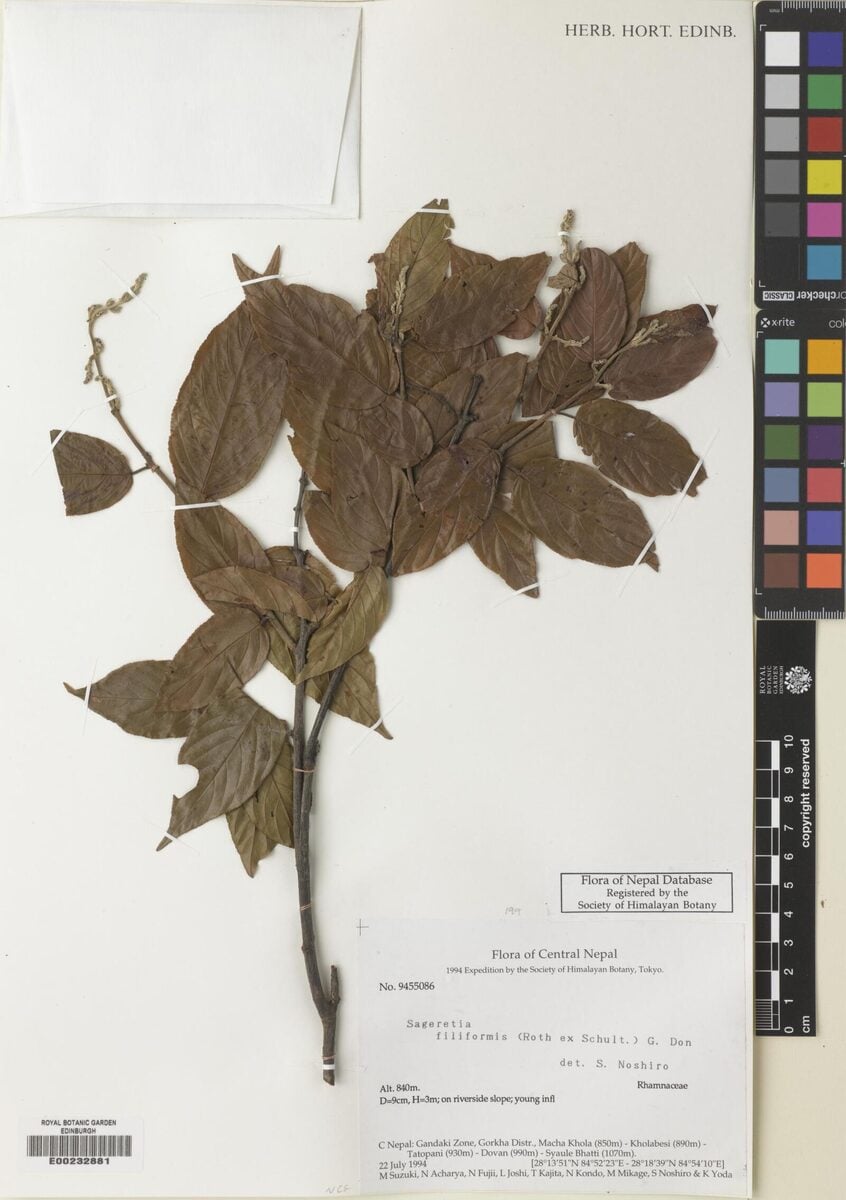
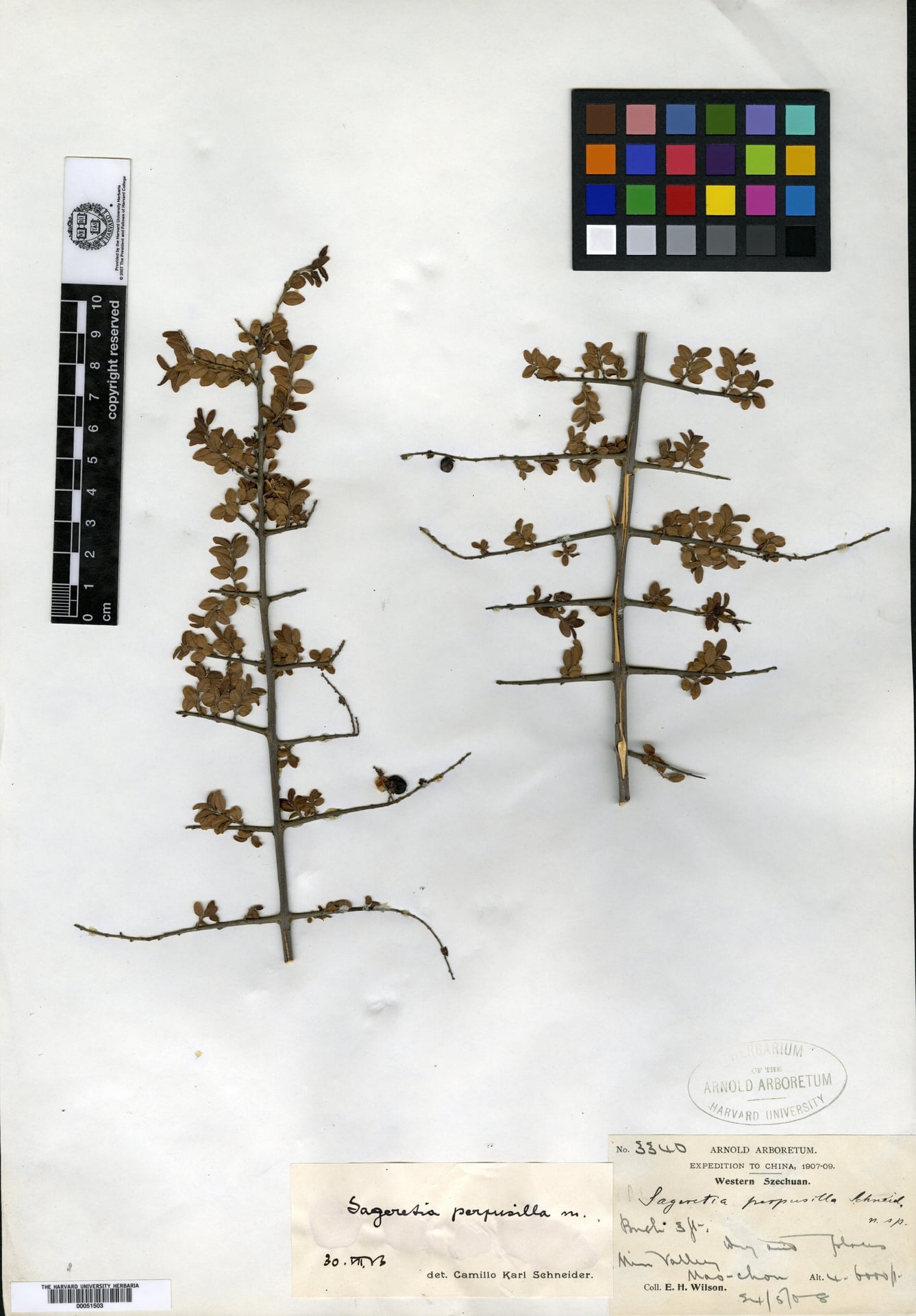
Ziziphus oxyphylla
Edgew.
Pointed fruit jujube
gbif· cc0
Royal Botanic Garden Edinburgh
gbif· cc-by
Royal Botanic Gardens, Kew
gbif· cc-by-nc
OBI - Robert F. Hoover Herbarium, Cal Poly State University (OBI-OBI)
Description
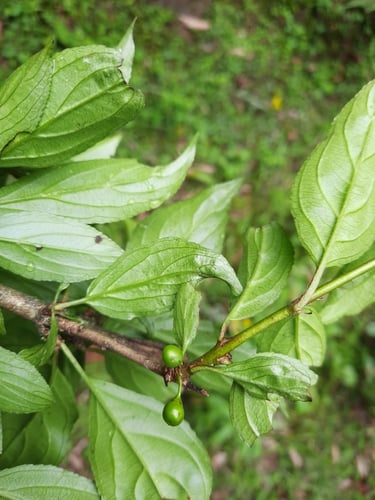
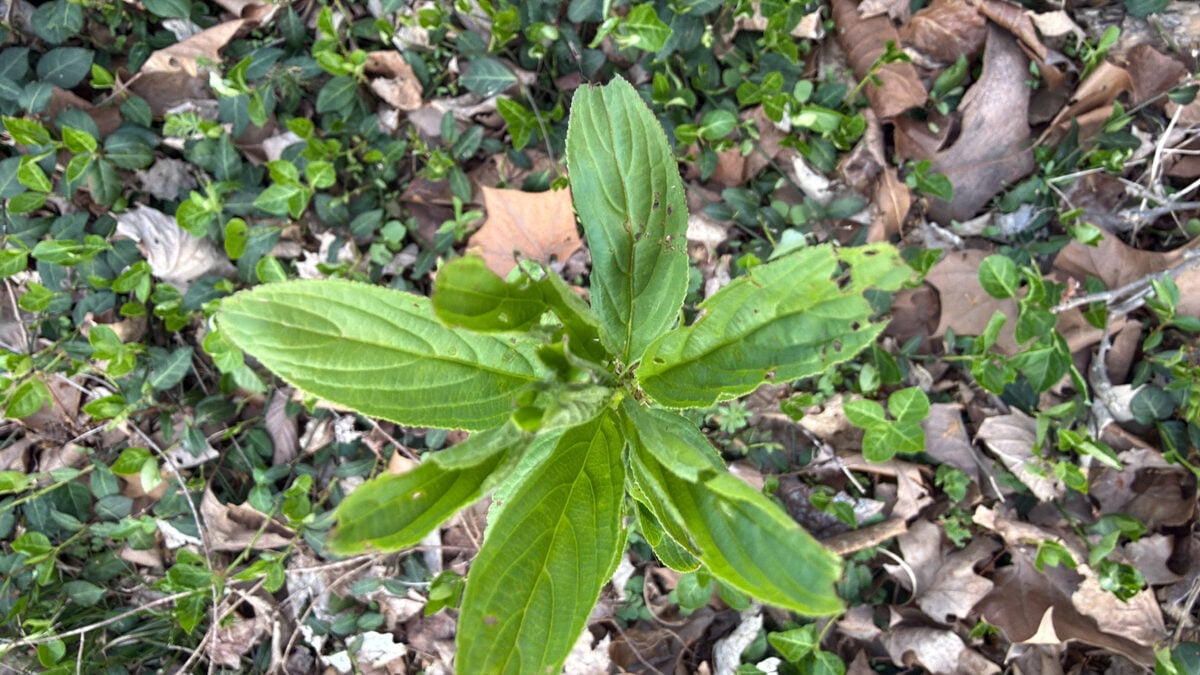
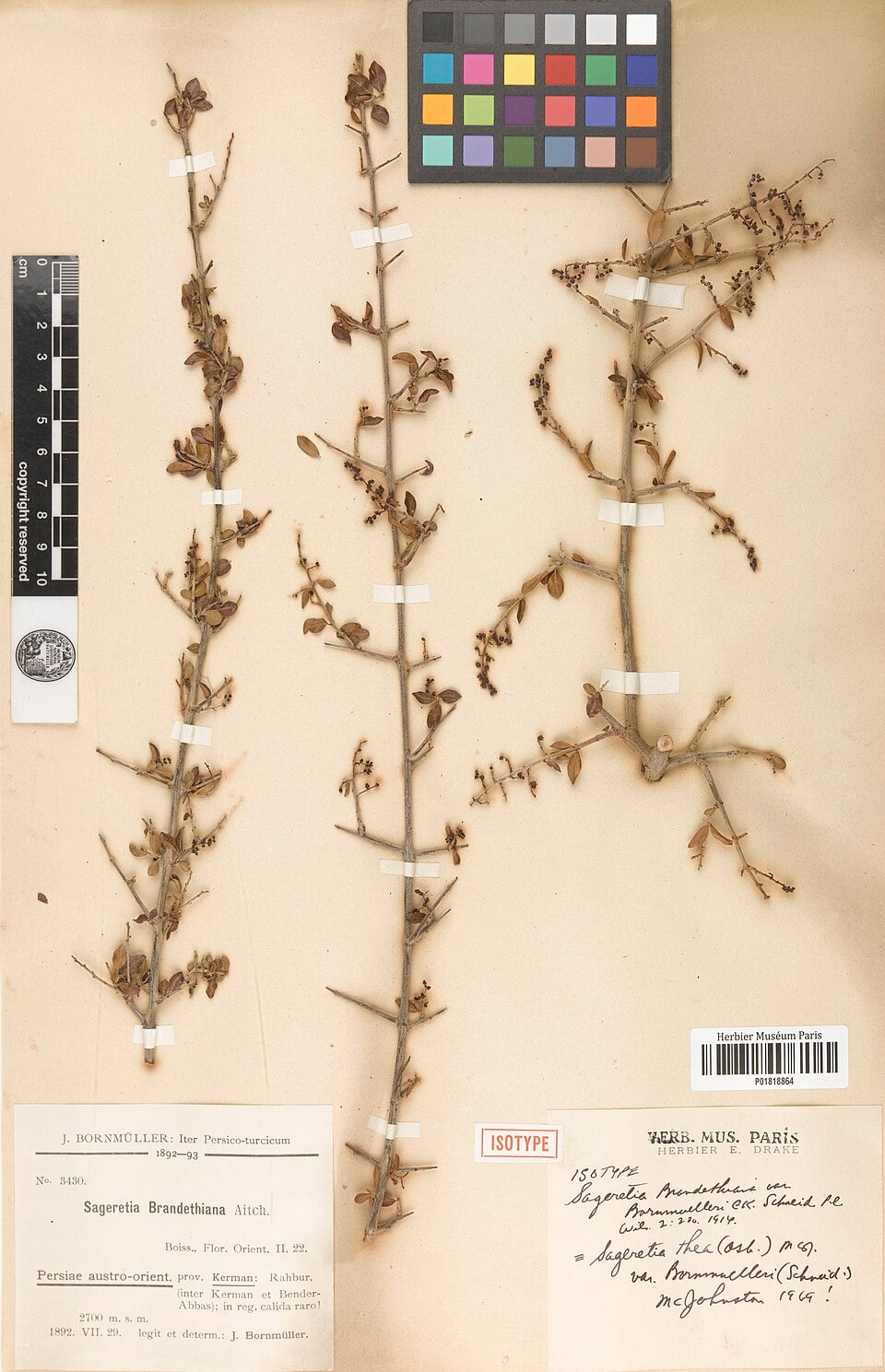
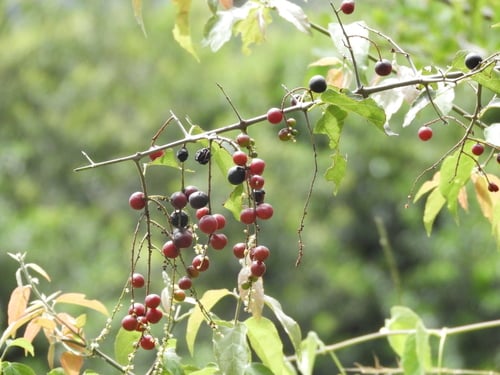
A shrub or small tree. It has slender spines. They are in unequal pairs. The leaves are 3-6 cm long by 2-3 cm wide. They are oval or sword shaped and taper to the tip. The base is heart shaped. There are teeth along the edge. The flowers are in groups in the axils of the leaves. The flowers are 3-4 mm across. The fruit is fleshy and oval. They are 8-10 mm long and orange-black when ripe. They have one seed.
Edible Uses
The fruit is eaten raw.
Traditional Uses
The fruit are eaten raw.
This uses section is brief — help expand it
Distribution
It is a temperate plant. In the Indian Himalayas it grows between 1,200-1,300 m above sea level.
Where It Grows
Asia, Himalayas, India, NW India, Pakistan,
Production
In NW Pakistan fruit are harvested in July.
Synonyms
Also Known As
Amlai, Baer, Ber, Beri, Berry, Broien, Elanae, Elanai, Enalai, Heilaneiy, Kath-ber, Kurit rama, Phitm berari, Phitni, Saib bair, Sezen, Shamor, Surkh bair
References (21)
- Abbasi, A. M., Khan, M & Zafar, M., 2013, Ethno-medicinal assessment of some selected wild edible fruits and vegetables of Lesser-Himalayas, Pakistan. Pak. J. Bot. 45 (SI):215-222
- Ahmad, K. & Pieroni, A., 2016, Folk knowledge of wild food plants among the tribal communities of Thakht-e-Sulaiman Hills, North-West Pakistan. Journal of Ethnobiology and Ethnomedicine, 12:17
- Altschul, S.V.R., 1973, Drugs and Foods from Little-known Plants. Notes in Harvard University Herbaria. Harvard Univ. Press. Massachusetts. no. 2619
- Ambasta, S.P. (Ed.), 2000, The Useful Plants of India. CSIR India. p 703
- Barkatullah and Ibrar, M., 2011, Plants profile of Malakand Pass Hills, District Malakand, Pakistan. African Journal of Biotechnology Vol. 10 (73) pp. 16521-16535
Show all 21 references Hide references
- Ethnobotanical Study of Tehsil Kabal, Swat District, KPK, Pakistan, Table 1
- Flora of Pakistan. www.eFloras.org
- Haj, F., et al, 2012, Species Diversity and Ethno Botanical Classes of the Flora of Allai Valley District Battagram Pakistan. International Journal of Plant Research 2012, 2(4): 111-123
- Hamayun, M., Ethnobotanical Studies of some Useful Shrubs and Trees of District Buner, NWFP, Pakistan
- Hedrick, U.P., 1919, (Ed.), Sturtevant's edible plants of the world. p 707
- Jabeen, A., et al, 2009, Indigenous uses of economically important flora of Margallah Hills National Park, Islamabad, Pakistan. African Journal of Biotechnology Vol. 8 (5), pp. 763-784
- Khan, A. H., et al, 2023, Traditional foraging for ecological transition? Wild food ethnobotany among three ethnic groups in the highlands of the eastern Hindukush, North Pakistan. Journal of Ethnobiology and Ethnomedicine 19:9
- Khan, D. & Shaukat, S.S., 2006, The Fruits of Pakistan: Diversity, Distribution, Trends of Production and Use. Int. J. Biol. Biotech., 3(3):463-499
- Khan, M. & Hussain, S., 2014, Diversity of wild edible plants and flowering phenology of district Poonch (J & K) in the northwest Himalaya. Indian Journal of Sci, Res. 9(1): 032-038
- Radha, B., et al, 2013, Wild Edible Plant Resources of the Lohba Range of Kedarnath Forest Division (KFD), Garhwal Himalaya, India. Int. Res J. Biological Sci. Vol. 2 (11), 65-73
- Majeed, M., et al, 2021, Gathered Wild Food Plants among Diverse Religious Groups in Jhelum District, Punjab, Pakistan. Foods 2021, 10, 594.
- Rashid, A., Anand, V.K. & Serwar, J., 2008, Less Known Wild Plants Used by the Gujjar Tribe of District Rajouri, Jammu and Kashmir State. International Journal of Botany 4(2):219-244
- Shad, A. A., Shah, H. U., & Bakht, J., 2013, Ethnobotanical Assessment and Nutritive Potential of Wild Food Plants. The Journal of Animal & Plant Sciences, 23(1) pp. 92-97 (Also as Ziziphus acuminata)
- Sharma, P., et al, 2013, Wild edibles of Murari Devi and surrounding areas in Mandi district of Himachal Pradesh, India. International Journal of Biodiversity and Conservation. Vol. 5(9), pp. 580-592, September 2013
- Trans. Linn. Soc. London 20:43. 1846
- Upreti, K., et al, 2010, Diversity and Distribution of Wild Edible Fruit Plants of Uttarakhand. Bioversity Potentials of the Himalaya. p 195