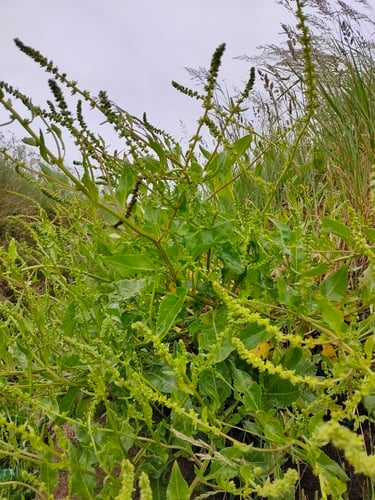
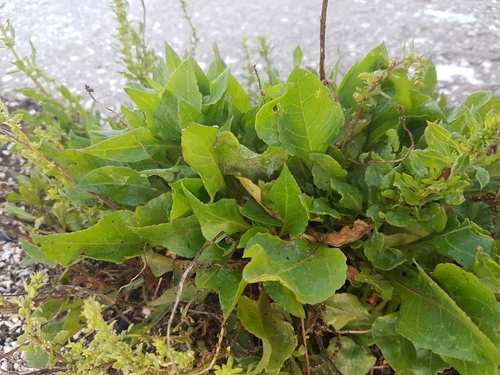
Rhagodia parabolica
R. Br.
Fragrant saltbush, Berry saltbush
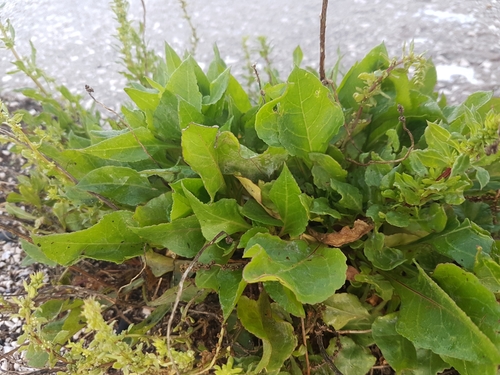
iNaturalist· cc-by-nc
(c) Helen Schofield, some rights reserved (CC BY-NC)
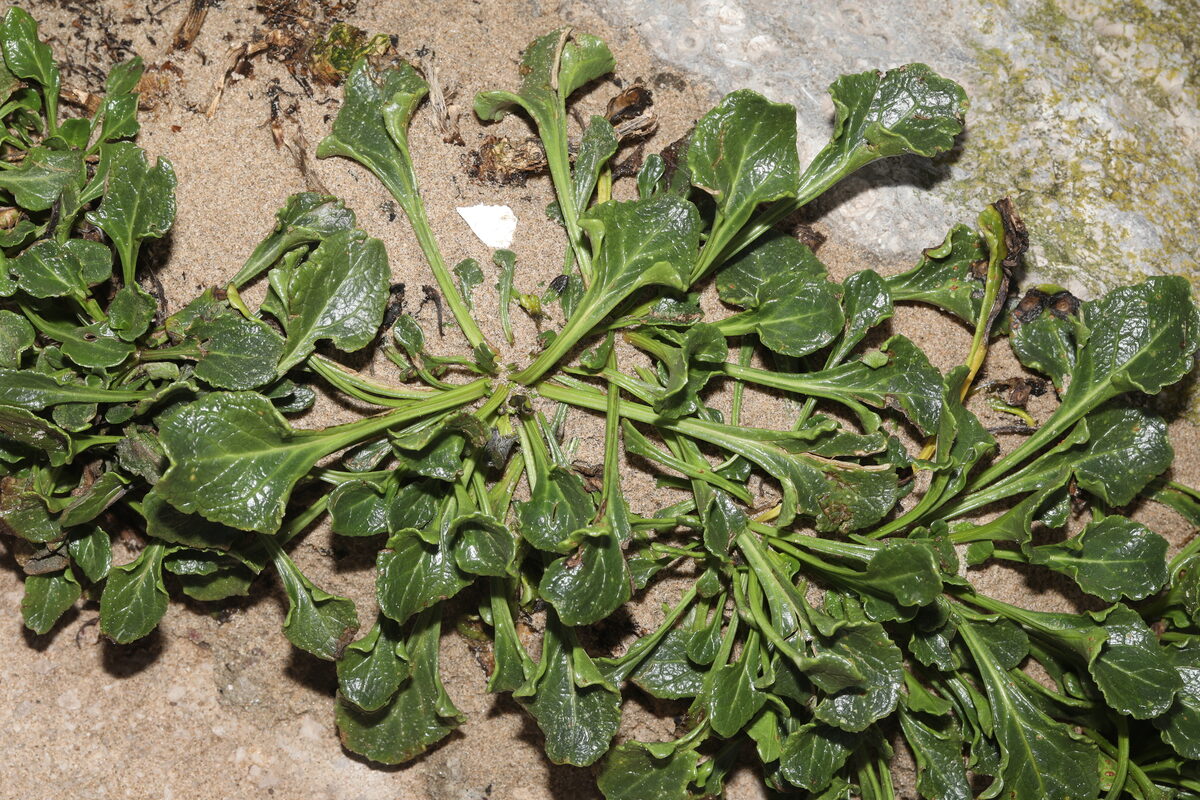
iNaturalist· cc-by
(c) Rod Lowther, some rights reserved (CC BY)
iNaturalist· cc-by-nc
(c) Helen Schofield, some rights reserved (CC BY-NC)
Summary
Source: WikipediaRhagodia parabolica is an evergreen shrub reaching 3 m tall, hardy to UK zone 9 and remaining in leaf year-round. It grows in light sandy, medium loamy, and heavy clay soils with well-drained, well-drained preference and mildly acidic to basic pH. The plant requires full sun and prefers moist conditions.
Description
An evergreen shrub. It grows 3 m tall. The leaves are almost opposite. They are narrowly oval. The fruit are pink or red.
This description is brief — help expand it
Edible Uses
Young leaves are edible when cooked. They have a salty flavour and can contain up to one third of their weight in salt. This saltiness can be reduced by briefly boiling the leaves in a couple of changes of water. After approximately one hour of boiling, the leaves become tender and palatable.
Traditional Uses
The young leaves are cooked. They have a salty flavour. They are boiled for about one hour and the water is changed to reduce the saltiness.
This uses section is brief — help expand it
Medicinal Uses
None known.
Distribution
It is a subtropical plant. It grows in semi-arid areas on poor soils. It can also be in higher rainfall areas. It needs a sunny position and well-drained soil.
Where It Grows
Australia*,
Cultivation
We have very little information on this species and do not know if it will be hardy in Britain, though it is unlikely to succeed outside the very mildest areas of the country. Requires a sunny position and a well-drained soil.
Propagation
Sow seed in spring in a greenhouse, covering only very lightly. Germination should occur within a week. Prick seedlings out into individual pots once large enough to handle, and plant out after the last expected frosts.
Other Uses
None known.
Notes
Also put in the family Chenopodiaceae.
Also Known As
Mealy saltbush
References (10)
- Cribb, A.B. & J.W., 1976, Wild Food in Australia, Fontana. p 111
- Dashorst, G.R.M., and Jessop, J.P., 1998, Plants of the Adelaide Plains & Hills. Botanic Gardens of Adelaide and State Herbarium. p 58
- Fern, K., 2012, Tropical Species Database http://theferns.info/tropical/
- Flora of Australia, Volume 4, Phytolaccaceae to Chenopodiaceae, Australian Government Publishing Service, Canberra (1984) p 175
- Hall, N. et al, 1972, The Use of Trees and Shrubs in the Dry Country of Australia, AGPS, Canberra. p 354
Show all 10 references Hide references
- Lazarides, M. & Hince, B., 1993, Handbook of Economic Plants of Australia, CSIRO. p 204
- Low, T., 1992, Bush Tucker. Australia’s Wild Food Harvest. Angus & Robertson. p 138
- Plants for a Future database, The Field, Penpol, Lostwithiel, Cornwall, PL22 0NG, UK. http://www.scs.leeds.ac.uk/pfaf/
- Prodr. 408. 1810
- Spearrit, G., 2016, Plants of Irongate Conservation Park. Amaroo Environmental Education Centre.