Salsola baryosma
Dandy
Saltwort
iNaturalist· cc-by-nc
(c) Zaidi, some rights reserved (CC BY-NC)
iNaturalist· cc-by-nc
(c) Zaidi, some rights reserved (CC BY-NC)
iNaturalist· cc-by-nc
(c) Zaidi, some rights reserved (CC BY-NC)
Description
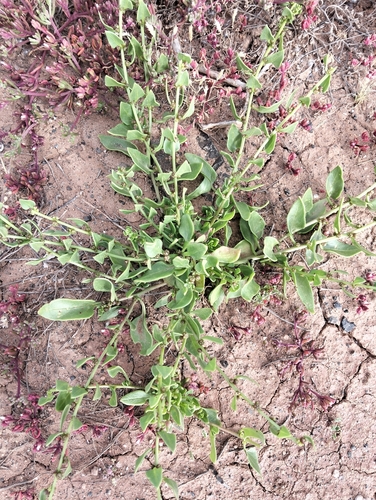
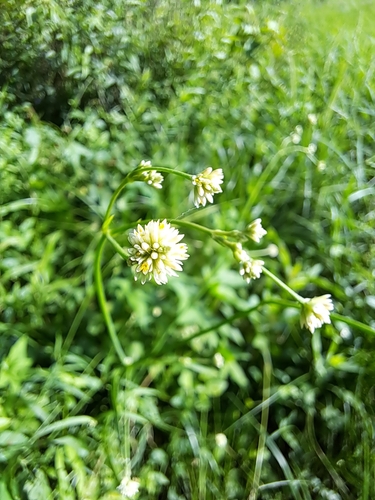
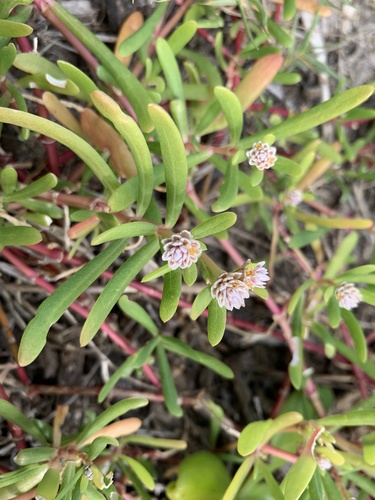
A shrub. It grows 1 m tall. The young stems are purplish. The leaves are narrow and have soft hairs. Older plants become branching shrubs with leaves like tiny knotted balls. The old stems are woody. The flowers are small and yellow. The fruit have pale yellow wings are are showy. The stems and leaves when crushed have a bad smell.
Edible Uses
Manna is obtained from the leaves by scraping off hardened deposits.
Traditional Uses
Manna is obtained from the leaves. It hardens and is scraped off for eating. Caution: The leaves themselves contain alkaloids.
This uses section is brief — help expand it
Known Hazards
The leaves contain alkaloids.
Distribution
It is a Mediterranean plant. It will grow in salty soil. In Bahrain it grows from seashore to stony desert. It can grow in arid places.
Where It Grows
Afghanistan, Africa, Algeria, Asia, Bahrain, Central Africa, Central Africa Republic, Chad, Egypt, India, Iran, Iraq, Israel, Jordan, Kenya, Kuwait, Libya, Mali, Mauritania, Mediterranean, Middle East, Morocco, Niger, North Africa, Oman, Pakistan, Qatar, Saudi Arabia, Senegal, Somalia, Sudan, United Arab Emirates, UAE, West Africa, Yemen,
Notes
Also put in the family Chenopodiaceae.
Synonyms
Also Known As
Aghacel, Ecchi, Ellakura, Gagraf, Ghadraf, Gora lane, Hamd, Lana shora, Lani, Loonak, Ressal
References (5)
- Ambasta, S.P. (Ed.), 2000, The Useful Plants of India. CSIR India. p 542
- Dobriyal, M. J. R. & Dobriyal, R., 2014, Non Wood Forest Produce an Option for Ethnic Food and Nutritional Security in India. Int. J. of Usuf. Mngt. 15(1):17-37
- Phillips, D.C., 1988, Wild Flowers of Bahrain. A Field Guide to Herbs, Shrubs, and Trees. Privately published. p 102
- Royal Botanic Gardens, Kew (1999). Survey of Economic Plants for Arid and Semi-Arid Lands (SEPASAL) database. Published on the Internet; http://www.rbgkew.org.uk/ceb/sepasal/internet [Accessed 8th April 2011]
- Singh, H.B., Arora R.K.,1978, Wild edible Plants of India. Indian Council of Agricultural Research, New Delhi. p 37