Salsola kali
L.
Russian thistle, Saltwort, Tumbleweed
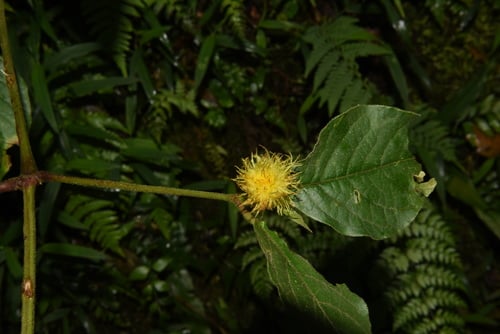
iNaturalist· cc-by
(c) Cheng-Tao Lin, some rights reserved (CC BY), uploaded by Cheng-Tao Lin
iNaturalist· cc-by-nc
(c) Josep Mª Albesa Gasulla, some rights reserved (CC BY-NC), uploaded by Josep Mª Albesa Gasulla
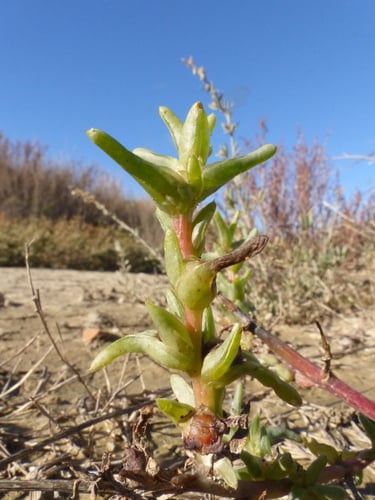
iNaturalist· cc-by-sa
(c) Tony Rebelo, some rights reserved (CC BY-SA), uploaded by Tony Rebelo
Summary
Source: WikipediaSalsola kali is the restored botanical name for a species of flowering plants in the amaranth family that has been treated as Kali turgidum. It is native to Macaronesia, and from the Atlantic coasts of Europe to the Baltic Sea and the Mediterranean (although it has been introduced elsewhere). It is an annual plant which grows primarily in the temperate biome, in salty sandy coastal soils. It is commonly known as prickly saltwort or prickly glasswort. In dry inland places it is replaced by Salsola tragus (syn. Kali tragus or Salsola kali subsp. tragus), which is less tolerant to salty soils, and has spread more widely from Eurasia to other continents. Salsola kali is less widespread as an introduced species in America.
Description
A rigid annual shrub. It is a succulent plant when young but becomes stiff and spiny. It grows 50 cm high. The leaves are small and fleshy. They are circular when cut cross wise and end in a point. They are 5-12 mm long by 2-3 mm wide. The flowers are very small and green. They are hidden in the axils of the leaves.
Edible Uses
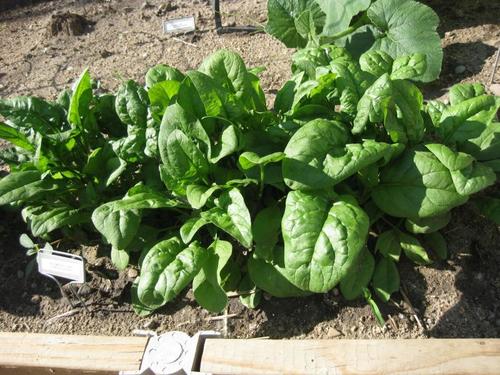
Young leaves and stems can be eaten raw or cooked and are considered an excellent food with a crunchy, tender texture. They work well as a spinach substitute or added in small amounts to salads. The seed can be cooked and ground into a meal for use as a gruel, as a soup thickener, or mixed into cereal flours for bread. The seed is small and collecting it in quantity is difficult.
Traditional Uses
CAUTION The leaves contain high amounts of oxalate. The young tender leaves are boiled and eaten in salads or used like spinach. They are used in soups. The roasted seeds are used as food.
Medicinal Uses
The juice of the fresh plant is an effective diuretic, and the seedpods can be used for the same purpose. One constituent, salsolin, has been used to regulate blood pressure and is said to resemble papaverine in its effect on vasoconstriction and hydrastine in its action on the smooth muscles of the uterus. The plant is a folk remedy for dropsy and excrescences and is reported to be cathartic, diuretic, emmenagogue, stimulant, and vermifuge.
Known Hazards
The plant contains up to 5% oxalic acid, so it should only be used in moderation. Oxalic acid can lock up certain of the nutrients in food and, if eaten in excess, can lead to nutritional deficiencies. It is, however, perfectly safe in small amounts and its acid taste adds a nice flavour to salads. Cooking the plant will reduce the quantity of oxalic acid. People with a tendency to rheumatism, arthritis, gout, kidney stones and hyperacidity should take especial caution if including this plant in their diet since it can aggravate their condition.
Distribution
It is a temperate plant. It grows in salt marshes and on beaches. It grows on red limestone soils. It can be grown for reducing soil salinity. It grows in the Gobi desert. In Argentina it grows from sea level to 1,200 m above sea level. Tasmania Herbarium.
Where It Grows
Africa, Argentina, Asia, Australia, Botswana, Canada, Chile, India, Mediterranean, Mexico, North America, Pacific, Papua New Guinea, PNG, Saudi Arabia, Slovenia, South America, Tasmania, Uruguay, USA,
Cultivation
Requires a very sunny position in a light or medium well-drained soil. Tolerates maritime exposure. The plant is reported to tolerate an annual precipitation in the range of 26 to 97cm, an annual temperature in the range of 9.2 to 23.8°C and a pH of 7.0 to 7.9. This species was seen growing in a sunny bed at Cambridge Botanical Gardens in 1987, we have also grown it on a number of occasions. This species is listed as a serious weed in many countries of the world.
Propagation
Sow seed in spring directly in situ. Seed has short viability and should be stored in cool conditions over winter.
Other Uses
Burning the plant produces ashes used in the manufacture of glass and soap — large quantities were once imported into Britain for this purpose, though a chemical process using salt has since replaced this. The ashes can also clean fabrics. Because it germinates quickly on minimally disturbed soils, requires little water, and is largely free of diseases and parasites, the plant has been proposed as a fuel crop for arid lands, with yields of around 3 tonnes of plant material per hectare recorded. It is also a dynamic accumulator.
Notes
Also put in the family Chenopodiaceae. Probably misapplied in Tasmania.
Nutrition
| Part | Moisture | kJ | kcal | Protein | Vit A | Vit C | Iron | Zinc |
|---|---|---|---|---|---|---|---|---|
| Seeds | 5.4 | 1848 | 451 | 27.4 | — | — | 14.3 | 12.1 |
Synonyms
Also Known As
Buckbush, Cardo del diablo, Cardo ruso, Kalijeva solinka, Prickly Glasswort, Monte espinoso, Prickly saltwort, Roly-poly, Sajji, Sajjibuti
References (36)
- Al-Sodany, Y. M., et al, 2013, Medicinal Plants in Saudi Arabia: I. Sarrwat Mountains at Taif, KSA. Academic Journal of Plant Sciences 6 (4): 134-145
- Ambasta, S.P. (Ed.), 2000, The Useful Plants of India. CSIR India. p 542
- Bianchini, F., Corbetta, F., and Pistoia, M., 1975, Fruits of the Earth. Cassell. p 78
- Blamey, M and Grey-Wilson, C., 2005, Wild flowers of the Mediterranean. A & C Black London. p 40
- Bodkin, F., 1991, Encyclopedia Botanica. Cornstalk publishing, p 904
Show all 36 references Hide references
- Breidahl H., 1997, Australian Southern Shores. Lothian. p 122
- Bremness, L., 1994, Herbs. Collins Eyewitness Handbooks. Harper Collins. p 268
- Cerne, M., 1992, Wild Plants from Slovenia used as Vegetables. Acta Horticulturae 318
- Cherikoff V. & Isaacs, J., The Bush Food Handbook. How to gather, grow, process and cook Australian Wild Foods. Ti Tree Press, Australia p 190
- Cormack, R. G. H., 1967, Wild Flowers of Alberta. Commercial Printers Edmonton, Canada. p 82
- Dashorst, G.R.M., and Jessop, J.P., 1998, Plants of the Adelaide Plains & Hills. Botanic Gardens of Adelaide and State Herbarium. p 62
- Dobriyal, M. J. R. & Dobriyal, R., 2014, Non Wood Forest Produce an Option for Ethnic Food and Nutritional Security in India. Int. J. of Usuf. Mngt. 15(1):17-37
- Elias, T.S. & Dykeman P.A., 1990, Edible Wild Plants. A North American Field guide. Sterling, New York p 76
- Esperanca, M. J., 1988. Surviving in the wild. A glance at the wild plants and their uses. Vol. 1. p 277 (var. tenuifolia)
- Facciola, S., 1998, Cornucopia 2: a Source Book of Edible Plants. Kampong Publications, p 222
- Flora of Australia, Volume 4, Phytolaccaceae to Chenopodiaceae, Australian Government Publishing Service, Canberra (1984) p 314
- Hall, N. et al, 1972, The Use of Trees and Shrubs in the Dry Country of Australia, AGPS, Canberra. p 289
- Harris, S., Buchanan, A., Connolly, A., 2001, One Hundred Islands: The Flora of the Outer Furneaux. Tas Govt. p 219
- Heywood, V.H., Brummitt, R.K., Culham, A., and Seberg, O. 2007, Flowering Plant Families of the World. Royal Botanical Gardens, Kew. p 97
- http://www.botanic-gardens-ljubljana.com/en/plants
- Hussey, B.M.J., Keighery, G.J., Cousens, R.D., Dodd, J., Lloyd, S.G., 1997, Western Weeds. A guide to the weeds of Western Australia. Plant Protection Society of Western Australia. p 134
- Kanis, A., in Henty, E.E., (Ed.), 1981, Handbooks of the Flora of Papua New Guinea, Melbourne University Press, p 23
- Kermath, B. M., et al, 2014, Food Plants in the Americas: A survey of the domesticated, cultivated and wild plants used for Human food in North, Central and South America and the Caribbean. On line draft. p 777
- Kenneally, K.E., Edinger, D. C., and Willing T., 1996, Broome and Beyond, Plants and People of the Dampier Peninsula, Kimberley, Western Australia. Department of Conservation and Land Management. p 84
- Lamp, C & Collet F., 1989, Field Guide to Weeds in Australia. Inkata Press. p 251
- Levitt, D., 1981, Plants and people. Aboriginal uses of plants on Groote Eylandt. Australian Institute of Aboriginal Studies, Canberra. p 88
- Malezas Comestibles del Cono Sur, INTA, 2009, Buernos Aires
- Moerman, D. F., 2010, Native American Ethnobotany. Timber Press. p 503 (As Salsola australis)
- Morley, B.D., & Toelken, H.R., (Eds), 1983, Flowering Plants in Australia. Rigby. p 83
- Plants for a Future database, The Field, Penpol, Lostwithiel, Cornwall, PL22 0NG, UK. http://www.scs.leeds.ac.uk/pfaf/
- Singh, H.B., Arora R.K.,1978, Wild edible Plants of India. Indian Council of Agricultural Research, New Delhi. p 37
- Sp. pl. 1:222. 1753
- Tasmanian Herbarium Vascular Plants list p 22
- Wheeler, J.R.(ed.), 1992, Flora of the Kimberley Region. CALM, Western Australian Herbarium, p 104
- Williams, K.A.W., 1999, Native Plants of Queensland Volume 4. Keith A.W. Williams North Ipswich, Australia. p 346
- Williams A. & Sides, T., 2008, Wiradjuri Plant Use in the Murrumbidgee Catchment. Murrumbidgee Catchment Management Authority. Wagga Wagga, p 67