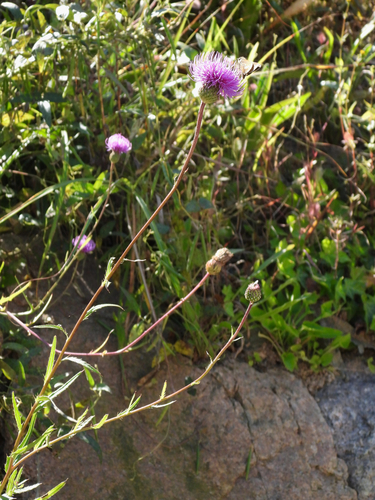
Reichardia picroides
(L.) Roth.
French scorzonera
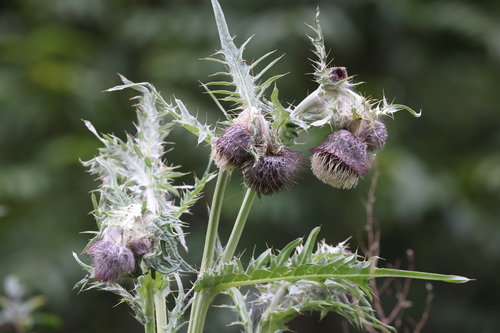
iNaturalist· cc-by-nc
(c) Stefano Doglio, some rights reserved (CC BY-NC), uploaded by Stefano Doglio
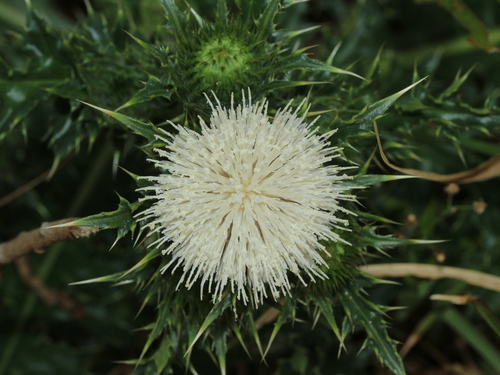
iNaturalist· cc-by-sa
(c) Emanuele Santarelli, some rights reserved (CC BY-SA), uploaded by Emanuele Santarelli
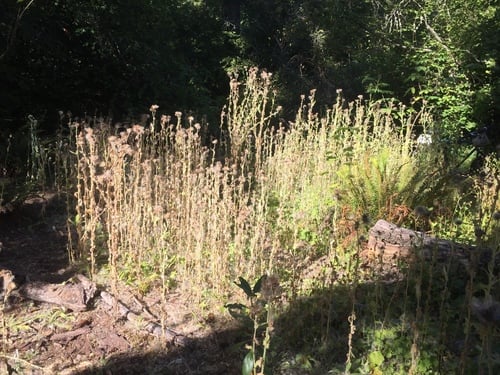
iNaturalist· cc-by-nc
(c) Σάββας Ζαφειρίου (Savvas Zafeiriou), some rights reserved (CC BY-NC), uploaded by Σάββας Ζαφειρίου (Savvas Zafeiriou)
Summary
A perennial growing to 0.5 m tall and 0.3 m wide at a fast rate. Hardy to UK zone 8 and not frost tender. Flowers appear from April to August, with seeds ripening June to September. Hermaphroditic and self-fertile, pollinated by insects. Attracts wildlife. Grows in light sandy, medium loamy, or heavy clay soils with good drainage. Tolerates mildly acid, neutral, and mildly alkaline soils. Prefers moist soil and can grow in semi-shade or full sun.
Description
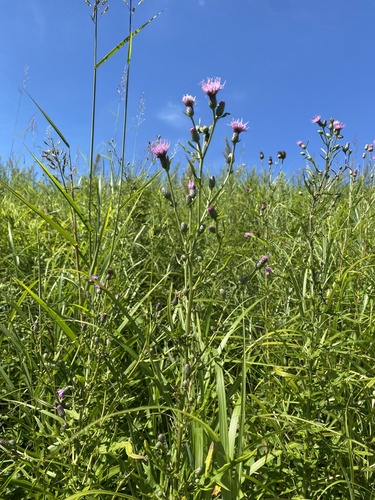
A low herb. It can grow as an annual or last for several years. It forms clumps 25 cm wide. The flowering stems can be 80 cm tall. The leaves are oblong. They have teeth or lobes. The leaves near the base have a broad winged stalk. The flower heads are yellow. The rays are yellow at the base. The flower stalk is not thickened towards the top.
Edible Uses
Both the leaves and root are edible raw or cooked. The leaves are mild, pleasant, and slightly sweet with very little fibre, making them an excellent lettuce substitute suitable for use in large quantities in salads. Notably, the older leaves remain just as good — or even better — than younger ones, even when the plant is in flower.
Traditional Uses
The young leaves are used in salads and also in soups. They are also boiled. The roots are also eaten.
This uses section is brief — help expand it
Medicinal Uses
None known.
Distribution
It is a Mediterranean plant. It grows on waste ground. It needs well-drained soil. It suits hardiness zones 8-9.
Where It Grows
Africa, Balkans, Bosnia, Britain, Crete, Croatia, Europe, France, Greece, Hawaii, Italy, Libya, Mediterranean, North Africa, North America, Pacific, Sicily, Spain, USA,
Cultivation
Plants can be grown from seeds.
Propagation
Sow seed from March/April in a warm position outdoors, continuing in succession until autumn if needed. Only just cover the seed; germination is typically fast and reliable. A useful approach is to make a spring sowing under glass, prick out seedlings into individual pots once large enough to handle, then plant out in late spring or early summer. Established plants can self-sow freely in disturbed ground.
Other Uses
French scorzonera works well as a ground cover and can help prevent soil erosion. Its flowers are rich in nectar and pollen, attracting bees and other beneficial pollinators. The seeds are consumed by birds and small mammals, and the leaves may provide food and habitat for various wildlife species. The plant's structure and leaf litter also offer shelter and overwintering sites for beneficial insects and other invertebrates. Special uses include food forest applications.
Synonyms
Also Known As
Caccialepre, Caccialiepru, Caddhazzida, Cosconilla, Cosconilles, Curcita, Escanyavelles, Gaddhazzida, Galatsida, Galazzida, Lattuquedde, Mammalucca, Sassello, Sassaiolo, Sladic
References (28)
- Biscotti, N. & Pieroni, A., 2015, The hidden Mediterranean diet: wild vegetables traditionally gathered and consumed in the Gargano area, Apulia, SE Italy. Acta Societatis Botanicorum Poloniae 84 (3): 327-338
- Biscotti, N. et al, 2018, The traditional food use of wild vegetables in Apulia (Italy) in the light of Italian ethnobotanical literature. Italian Botanist 5:1-24
- Blamey, M and Grey-Wilson, C., 2005, Wild flowers of the Mediterranean. A & C Black London. p 464
- Bonet, M. A. & Valles, J., 2002, Use of non-crop food vascular plants in Montseny biosphere reserve (Catalonia, Iberian Peninsula). International Journal of Food Sciences and Nutrition (2002) 53, 225–248
- Crawford, M., 2012, How to grow Perennial Vegetables. Green Books. p 104
Show all 28 references Hide references
- Dolina, K. & Luczaj, L., 2014, Wild food plants used on the Dubrovnik coast (south-eastern Croatia) Acta Soc Bot Pol 83(3):175–181
- Facciola, S., 1998, Cornucopia 2: a Source Book of Edible Plants. Kampong Publications, p 41
- Geraci, A., et al, 2018, The wild taxa utilized as vegetables in Sicily (Italy): a traditional component of the Mediterranean diet. Journal of Ethnobiology and Ethnomedicine (2018) 14:14
- Hadjichambis, A. C., et al, 2007, Wild and semi-domesticated food plant consumption in seven circum-Mediterranean areas. International Journal of Food Sciences and Nutrition. 2007, 1-32.
- Hedrick, U.P., 1919, (Ed.), Sturtevant's edible plants of the world. p 495 (Probably as Picridium vulgare)
- Hermandez Bermejo, J.E., and Leon, J. (Eds.), 1994, Neglected Crops. 1492 from a different perspective. FAO Plant Production and Protection Series No 26. FAO, Rome. p 263
- Licata, M., et al, 2016, A survey of wild plant species for food use in Sicily (Italy) – results of a 3-year study in four Regional Parks. Journal of Ethnobiology and Ethnomedicine 12:12
- Lim, T. K., 2015, Edible Medicinal and Non Medicinal Plants. Volume 9, Modified Stems, Roots, Bulbs. Springer p 73
- Luczaj et al, 2013, Wild vegetable mixes sold in the markets of Dalmatia (southern Croatia). Journal of Ethnobiology and Ethnomedicine. 8:2
- Luczaj, L. et al, 2014, Wild Food Plants of Dalmatia (Croatia). in A. Pieroni, C. L. Quave (eds.), Ethnobotany and Biocultural Diversities in the Balkans, p 142
- Mahklouf, M. H., 2019, Ethnobotanical Study of Edible Wild Plants in Libya. European Journal of Ecology. 5(2): 30-40
- Nebel, S., Pieroni, A. & Heinrich, M., 2006, Ta cho`rta: Wild edible greens used in the Graecanic area in Calabria, Southern Italy. Appetite 47 (2006) 333–342
- Nimis, P. L., et al, 2015, A guide to the vascular plants of the temporary ponds of Sardinia (Italy) p 169
- Pasta, S., et al, 2020, An Updated Checklist of the Sicilian Native Edible Plants: Preserving the Traditional Ecological Knowledge of Century-Old Agro-Pastoral Landscapes. Frontiers in Plant Science. Volume 11|Article 388
- Pieroni, A., 1999, Gathered wild food plants in the Upper Valley of the Serchio River (Garfagnana), Central Italy. Economic Botany 53(3) pp 327-341
- Plants for a Future database, The Field, Penpol, Lostwithiel, Cornwall, PL22 0NG, UK. http://www.scs.leeds.ac.uk/pfaf/
- Psaroudaki, A., et al, 2015, Genetic structure and population diversity of eleven edible herbs of Eastern Crete. Journal of Biological Research-Thessaloniki, 22:7
- Rivera, D. et al, 2006, Gathered Mediterranean Food Plants - Ethnobotanical Investigations and Historical Development, in Heinrich M, Müller WE, Galli C (eds): Local Mediterranean Food Plants and Nutraceuticals. Forum Nutr. Basel, Karger, 2006, vol 59, pp 18–74
- Signorini, M. A., et al, 2009, Plants and traditional knowledge: An ethnobotanical investigation on Monte Ortobene (Nuoro, Sardinia). Journal or Ethnobiology and Ethnomedicine, 5:6
- Skoula, M & Sarpaki, A., 2005, Traditional knowledge on the uses of wild plants in Crete, Greece.
- Tardio, J., et al, Ethnobotanical review of wild edible plants in Spain. Botanical J. Linnean Soc. 152 (2006), 27-71
- Turner, N. J. et al, 2011, Edible and Tended Wild Plants, Traditional Ecological Knowledge and Agroecology. Critical Reviews in Plant Sciences, 30:198-225
- Vardavas, C. I., et al, 2006, Lipid concentrations of wild greens in Crete. Food Chemistry 99: 822-834