Quercus x bebbiana
C. K. Schneid.
Bebb's Oak
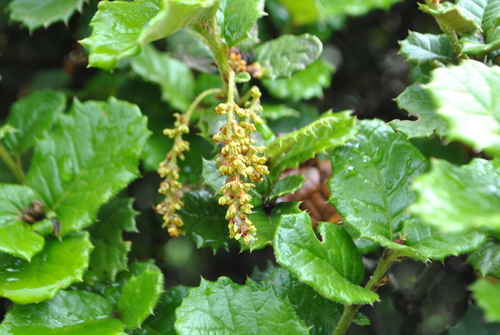
iNaturalist· cc-by-nc
(c) Paul Gugger, some rights reserved (CC BY-NC)
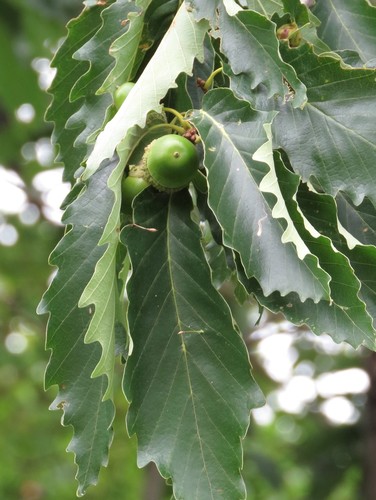
iNaturalist· cc-by-nc
(c) Andrew Hipp, some rights reserved (CC BY-NC)
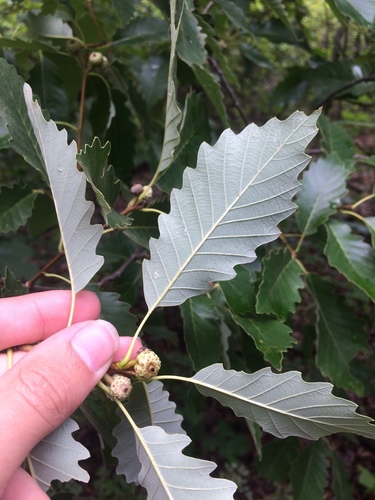
iNaturalist· cc-by-nc
(c) Andrew Hipp, some rights reserved (CC BY-NC)
Summary
A deciduous hybrid oak growing slowly to 15 meters tall by 8 meters wide, hardy to UK zone 3, not frost tender. Flowers in May with seeds ripening in October. Monoecious and wind-pollinated. Grows in loamy and clay soils including heavy clay, across mildly acidic to alkaline pH ranges. Adapts to semi-shade or full sun, tolerates both dry and moist soil with drought resistance, withstands strong winds and atmospheric pollution but not coastal exposure.
Description
A deciduous hybrid oak growing slowly to 15 meters tall by 8 meters wide, hardy to UK zone 3, not frost tender. Flowers in May with seeds ripening in October. Monoecious and wind-pollinated. Grows in loamy and clay soils including heavy clay, across mildly acidic to alkaline pH ranges. Adapts to semi-shade or full sun, tolerates both dry and moist soil with drought resistance, withstands strong winds and atmospheric pollution but not coastal exposure.
Edible Uses
The large seeds can be eaten raw or cooked and are sweet enough to eat out of hand. They can also be ground into a powder and used in making bread and dumplings, or as a thickener in soups. If the seed tastes bitter, this indicates the presence of tannins, which can be leached out by washing the dried, ground seed thoroughly in water, though many minerals will also be lost in the process. Traditionally, seeds were buried in boggy ground overwinter and dug up in spring, when most of their astringency would have disappeared. The roasted seed makes a coffee substitute.
Medicinal Uses
Any galls produced on the tree are strongly astringent and can be used in treating haemorrhages, chronic diarrhoea, and dysentery.
Distribution
It is a temperate plant.
Where It Grows
NORTHERN AMERICA: United States (Indiana, Michigan, Ohio, Vermont, Illinois, Iowa, Minnesota (southeast), Missouri, Wisconsin, Kentucky)
Cultivation
Prefers a good deep fertile loam which can be on the stiff side. Lime tolerant. Succeeds in a hot dry position. Young plants tolerate reasonable levels of side shade. Tolerates moderate exposure, surviving well but being somewhat stunted. A vigorous, fast-growing hybrid species, some forms are capable of reaching 1.5 metres tall in 2 years.]. Established plants are drought resistant and tolerant of atmospheric pollution. This species is occasionally cultivated for its edible seed, there are some named varieties. It is a hybrid of garden origin, Q. alba x Q. macrocarpa. Both of its parents prefer warmer summers than are usually experienced in Britain, often growing poorly in this country and failing to properly ripen their wood, resulting in frost damage overwinter. The tree flowers on new growth produced in spring, the seed ripening in its first year. Hybridizes freely with other members of the genus. Plants in this genus are notably resistant to honey fungus.
Propagation
Seed loses viability quickly if allowed to dry out. It can be stored moist and cool overwinter but is best sown as soon as it is ripe in an outdoor seed bed with protection from mice and squirrels. Small quantities can be sown in deep pots in a cold frame. Plants develop a deep taproot and should be moved to their permanent positions as soon as possible — seed sown in situ produces the best trees. Trees left in a nursery bed for more than 2 growing seasons transplant very badly. This species is a hybrid and may not breed true from seed.
Other Uses
A mulch of the leaves repels slugs and grubs, though fresh leaves should not be used as they can inhibit plant growth. Oak galls, sometimes produced in large numbers on the tree, are caused by insect larvae that live and feed inside the tissue. Once the insect pupates and leaves, the empty gall provides a rich source of tannin that can also be used as a dye. The wood is hard, heavy, strong, tough, very durable, and close-grained.
Notes
There are about 600 Quercus species.
Synonyms
References (2)
- Ill. Handb. Laubholzk. 1:201. 1904
- Plants for a Future database, The Field, Penpol, Lostwithiel, Cornwall, PL22 0NG, UK. http://www.scs.leeds.ac.uk/pfaf/