Quercus virginiana
Mill.
Live Oak
iNaturalist· cc-by-nc
(c) Dusty, some rights reserved (CC BY-NC), uploaded by Dusty
iNaturalist· cc-by-nc
(c) rlar, some rights reserved (CC BY-NC)
iNaturalist· cc-by-nc
(c) Chris Kneupper, some rights reserved (CC BY-NC)
Summary
Source: WikipediaQuercus virginiana, also known as the southern live oak, is an evergreen oak tree endemic to the Southeastern United States. Though many other species are loosely called live oak, the southern live oak is particularly iconic of the Old South. Many very large and old specimens of live oak can be found today in the Deep South region of the United States.
Description
A tree which keeps its leaves through the year. They loose some leaves in colder regions. It grows to 12-15 m tall. It spread out widely. The branches are large and spread widely almost reaching the ground. The leaves are narrow and oval. They are 5-13 cm long. The edge is smooth. They are dark green and shiny above and whitish underneath. The acorns are narrowly oval and 2.5 cm long. They are enclosed for almost half their length in reddish-brown cups. The nuts are sweet and edible.
Edible Uses
The seed can be eaten raw or cooked and is typically produced in clusters of 3–5, measuring about 25mm long and 10mm wide (though one source gives the length as around 12mm). It is low in tannin and has a sweet flavour. The dried seed can be ground into a powder and used as a thickener in stews or mixed with cereals to make bread. Seeds that do contain bitter tannins can be leached by washing thoroughly in running water, though this also removes many minerals. Whole seeds may take several days or even weeks to leach — a traditional method was to wrap them in a cloth bag and place them in a running stream. Ground powder leaches more quickly, and a simple taste test reveals when enough tannin has been removed. Another traditional preparation involved burying seeds in boggy ground overwinter; the germinating seeds dug up in spring would have lost most of their astringency. An edible oil extracted from the seed is used for cooking, and the roasted seed serves as a coffee substitute.
Traditional Uses
The acorns are eaten. They are ground into a fine flour, sun dried and made into porridge. They can be crushed and used for bread. The nuts are used for oil.
Medicinal Uses
The bark is astringent, and a decoction has been used to treat dysentery. A decoction of wood chips or bark applied externally acts as an astringent analgesic for aches, pains, sores, and haemorrhoids. Any galls produced on the tree are strongly astringent and can be used in treating haemorrhages, chronic diarrhoea, and dysentery.
Distribution
It is a temperate plant. It can grow on most soils. It can tolerate frost. It can resist salt spray. It suits hardiness zones 7-11.
Where It Grows
Australia, North America, USA,
Cultivation
Prefers a good deep fertile loam which can be on the stiff side. Young plants tolerate reasonable levels of side shade. Trees can stand considerable salinity, often growing close to the sea. They tolerate moderate exposure, surviving well but being somewhat stunted. This species seems to be susceptible to soil types, producing dwarf forms and diverse leaf forms under certain conditions. Prefers warmer summers than are usually experienced in Britain, trees often grow poorly in this country and fail to properly ripen their wood resulting in frost damage overwinter. The tree flowers on new growth produced in spring, the seed ripening in its first year. Abundant crops are usually produced in the wild. Intolerant of root disturbance, trees should be planted in their permanent positions whilst young. Hybridizes freely with other members of the genus. Plants in this genus are notably resistant to honey fungus.
Propagation
Seed loses viability quickly if allowed to dry out. It can be stored moist and cool overwinter but is best sown as soon as it is ripe in an outdoor seed bed with protection from mice and squirrels. Small quantities can be sown in deep pots in a cold frame. Plants develop a deep taproot and should be moved to their permanent positions as soon as possible — seed sown in situ produces the best trees. Trees left in a nursery bed for more than 2 growing seasons transplant very badly.
Other Uses
A mulch of the leaves repels slugs and grubs, though fresh leaves should not be used as they can inhibit plant growth. Oak galls, sometimes produced in large numbers on the tree, are caused by insect larvae living inside and feeding on the tissue. Once the insect pupates and leaves, the empty gall provides a rich source of tannin that can also be used as a dye. The bark is a commercial source of tannin, and dyes of various colours can be obtained from it. The wood is very heavy, hard, strong, tough, and close-grained but difficult to work, weighing 59lb per cubic foot. It is used for making hubs, cogs, and in shipbuilding, and makes an excellent fuel.
Production
It grows quickly.
Notes
There are about 600 Quercus species.
Synonyms
References (17)
- Beckstrom-Sternberg, Stephen M., and James A. Duke. "The Foodplant Database." http://probe.nalusda.gov:8300/cgi-bin/browse/foodplantdb.(ACEDB version 4.0 - data version July 1994)
- Bodkin, F., 1991, Encyclopedia Botanica. Cornstalk publishing, p 865
- Cundall, P., (ed.), 2004, Gardening Australia: flora: the gardener's bible. ABC Books. p 1128
- Gard. dict. ed. 8: Quercus no. 16. 1768
- Glowinski, L., 1999, The Complete Book of Fruit Growing in Australia. Lothian. p 137
Show all 17 references Hide references
- Gouldstone, S., 1983, Growing your own Food-bearing Plants in Australia. Macmillan p 175
- Grandtner, M. M., 2008, World Dictionary of Trees. Wood and Forest Science Department. Laval University, Quebec, Qc Canada. (Internet database http://www.wdt.qc.ca)
- Hedrick, U.P., 1919, (Ed.), Sturtevant's edible plants of the world. p 547
- Hibbert, M., 2002, The Aussie Plant Finder 2002, Florilegium. p 244
- Kermath, B. M., et al, 2014, Food Plants in the Americas: A survey of the domesticated, cultivated and wild plants used for Human food in North, Central and South America and the Caribbean. On line draft. p 737
- Little, E.L., 1980, National Audubon Society Field Guide to North American Trees. Alfred A. Knopf. p 410
- Lord, E.E., & Willis, J.H., 1999, Shrubs and Trees for Australian gardens. Lothian. p 70
- Menninger, E.A., 1977, Edible Nuts of the World. Horticultural Books. Florida p 19
- Moerman, D. F., 2010, Native American Ethnobotany. Timber Press. p 466
- Plants for a Future database, The Field, Penpol, Lostwithiel, Cornwall, PL22 0NG, UK. http://www.scs.leeds.ac.uk/pfaf/
- Schuler, S., (Ed.), 1977, Simon & Schuster's Guide to Trees. Simon & Schuster. No. 157
- Wickens, G.E., 1995, Edible Nuts. FAO Non-wood forest products. FAO, Rome. p 130
More from Fagaceae
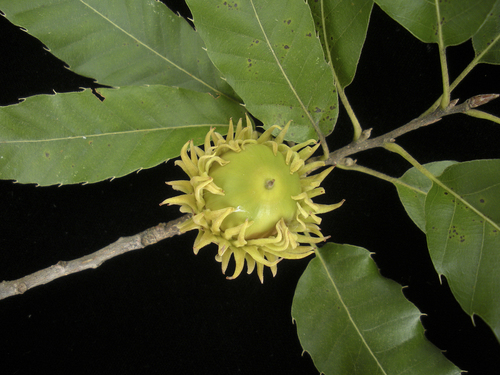
Quercus acutissima
Bristle-tipped oak, Sawthorn oak
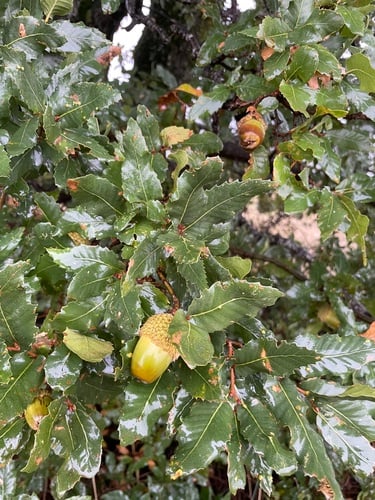
Quercus aegilops subsp. persica
Manna oak, Valonea oak, Camata, Camatina oak, Valonia oak
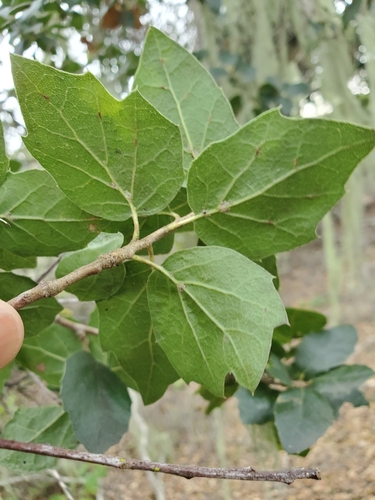
Quercus agrifolia
California Live Oak, Encina, Coast Live oak
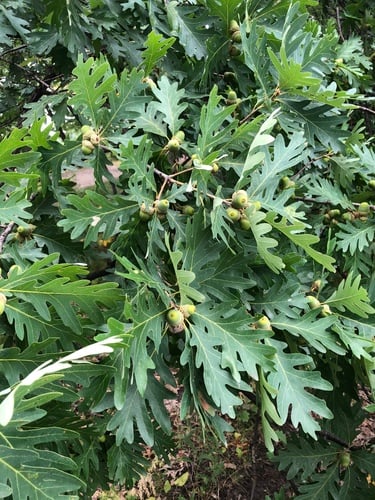
Quercus alba
White oak, Quebec oak, Stave oak
Quercus albocincta
Cusi
Quercus aliena
Oriental white oak, Hu li