Anogeissus latifolia
(Roxb. ex DC) Beddome
Axle wood, Button tree, Gum ghatti
gbif· cc0
Qarshi Industries Pvt Ltd
Description
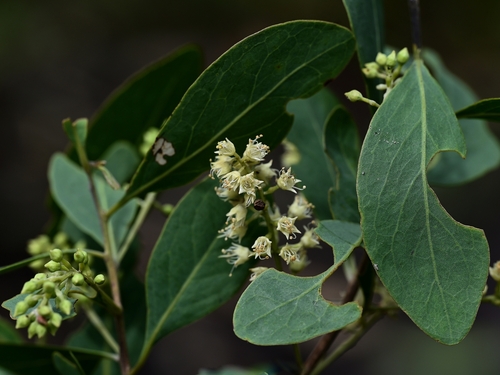
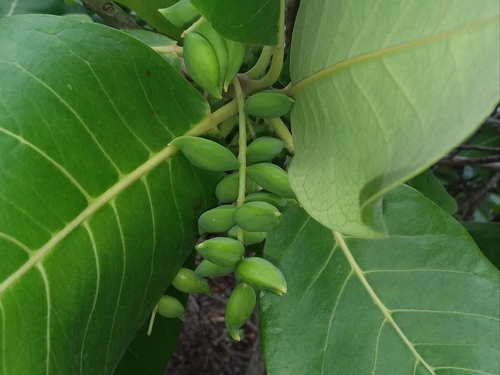
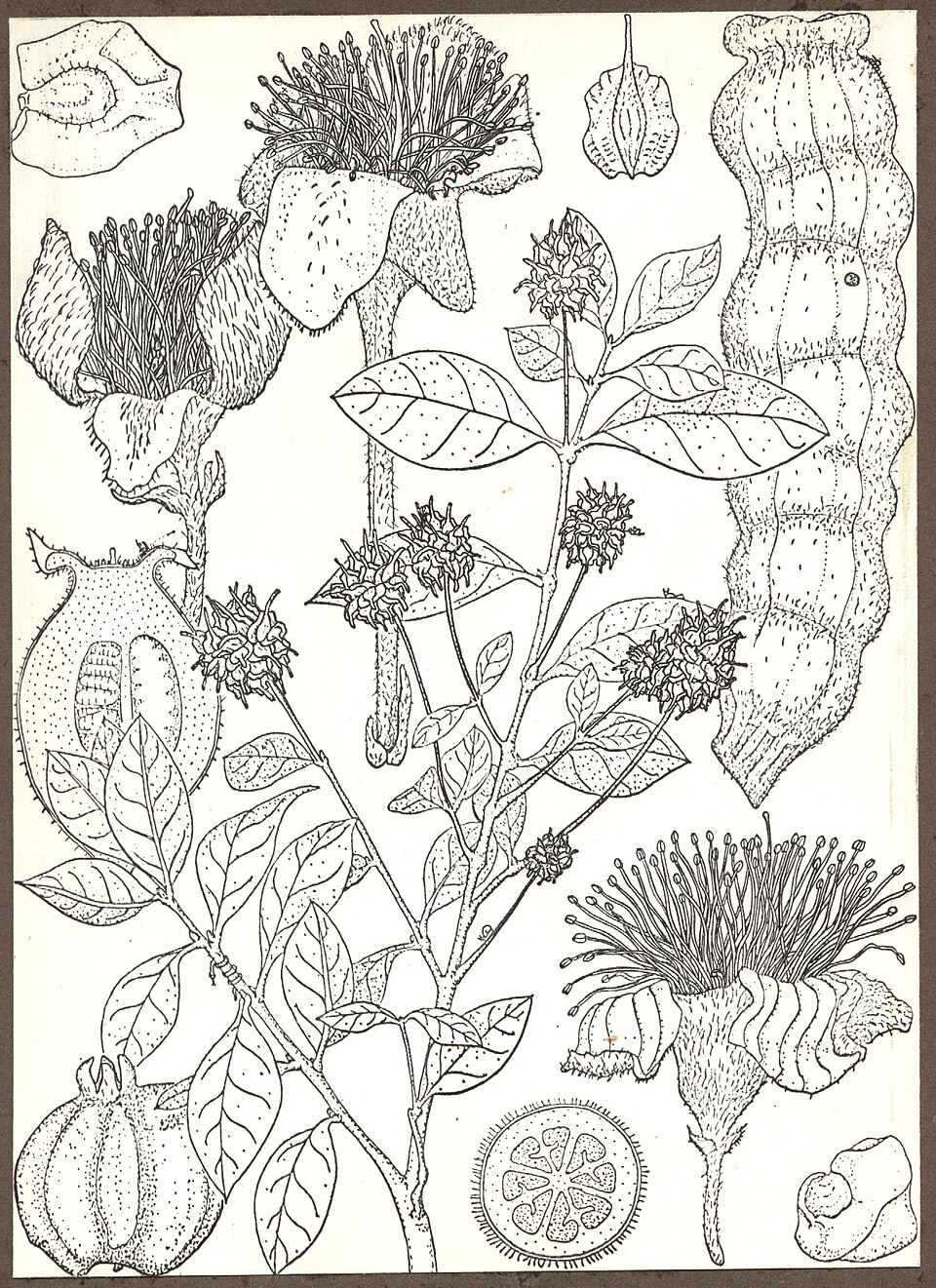
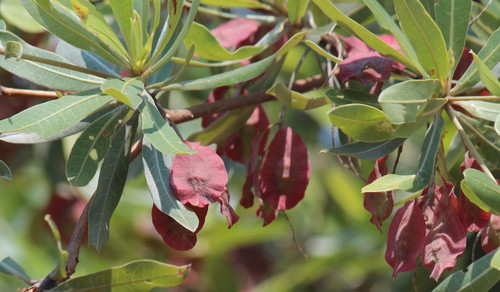
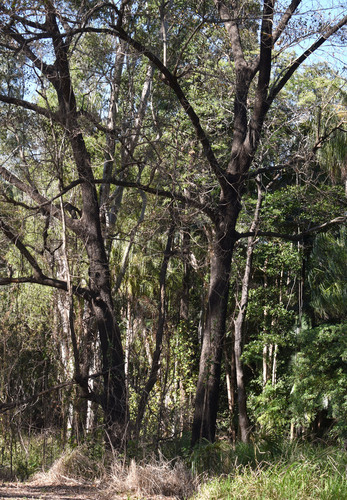
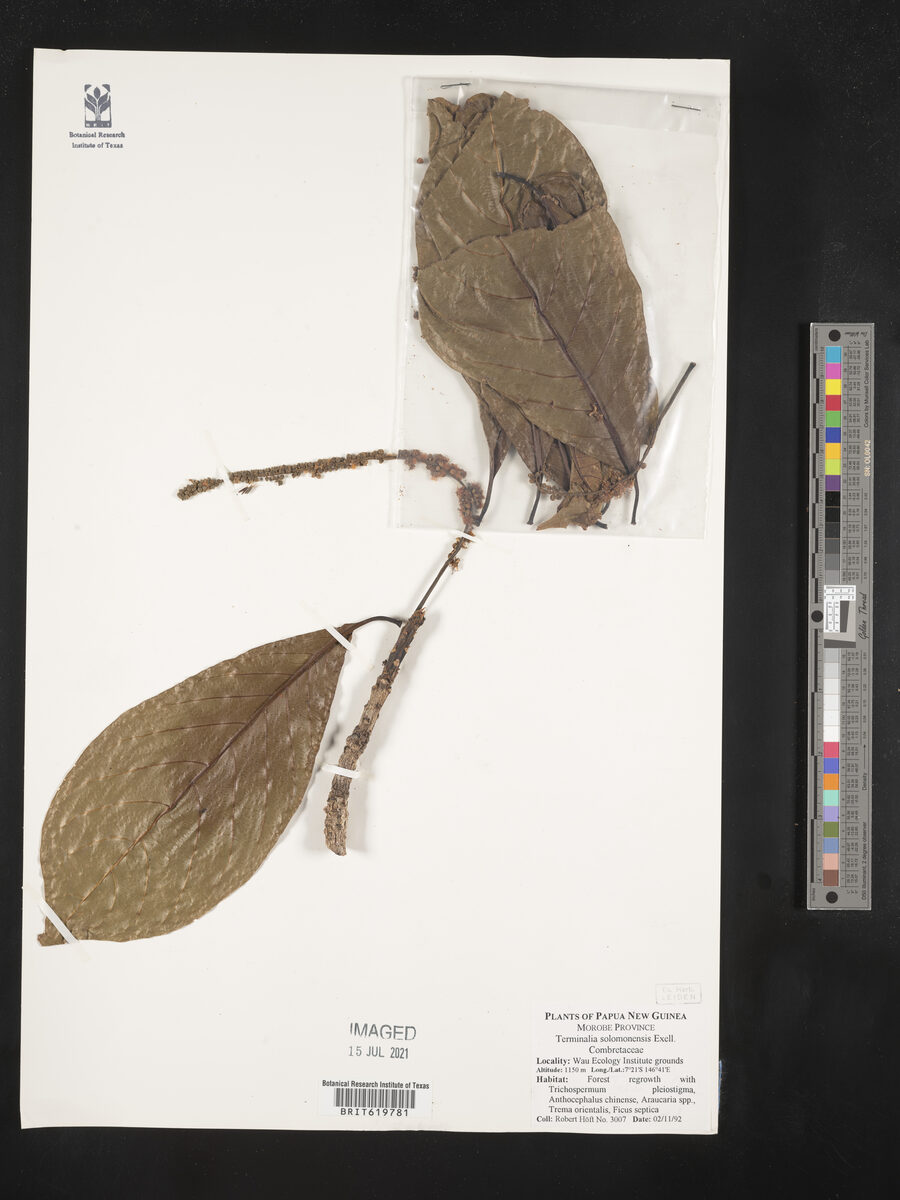
A deciduous tree. It grows to about 40 m high. The bark is smooth and greenish-white. It peels off in flakes. The leaves are alternate. The leaves have leaf stalks. The leaves are 3-12 cm long by 2-7 cm wide. They are oval or sword shaped and pale green. The flowers are in small round heads. They are green. The fruit is a dry stone fruit. It is compressed and has two wings.
Edible Uses
The gum is fried and powdered to eat with salt and capsicum, used in sweetmeats, and used in making ladoos and other Indian sweets. It also serves as an emulsifier in chocolate and other applications.
Traditional Uses
The fried gum is powdered and eaten with salt and capsicum. It is used in sweetmeats. It is also used as an emulsifier. It is also used in chocolate. It is used in making ladoos and Indian sweet.
Medicinal Uses
The plant (part not specified) is atringent and cooling. It is used in the treatment of diarrhoea, dysentery, ulcers, piles, urinary disorders and dysuria. The plant is used in treating snake bites and scorpion stings in India. The gum is used as a tonic after delivery. The plant contains a range of active compounds:- The leaves, bark and heartwood yield quinic and shikmik acids' The leaves contain gallotannin (90 - 95% of the total tannin content). The young leaves and shoots contain 50% tannins (dry weight basis). The bark contains 12 - 18% tannins. The heartwood contains gallic acid, ellagic acid, plus its derivatives, quercetin and myricetin. The gum is mainly the calcium salt of a complex, high molecular weight polysaccharic acid (ghattic acid). It can be used as a substitute for Gum arabic (Senegalia senegal).
Distribution
A tropical plant. It grows in Nepal up to about 1200 m altitude.
Where It Grows
Asia, Himalayas, India, Nepal, Pakistan, Sri Lanka,
Cultivation
Plants are grown from seed. The tree when bruised yields gum.
Propagation
Generally, seed viability is low but increases after very dry seasons. Germination rates can be increased by pre-soaking the seeds for 3 minutes in hot water. Fruits should be collected only when they are fully ripe as immature seeds fail to germinate. The ripe fruits are collected from the trees, dried in the sun and then stored. Seed storage in metal tins or polythene containers is the best. Shoot cuttings failed to root and callous irrespective of IBA concentrations and method of application.
Other Uses
Ghatty gum is an exudation obtained from the wood. Composed of yellowish-white tears, it is soluble in water, giving a very sticky mucilage. It is a good substitute for gum arabic and is used in calico printing, for making sweetmeats, in dye processes, and as a binding agent in pharmaceuticals. The gum has a great reputation in India among calicoprinters for use with certain dye-stuffs, such as turmeric The leaves and bark are used as a source of tannins. The leaves yield a black dye that is used commercially in India. The wood is grey, though the sapwood of young trees is yellow; the purplish heartwood is small but very hard. The wood is elastic, hard, very strong, heavy with a density of 760-940 kg/cu m. The wood is close-grained, the texture is fine to medium and even. It is not very durable. Shrinkage upon seasoning is moderate to high, and the wood is difficult to season as it is liable to warping, splitting and surface checking. It is possible to modify surface checking completely by soaking in solutions of 50% polyethylene glycol-600 for 1 day. The wood can be difficult to saw. The wood is much used for making tool and implement handles in India and is also suitable for making chairs. It is used for erecting fences on field bunds. The pulp, when mixed with the pulp of other woods, can make good packing and writing paper. It yields an excellent charcoal and a good firewood with an energy value of 17 600-20 500 kJ/kg. The tree is a good survivor on eroded land. It is used in river bank stabilization. The tree contributes to soil nutrient cycling, exhibiting high leaf-litter decomposition rates.
Production
In southern India the gum is collected March to September.
Synonyms
Also Known As
Chakwa, Dhamada, Dhaura, Dhawda, Dhauti hade, Dhawnra, Dhowda, Ghatti tree, Nunnera, Panchman, Pansi, Pasi, Yon
References (15)
- Ambasta S.P. (Ed.), 2000, The Useful Plants of India. CSIR India. p 42 (As Anogeissus latifolia Wall. ex Bedd.)
- Behera, K. K. et al, 2008, Wild Edible Plants of Mayurbhanj District, Orissa, India. J. Econ. Taxon. Bot. Vol. 32 (Suppl,) pp 305-314
- Bircher, A. G. & Bircher, W. H., 2000, Encyclopedia of Fruit Trees and Edible Flowering Plants in Egypt and the Subtropics. AUC Press. p 33
- Bole, P.V., & Yaghani, Y., 1985, Field Guide to the Common Trees of India. OUP p 37 (As Anogeissus latifolia Wall.)
- Brouk, B., 1975, Plants Consumed by Man. Academic Press, London. p 261
Show all 15 references Hide references
- Chandrakumar, P., et al, 2015, Ethnobotanical studies of wild edible plants of Gond, Halba and Kawar tribes of Salekasa Taluka, Gondia District, Maharashtra State, India. International Research Journal of Pharmacy 6(8)
- Facciola, S., 1998, Cornucopia 2: a Source Book of Edible Plants. Kampong Publications, p 80
- A. Guillemin et al., Fl. Seneg. tent. 1:280. 1832 (ex Beddome, Fl. sylv. S.India t. 16. 1869)
- Jadhav, R., et al, 2015, Forest Foods of Northern Western Ghats: Mode of Consumption, Nutrition and Availability. Asian Agri-History Vol. 19, No. 4: 293-317
- Kiran, K. C., et al, 2019, Diversity and Seasonal Availability of Potential Wild Edible Plants from Vidarbha Region of Maharashtra State, India. Int.J.Curr.Microbiol.App.Sci (2019) 8(2): 1434-1446
- Manandhar, N.P., 2002, Plants and People of Nepal. Timber Press. Portland, Oregon. p 92
- Patil, M. V. & Patil, D. A., 2000, Some More Wild Edible Plants of Nasik District (Maharashtra). Ancient Science of Life Vol. X1X (3&4): 102-104
- Reddy, B. M., 2012, Wild edible plants of Chandrapur district, Maharashtra, India. Indian Journal of Natural Products and Resources. 3(1) pp 110-117
- Toppo, P. et al, 2016, Wild edible plants of Dhamtari district of Chhattisgarh, India. Van Sangyan Vol. 3, No. 4
- Uphof,