Conocarpus erectus
L.
Buttonwood
iNaturalist· cc-by-nc
(c) Clifton Albrecht, some rights reserved (CC BY-NC), uploaded by Clifton Albrecht
iNaturalist· cc-by-nc
(c) Stephen B. Brown, some rights reserved (CC BY-NC), uploaded by Stephen B. Brown
iNaturalist· cc-by-sa
(c) Douglas Goldman, some rights reserved (CC BY-SA), uploaded by Douglas Goldman
Summary
Source: WikipediaConocarpus erectus, commonly called buttonwood or button mangrove, is a hardy species of mangrove shrub in the family Combretaceae.
Description
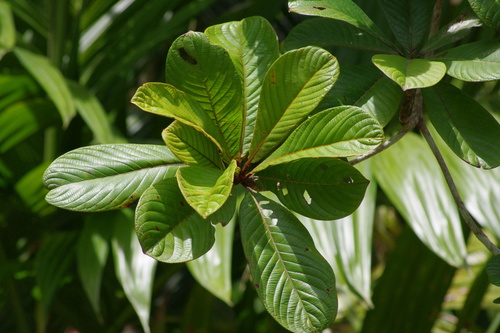
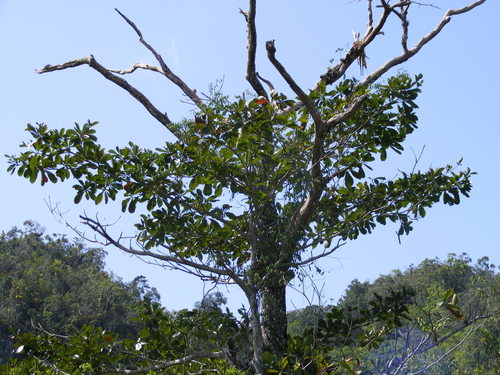
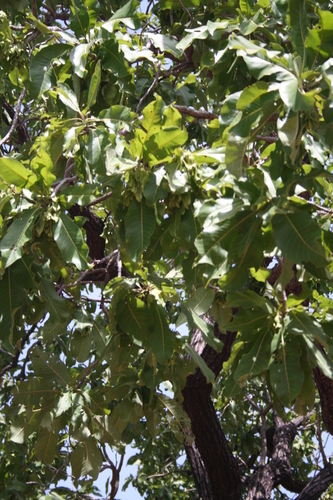
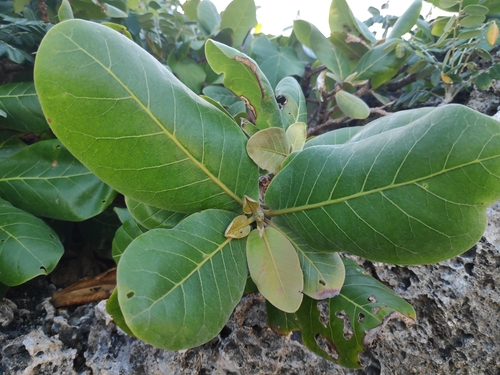
A shrub or tree. It is often 1-4 m tall but can grow 20 m tall. The trunk can be 1 m across. The bark is thick and has broad plates. The leaves are simple and arranged alternately. The leaves are narrowly oval. They are 2-7 cm long by 1-3 cm wide. The flowers are small and green. The fruit are clusters of small winged seeds. They are like buttons. The seeds float.
Edible Uses
The tree is used as an ornamental plant and in bonsai. The variety sericeus, with silvery leaves, is especially prized for landscaping. It is an important host plant for epiphytes. As a result of ornamental planting, it has become naturalized in Hawaii. It has been used extensively in landscaping in Kuwait and became the most abundant tree/shrub. The wood is sometimes used in cabinets; it is difficult to work but takes a smooth finish. It is also used as firewood, and is reported to be good for smoking meat and fish, as it burns very hot and slowly; it also makes high quality charcoal. The bark is high in tannin, for which it has been harvested commercially.
Medicinal Uses
The bark contains tannins and has medicinal properties. Probably as an astringent.
Distribution
It is a tropical plant. It grows along the coast. It is resistant to salt spray. It grows in mangroves. It can grow up to 700 m above sea level. It needs to be in a sunny position.
Where It Grows
Africa, Angola, Anguilla, Aruba, Bahamas, Belize, Benin, Bermuda, Brazil, Cabinda, Cameroon, Cayman Islands, Central Africa, Central America, Colombia, Congo DR, Congo R, Costa Rica, Cuba, Dominican Republic, Ecuador, El Salvador, Gabon, French Guiana, Gambia, Ghana, Guatemala, Guianas, Guinea, Guinée, Guinea-Bissau, Guyana, Haiti, Hawaii, Honduras, Ivory Coast, Jamaica, Liberia, Mexico, Nicaragua, Nigeria, North America, Pacific, Panama, Peru, Puerto Rico, Sao Tome and Principe, Senegal, Sierra Leone, South America, St. Kitts and Nevis, Suriname, Trinidad-Tobago, USA, Venezuela, West Africa, West Indies,
Cultivation
Plants are grown from seed. It can be used for a hedge.
Propagation
Seed - best sown as soon as it is ripe in a sunny position in a nursery seedbed. Cuttings. Even large branches can root, especially if planted in wet soil. Layering.
Other Uses
The leaves and bark are a source of tannins that can also be used for dyeing purposes. The heartwood is yellow-brown to dark brown; the thin band of sapwood light brown to nearly white. The texture is fine; the grain very fine. The wood is very heavy; hard; very strong; tough; very durable, even in contact with the soil. It takes a good polish. It is susceptible to dry-wood termites. The wood is used for fence posts, crossties, turnery and boat building. The wood keeps almost indefinitely, and is highly prized as timber, being used for carpentry work, poles, rafters, boat curves and cabinet work. The wood makes a very good fuel, burning slowly. It also makes an excellent charcoal. Amenable to trimming, and easily propagated by cuttings of large wood, the plant can be grown as a hedge or screen. Because it can be grown from large cuttings, it has been planted as a living hedge in some water-retentive areas. Used in land reclamation schemes, especially on sandy and saline soils. It has become a particularly popular species in the United Arab Emirates, where it is being used to desalinate the desert and help to green it.
Synonyms
Also Known As
Ariata, Buttonbush, Button mangrove, Button-tree, False mangrove, Florida buttonwood
References (2)
- Grubben, G. J. H. and Denton, O. A. (eds), 2004, Plant Resources of Tropical Africa 2. Vegetables. PROTA, Wageningen, Netherlands. p 560
- Kew Plants of the World Online