Pyrus amygdaliformis
Vill.
Almond pear, Almond-leafed pear
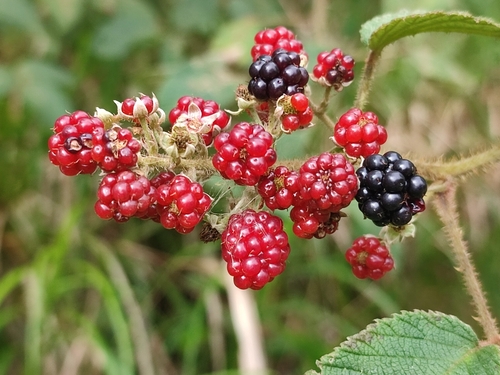
iNaturalist· cc-by-nc
(c) Σάββας Ζαφειρίου (Savvas Zafeiriou), some rights reserved (CC BY-NC)
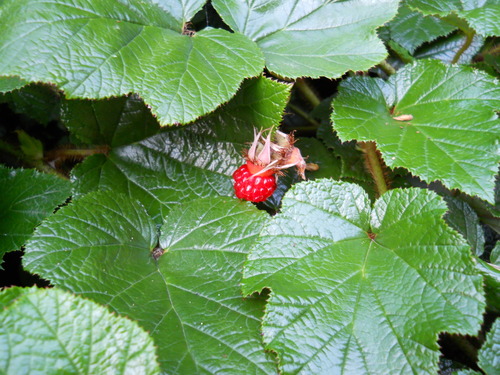
iNaturalist· cc-by-nc
(c) Tomasz Piotr Kozlowski, some rights reserved (CC BY-NC)
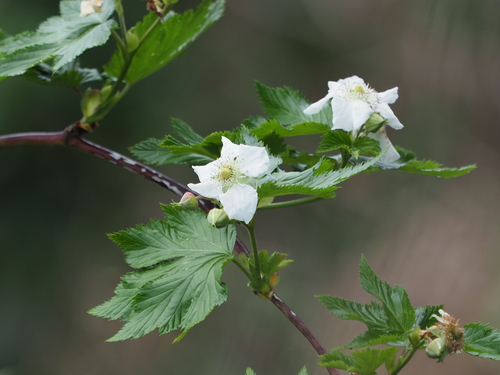
iNaturalist· cc-by-nc
(c) Tomasz Piotr Kozlowski, some rights reserved (CC BY-NC)
Summary
Source: WikipediaDeciduous tree reaching 10 m by 8 m, hardy to UK zone 6. Flowers in May with hermaphrodite blooms pollinated by insects. Tolerates light sandy, medium loamy, and heavy clay soils with well-drained preference, pH from mildly acidic to mildly alkaline, semi-shade or full sun, and both moist and drought conditions. Resists atmospheric pollution.
Description
A large shrub or small tree. It grows 6 m high and spreads 3.5 m wide. It can have spines on its branches. The leaves are narrow and often have shallow teeth along the edge. The leaves are silvery at first then turn green. The fruit are small and round. They are yellow-brown.
Edible Uses
The fruit, which grows up to 3cm in diameter, can be eaten raw or cooked.
Traditional Uses
The fruit are eaten raw. They are also used for drinks and jam. They are used in pickles.
This uses section is brief — help expand it
Medicinal Uses
None known.
Distribution
It is a temperate plant. It suits hardiness zones 5-9.
Where It Grows
Africa, Albania, Australia, Balkans, Bosnia, Bulgaria, Croatia, Europe, France, Greece, Italy, Macedonia, Mediterranean, North Africa, Portugal, Spain, Turkey, Türkiye, Yugoslavia,
Cultivation
Prefers a good well-drained loam in full sun. Grows well in heavy clay soils. Tolerates light shade but does not fruit so well in such a position. Tolerates atmospheric pollution, excessive moisture and a range of soil types if they are moderately fertile. Established plants are drought tolerant. Plants are hardy to at least -15°c.
Propagation
Seed is best sown in a cold frame as soon as it is ripe in autumn, when it will usually germinate in mid to late winter. Stored seed requires 8–10 weeks of cold stratification at 1°C and should be sown as early in the year as possible. Temperatures above 15–20°C can induce secondary dormancy. Prick seedlings into individual pots when large enough and grow on in light shade in a cold frame or greenhouse for their first year, then plant out in late spring or early summer of the following year.
Other Uses
None known.
Other Information
The fruit are normally small and hard and not really edible.
Synonyms
Also Known As
Cogur armudu, Deli armut, Divlje jabuka, Divlja kruska, Kruska trnovaca, Pirastru, Trnovaca, Yaban armudu
References (18)
- Balut, G., 2016, Medicinal and wild food plants of Marmara Island (Balikesir - Turkey). Acta Societatis Botanicorum Poloniae 85 (2): 3501
- Blamey, M and Grey-Wilson, C., 2005, Wild flowers of the Mediterranean. A & C Black London. p 77
- Cat. jard. pl. Strasbourg 323. 1807
- Cundall, P., (ed.), 2004, Gardening Australia: flora: the gardener's bible. ABC Books. p 1117
- Dogan, Y., et al, 2004, The Use of Wild Edible Plants in Western and Central Anatolia (Turkey). Economic Botany 58(4) pp. 684-690
Show all 18 references Hide references
- Dolina, K. & Luczaj, L., 2014, Wild food plants used on the Dubrovnik coast (south-eastern Croatia) Acta Soc Bot Pol 83(3):175–181
- Ertug, F., 2004, Wild Edible Plants of the Bodrum Area. (Mugla, Turkey). Turk. J. Bot. 28 (2004): 161-174
- Ertug, F, Yenen Bitkiler. Resimli Türkiye Florası -I- Flora of Turkey - Ethnobotany supplement
- Gurdal, B. & Kultur, S., 2014, The edible and miscellaneous useful plants in Marmaris (Southwest Turkey). İstanbul Ecz. Fak. Derg. / J. Fac. Pharm. Istanbul 44(1) 2014 pp.69-78
- Lentini, F. and Venza, F., 2007, Wild food plants of popular use in Sicily. J Ethnobiol Ethnomedicine. 3: 15
- Luczaj, L. et al, 2013, Wild food plants used in the villages of the Lake Vrana Nature Park (northern Dalmatia, Croatia). Acta Societatis Botanicorum Poloniae, 82(4): 275-281
- Özdemir, E. and Kültür, S., 2017, Wild Edible Plants of Savaştepe District (Balıkesir, Turkey), Marmara Pharm J 21/3: 578-589
- Pieroni, A. et al, 2014, Resilience at the border: traditional botanical knowledge among Macedonians and Albanian living in Gollobordo, Eastern Albania. Journal of Ethnobiology and Ethnomedicine. 10:31
- Plants for a Future database, The Field, Penpol, Lostwithiel, Cornwall, PL22 0NG, UK. http://www.scs.leeds.ac.uk/pfaf/
- Redzic, S. J., 2006, Wild Edible Plants and their Traditional Use in the Human Nutrition in Bosnia-Herzegovina. Ecology of Food and Nutrition, 45:189-232
- Sfikas, G., 1984, Trees and shrubs of Greece. Efstathiadis Group. Athens. p 62
- Signorini, M. A., et al, 2009, Plants and traditional knowledge: An ethnobotanical investigation on Monte Ortobene (Nuoro, Sardinia). Journal or Ethnobiology and Ethnomedicine, 5:6
- Zamani, A., et al, 2012, A synopsis of the genus Pyrus (Rosaceae) in Iran. Nordic Journal of Botany 30: 310–332