Peraphyllum ramosissimum
Nutt.
Squaw apple
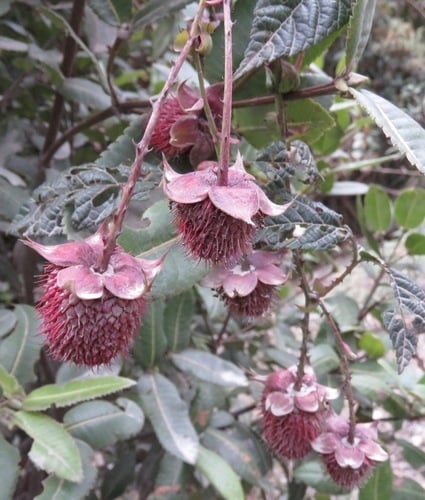
iNaturalist· cc-by
(c) Jim Morefield, some rights reserved (CC BY)
iNaturalist· cc-by-nc
(c) Zane Holditch, some rights reserved (CC BY-NC)
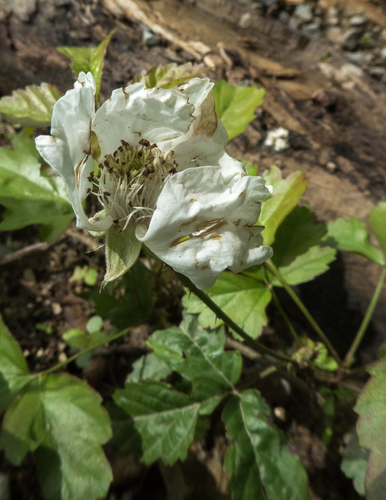
iNaturalist· cc-by-nc
(c) Zane Holditch, some rights reserved (CC BY-NC)
Summary
Source: WikipediaA deciduous shrub growing to 1.8 m in height. Hardy to UK zone 5. Flowers from April to May. Hermaphroditic and insect-pollinated. Adapts to light sandy, medium loamy, and heavy clay soils that are well-drained, with mildly acid to neutral pH. Requires full sun and cannot tolerate shade. Tolerates both dry and moist soil conditions, with good drought resistance. Fruit production is rare in Britain.
Description
A deciduous shrub growing to 1.8 m in height. Hardy to UK zone 5. Flowers from April to May. Hermaphroditic and insect-pollinated. Adapts to light sandy, medium loamy, and heavy clay soils that are well-drained, with mildly acid to neutral pH. Requires full sun and cannot tolerate shade. Tolerates both dry and moist soil conditions, with good drought resistance. Fruit production is rare in Britain.
Edible Uses
The fruit can be eaten raw or cooked. Unripe fruits are sour, and as they ripen they become slightly bitter with a sweetish flavour that still carries a bitter aftertaste. Fruits that have fully ripened and dried on the plant are the sweetest and most desirable. Ripe fruits can also be made into jellies or prepared like spiced crab apples. Fruits are rarely borne in Britain.
Traditional Uses
The fruit are eaten. They are sour when unripe but those that dry on the plant are the sweetest. The fruit are used for jelly or prepared like spiced crab apple.
Medicinal Uses
None known
Distribution
It is a temperate plant.
Where It Grows
Britain, Europe, North America, USA,
Cultivation
Requires a good well-drained neutral or lime-free loam and the maximum possible sunshine in a sheltered position. Does well in hot dry summers. Closely related to the Amelanchier species.
Propagation
No specific information is available for this species, but sowing seed in a cold frame as soon as it is ripe is recommended, or as soon as stored seed is received. Stored seed will likely need a period of cold stratification. Prick out seedlings into individual pots when large enough to handle and grow on in a greenhouse or cold frame through their first winter, then plant out in late spring. Layering in spring is another option and takes 12 months.
Other Uses
None known
References (4)
- Facciola, S., 1998, Cornucopia 2: a Source Book of Edible Plants. Kampong Publications, p 200
- Kermath, B. M., et al, 2014, Food Plants in the Americas: A survey of the domesticated, cultivated and wild plants used for Human food in North, Central and South America and the Caribbean. On line draft. p 629
- Plants for a Future database, The Field, Penpol, Lostwithiel, Cornwall, PL22 0NG, UK. http://www.scs.leeds.ac.uk/pfaf/
- J. Torrey & A. Gray, Fl. N. Amer. 1:474. 1840