Padus virginiana
(L.) M. Roem.
Chokecherry, Eastern choke cherry
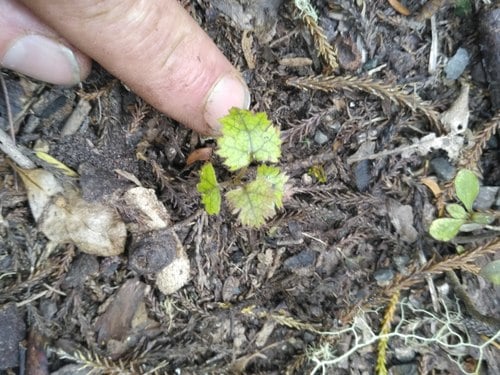
iNaturalist· cc-by-nc
(c) Yongxin Zheng, some rights reserved (CC BY-NC)
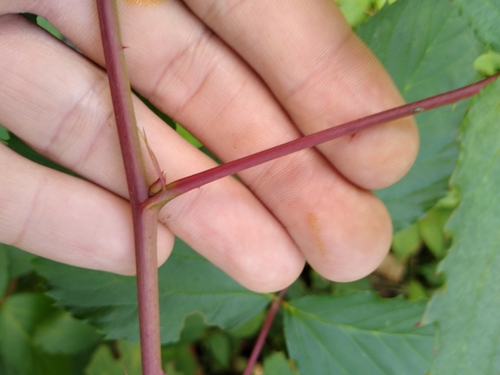
iNaturalist· cc-by-nc
(c) chelseymoto, some rights reserved (CC BY-NC)
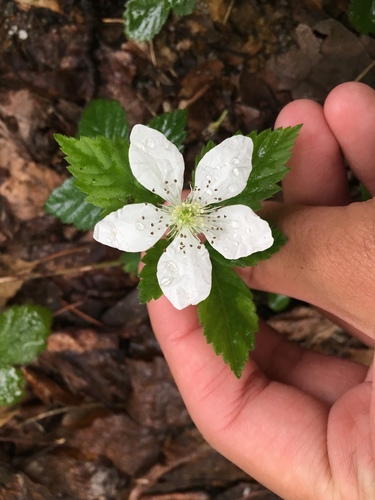
iNaturalist· cc-by-nc
(c) Kéllyanne, some rights reserved (CC BY-NC)
Description
A tall shrub or small tree. It can be 9 m high. The trunk can be 15 cm across. The leaves are broadly oval. They are 5-10 cm long. They taper to both ends. It is dark green above and paler underneath. The flowers are white. The appear in bottlebrush like clusters. These are 8-15 cm long. They are at the end of new short, leafy shoots. The fruit are in drooping clusters. The fruit can be yellow, red or purple. The fruit are edible. There are some named cultivated varieties.
Edible Uses
The fruit is used for jams, jellies, juice, syrup, and wine, and can be dried for storage. The green twigs are stripped of bark and inserted into roasting meat for flavoring. Seed kernels are added to pemmican. The bark and twigs are used as a tea substitute.
Traditional Uses
The fruit is used for jams or jellies, juice, syrup and wine. They are dried and stored for later use. The green twigs are stripped of their bark and inserted into roasting meat to add flavour. The seed kernels are added to pemmican. The bark and twigs are used as a substitute for tea.
Distribution
Temperate. It grows in rich, moist soil. It suits hardiness zones 2-9.
Where It Grows
Australia, Canada, North America, USA,
Cultivation
They can be cultivated from seed, cuttings, suckers or dividing the crown of the plant.
Notes
There are about 200 Prunus species.
Synonyms
References (22)
- Beckstrom-Sternberg, Stephen M., and James A. Duke. "The Foodplant Database." http://probe.nalusda.gov:8300/cgi-bin/browse/foodplantdb.(ACEDB version 4.0 - data version July 1994) (As Prunus virginiana)
- Bremness, L., 1994, Herbs. Collins Eyewitness Handbooks. Harper Collins. p 77 (As Prunus virginiana)
- Brickell, C. (Ed.), 1999, The Royal Horticultural Society A-Z Encyclopedia of Garden Plants. Convent Garden Books. p 840 (As Prunus virginiana)
- Cundall, P., (ed.), 2004, Gardening Australia: flora: the gardener's bible. ABC Books. p 1100 (As Prunus virginiana)
- Elias, T.S. & Dykeman P.A., 1990, Edible Wild Plants. A North American Field guide. Sterling, New York p 204 (As Prunus virginiana)
Show all 22 references Hide references
- Esperanca, M. J., 1988. Surviving in the wild. A glance at the wild plants and their uses. Vol. 1. p 225 (As Prunus virginiana)
- Facciola, S., 1998, Cornucopia 2: a Source Book of Edible Plants. Kampong Publications, p 205 (As Prunus virginiana)
- Farrar, J.L., 1995, Trees of the Northern United States and Canada. Iowa State University press/Ames p 382 (As Prunus virginiana)
- Flowerdew, B., 2000, Complete Fruit Book. Kyle Cathie Ltd., London. p 184 (As Prunus virginiana)
- Grandtner, M. M., 2008, World Dictionary of Trees. Wood and Forest Science Department. Laval University, Quebec, Qc Canada. (Internet database http://www.wdt.qc.ca) (As Prunus virginiana)
- Hedrick, U.P., 1919, (Ed.), Sturtevant's edible plants of the world. p 530 (As Prunus virginiana)
- http://en.hortipedia.com (As Prunus virginiana)
- Jackes, D. A., 2007, Edible Forest Gardens (As Prunus virginiana)
- Kiple, K.F. & Ornelas, K.C., (eds), 2000, The Cambridge World History of Food. CUP p 1751, 1756 (As Prunus virginiana)
- Little, E.L., 1980, National Audubon Society Field Guide to North American Trees. Alfred A. Knopf. p 508 (As Prunus virginiana)
- MacKinnon, A., et al, 2009, Edible & Medicinal Plants of Canada. Lone Pine. p 86 (As Prunus virginiana)
- Moerman, D. F., 2010, Native American Ethnobotany. Timber Press. p 443 (As Prunus virginiana)
- Plants for a Future, The Field, Penpol, Lostwithiel, Cornwall, PL22 0NG, UK. http://www.scs.leeds.ac.uk/pfaf/ (As Prunus virginiana)
- Scotter, G. W., & Flygare, H., 1993, Wildflowers of the Canadian Rockies. Hurtig. p 12 (As Prunus virginiana)
- Sp. pl. 1:473. 1753 (As Prunus virginiana)
- Turner, N., 1997, Food Plants of Interior First Peoples. Royal BC Museum Handbook p 147 (As Prunus virginiana)
- USDA plants. (As Prunus virginiana)