Pyracantha crenulata
(D.Don) M. Roem.
Nepal Firethorn, Nepalese white thorn
iNaturalist· cc-by-sa
(c) Tony Rebelo, some rights reserved (CC BY-SA), uploaded by Tony Rebelo
iNaturalist· cc-by
(c) Gianni Del Bufalo bygdb, some rights reserved (CC BY)
Summary
Source: WikipediaPyracantha crenulata, the Nepalese firethorn, Nepal firethorn or Himalayan firethorn, is a species of firethorn. The native range of this shrub species stretches from northern Pakistan to northwestern India and China.
Description
An evergreen shrub. It grows to about 3 m high. It has spines. The leaves have stalks. They are crowded on short side branches. The leaves are 1.5-5.5 cm long by 0.8-1.8 cm wide. They are oblong or oval. They narrow towards the base. They are rounded teeth. The flowers are on stalks. The flower petals are white. The fruit is round and red. They are 6 mm across.
Edible Uses
The leaves can be brewed as a tea-like beverage. The ripe fruit is sugar-rich and eaten fresh; each fruit measures 6–8mm in diameter.
Traditional Uses
The ripe fruit are eaten fresh. The leaves are used for tea.
This uses section is brief — help expand it
Medicinal Uses
The fruit is dried, powdered, and combined with yoghurt to treat bloody dysentery.
Distribution
It is a subtropical plant. In Nepal it grows between 1000-2500 m altitude. In grows on open hillsides among other shrubs. In Vietnam it grows at 1,600 m above sea level. In Garhwal Himalayas in India. It suits hardiness zones 7-10. In Sichuan and Yunnan.
Where It Grows
Africa, Asia, Australia, Bhutan, China, East Africa, Himalayas, India, Indochina, Indonesia, Myanmar, Nepal, SE Asia, Tibet, Vietnam, Zimbabwe,
Cultivation
Plants are grown from seed.
Propagation
Sow seed as soon as it is ripe in a cold frame, removing all fruit flesh first as it can inhibit germination. Stored seed needs 3 months of cold stratification; sow as early in the year as possible in a cold frame. Prick seedlings into individual pots when large enough and grow on in the cold frame through their first winter. Plant out in late spring or early summer after the last expected frosts. Cuttings of almost mature wood, 5–10cm with a heel, can be taken in mid-August and rooted in a cold frame, then potted up in October or the following spring.
Other Uses
This plant makes an excellent hedge. Its wood is hard, very close and even-grained, and is used for making walking sticks.
Other Information
The fruit are eaten in large quantities.
Notes
There are 7 Pyracantha species.
Synonyms
Also Known As
Broad-leaf firethorn, Chaido, Chinese firethorn, Cha-kou-tzu, Choota seb, Duri api cina, Duri api merah, Ghangaru, Ghangyar, Ghingaru, Himalayan firethorn, Kaatha gedi, Small round serrate firethorn, Xiyuanchi Huoji
References (26)
- Agarwal, R. & Chandra, V., 2019, Diversity of wild edible plants in the Mandal-Chopta forest, Uttarakhand. Journal of Medicinal Plants Studies 2019; 7(1): 89-92 (As Crataegus crenulata)
- Ambasta S.P. (Ed.), 2000, The Useful Plants of India. CSIR India. p 506
- Aryal, K. P., et al, 2018, Diversity and use of wild and non-cultivated edible plants in the Western Himalaya. Journal of Ethnobiology and Ethnomedicine (2018) 14:10
- Bajracharya, D., 1980, Nutritive Values of Nepalese Edible Wild Fruits. Z. Lebensm. Unters. Forsch. 171: 363-366
- Bodkin, F., 1991, Encyclopedia Botanica. Cornstalk publishing, p 857
Show all 26 references Hide references
- Cundall, P., (ed.), 2004, Gardening Australia: flora: the gardener's bible. ABC Books. p 1116
- Dangol, D. R. et al, 2017, Wild Edible Plants in Nepal. Proceedings of 2nd National Workshop on CUAOGR, 2017.
- Facciola, S., 1998, Cornucopia 2: a Source Book of Edible Plants. Kampong Publications, p 205
- Fam. nat. syn. monogr. 3:220. 1847
- GUPTA,
- Hibbert, M., 2002, The Aussie Plant Finder 2002, Florilegium. p 244
- Kala, C. P., 2007, Prioritization of cultivated and wild edibles by local people in the Uttaranchal hills of Indian Himalaya. Indian Journal of Traditional Knowledge. 6(1) pp 239-244
- Khakurel, D., et al, 2021, Foods from the wild: Local knowledge, use pattern and distribution in Western Nepal. PLOS ONE.
- Manandhar, N.P., 2002, Plants and People of Nepal. Timber Press. Portland, Oregon. p 386
- Masoodi, H. U. R. & Sundriyal, R. C., 2020, Richness of non-timber forest products in Himalayan communities—diversity, distribution, use pattern and conservation status. Journal of Ethnobiology and Ethnomedicine 16:56
- Mehta, P. S. et al, 2010, Native plant genetic resources and traditional foods of Uttarakhand Himalaya for sustainable food security and livelihood. Indian Journal or Natural products and Resources. Vol 1(1), March 2010 pp 89-96
- Negi, K.S., 1988, Some little known wild edible plants of U.P. Hills. J. Econ. Tax. Bot. Vol. 12 No. 2 pp 345-360
- Pham-Hoang Ho, 1999, An Illustrated Flora of Vietnam. Nha Xuat Ban Tre. p 770
- Plants for a Future database, The Field, Penpol, Lostwithiel, Cornwall, PL22 0NG, UK. http://www.scs.leeds.ac.uk/pfaf/
- Radha, B., et al, 2013, Wild Edible Plant Resources of the Lohba Range of Kedarnath Forest Division (KFD), Garhwal Himalaya, India. Int. Res J. Biological Sci. Vol. 2 (11), 65-73
- Shah, S. K., 2014, Dietary contribution of underutilized minor crops and indigenous plants collected from uncultivated lands and forests in Nepal. in Promotion of Underutilized Indigenous Food Resources for Food Security and Nutrition in Asia and Pacific. FAO. Bangkok p 64
- Sukarya, D. G., (Ed.) 2013, 3,500 Plant Species of the Botanic Gardens of Indonesia. LIPI p 695
- Tanaka,
- Upreti, K., et al, 2010, Diversity and Distribution of Wild Edible Fruit Plants of Uttarakhand. Bioversity Potentials of the Himalaya. p 182
- Valder, P., 1999, The Garden Plants of China. Florilegium. p 324
- www.efloras.org Flora of China Volume 9
More from Rosaceae
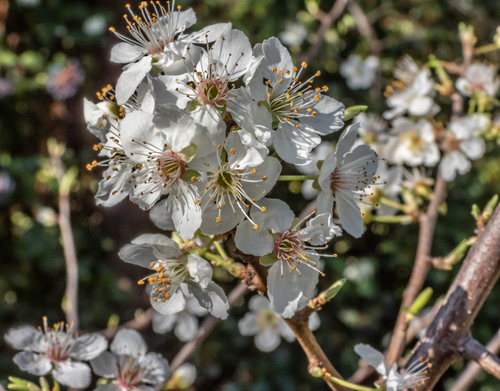
Prunus caspica
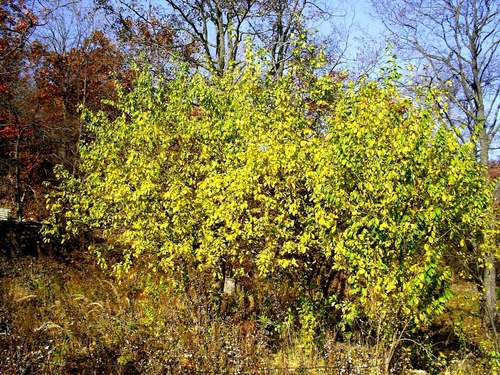
Prunus cerasifera
Myrobalan plum, Cherry plum, Flowering plum
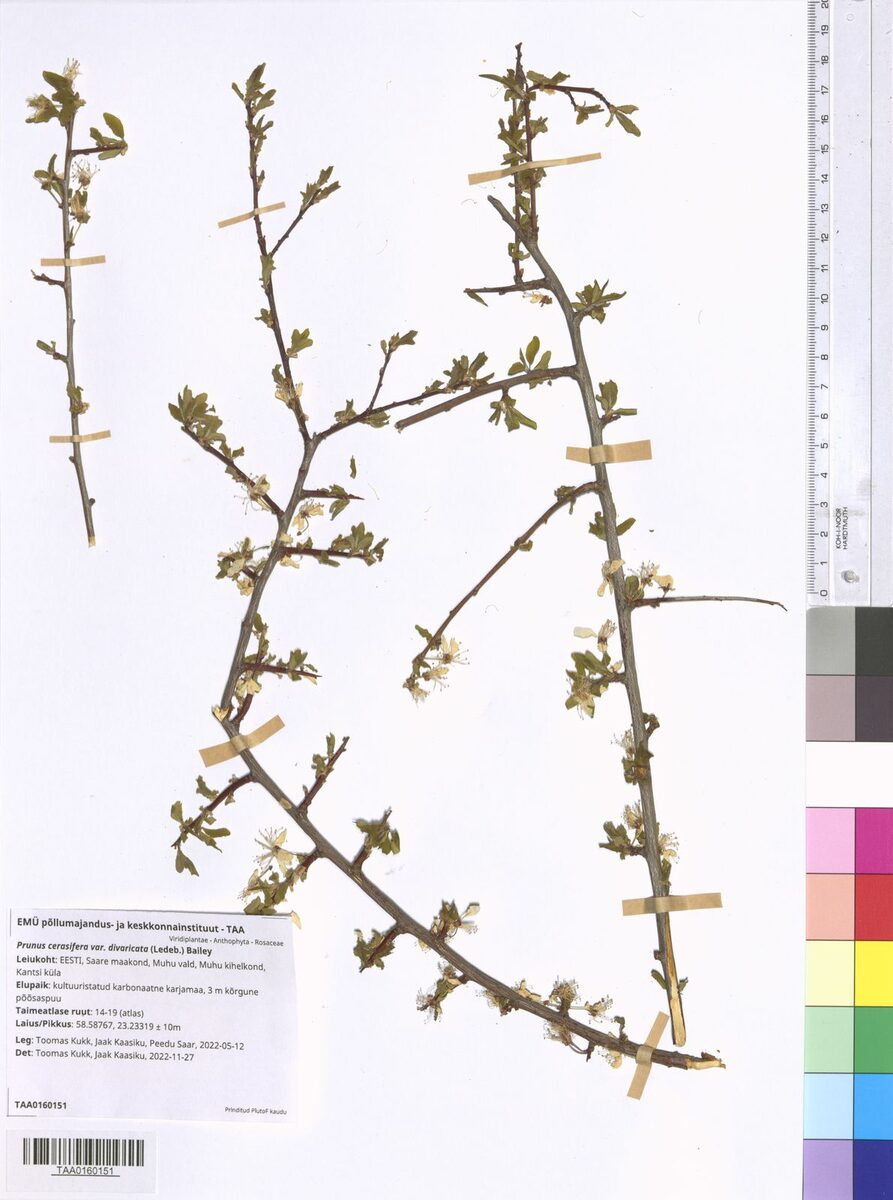
Prunus cerasifera divaricata - (Ledeb.)Schneid.
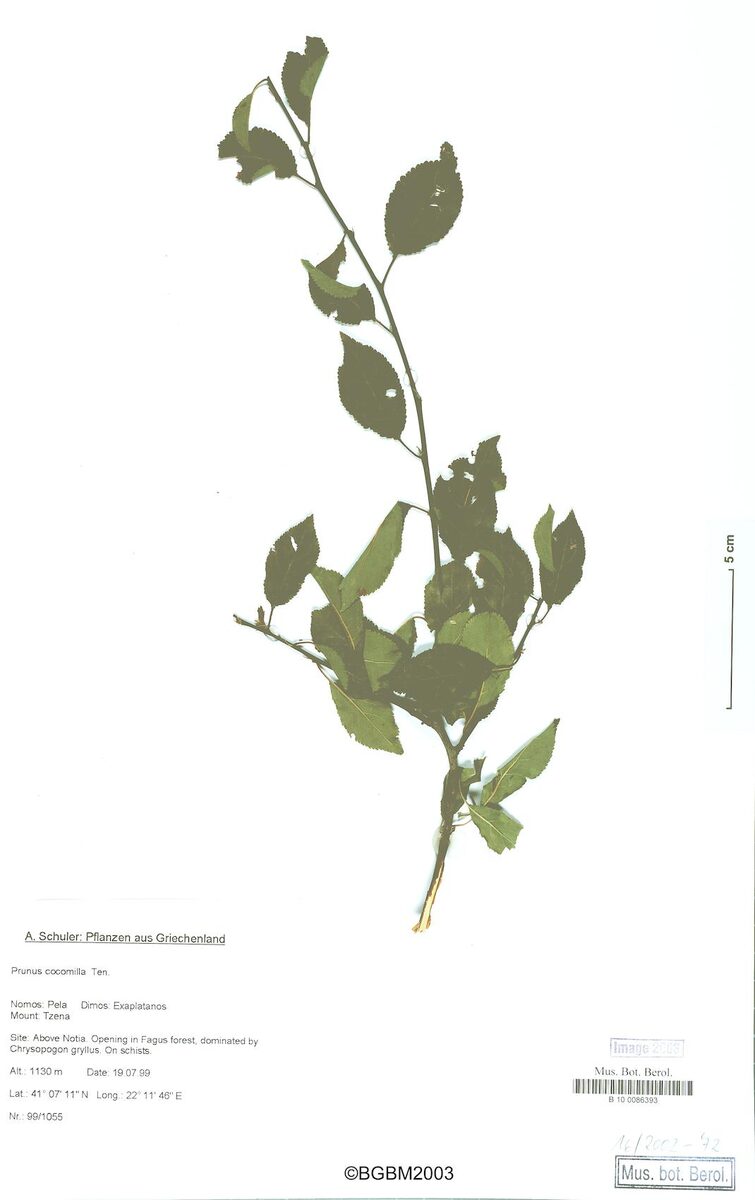
Prunus cerasifera subsp. divaricata
Macedonian plum, Wild cherry plum, Sour plum
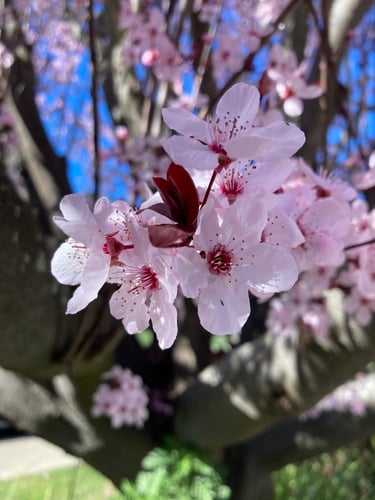
Prunus cerasifera x Prunus salicina
Methley plum
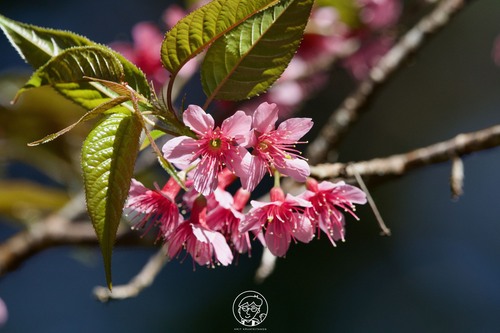
Prunus cerasoides
Himalaya Wild Cherry, Yunnan plum