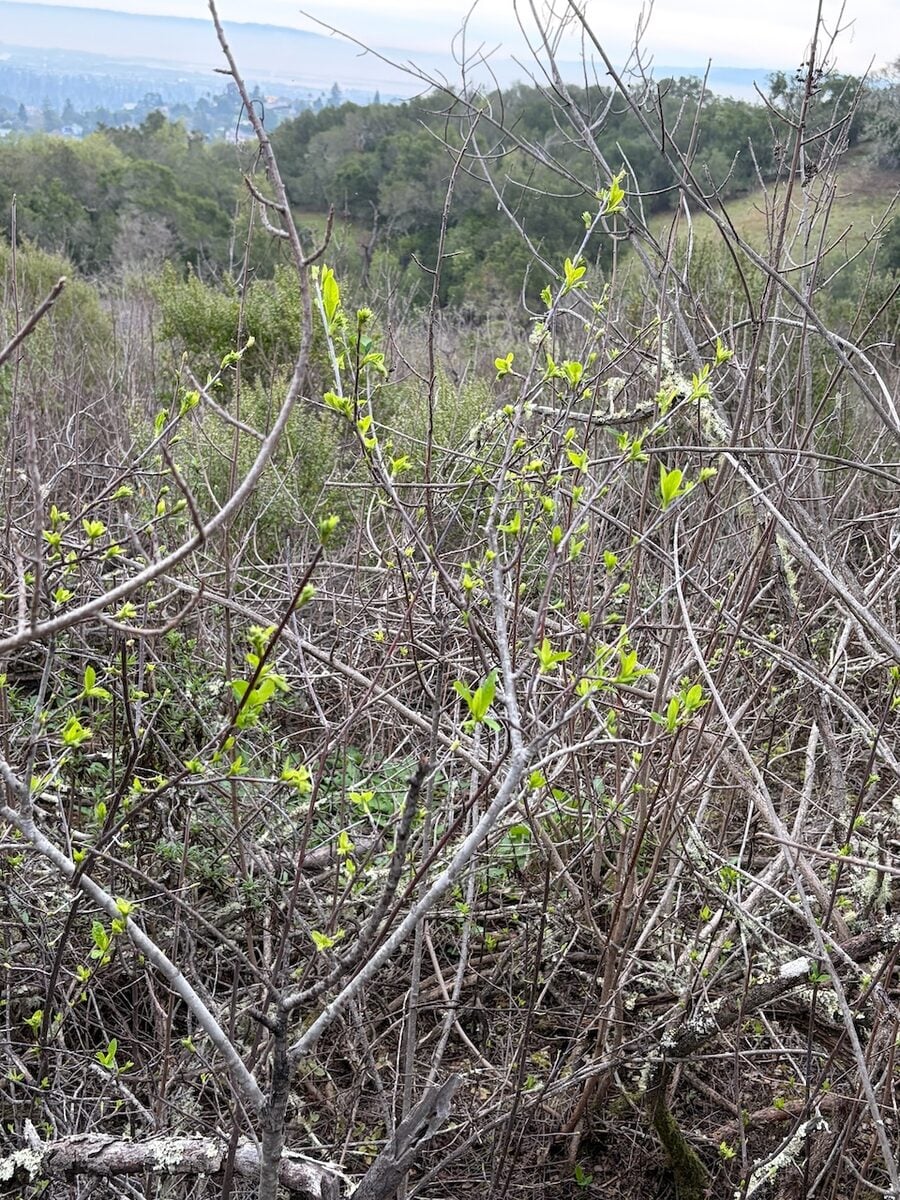
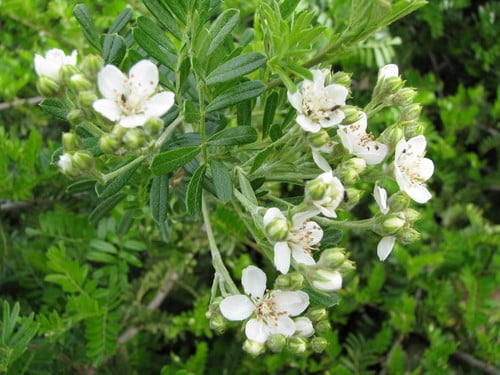
Prunus virginiana melanocarpa - (A.Nels.)Sarg.
(A.Nels.)Sarg.
Rocky Mountain Chokecherry
gbif· cc-by-nc
Arizona State University Vascular Plant Herbarium (ASU-Plants)
gbif· cc0
Public Domain
gbif· cc0
Public Domain
Description
Prunus virginiana melanocarpa is a deciduous Shrub growing to 3.6 m (11ft 10in). See above for USDA hardiness. It is hardy to UK zone 2. It is in flower in May, and the seeds ripen in August. The species is hermaphrodite (has both male and female organs) and is pollinated by Insects. Suitable for: light (sandy), medium (loamy) and heavy (clay) soils and prefers well-drained soil. Suitable pH: mildly acid, neutral and basic (mildly alkaline) soils. It cannot grow in the shade. It prefers moist soil.
Edible Uses
Tea. Fruit - raw or cooked. The fruit must be fully ripe otherwise it is very astringent. This sub-species is larger and less astringent than P. virginiana and some forms can be quite nice raw. A cherry-like flavour, it can also be dried and is then quite nice raw. The fruit can also be made into syrup, jams, jellies etc. The native N. American Indians ground the fruit, seeds and all, into a paste and dried them into cakes which were later soaked in water, mixed with flour and sugar and used as a sauce. The fruit contains a single large seed. Seed - raw or cooked. Do not eat the seed if it is too bitter - see the notes above on toxicity. The bark and twigs are a tea substitute.
Medicinal Uses
Astringent Pectoral Sedative Tonic. The bark is astringent, pectoral, sedative and tonic. The bark can be made into a cough syrup. A drink of the fruit juice has been used to stop bleeding following the delivery of a baby. Although no specific mention has been seen for this species, all members of the genus contain amygdalin and prunasin, substances which break down in water to form hydrocyanic acid (cyanide or prussic acid). In small amounts this exceedingly poisonous compound stimulates respiration, improves digestion and gives a sense of well-being.
Known Hazards
The seed can contain high concentrations of hydrogen cyanide, a poison that gives almonds their characteristic flavour. This toxin is readily detected by its bitter taste. Usually present in too small a quantity to do any harm, any very bitter seed or fruit should not be eaten. In small quantities, hydrogen cyanide has been shown to stimulate respiration and improve digestion, it is also claimed to be of benefit in the treatment of cancer. In excess, however, it can cause respiratory failure and even death.
Distribution
Western N. America - N. Dakota to British Columbia, south to California and New Mexico.
Where It Grows
Coming Soon
Cultivation
Requires a well-drained moisture retentive soil. Requires a sunny position. Thrives in a loamy soil, doing well on limestone. Prefers some chalk in the soil but apt to become chlorotic if too much is present. Occasionally cultivated for its edible fruit in N. America, and sold in local markets, there is at least one named variety. The fruit is not very freely borne in Britain. Most members of this genus are shallow-rooted and will produce suckers if the roots are damaged. Plants in this genus are notably susceptible to honey fungus.
Propagation
Seed - requires 2 - 3 months cold stratification and is best sown in a cold frame as soon as it is ripe. Sow stored seed in a cold frame as early in the year as possible. Protect the seed from mice etc. The seed can be rather slow, sometimes taking 18 months to germinate. Prick out the seedlings into individual pots when they are large enough to handle. Grow them on in a greenhouse or cold frame for their first winter and plant them out in late spring or early summer of the following year. Cuttings of half-ripe wood with a heel, July/August in a frame. Softwood cuttings from strongly growing plants in spring to early summer in a frame. Layering in spring. Division of suckers during the dormant season. They can be planted out direct into their permanent positions.
Other Uses
Dye Soil stabilization Wood. The plant forms thickets by means of suckers from its extensive root system and can be planted for erosion control. A green dye can be obtained from the leaves. A green dye is obtained from the inner bark in spring. A red-brown dye can be obtained from the inner bark. A dark grey to green dye can be obtained from the fruit. A dark red dye can be made from the fruit. A purplish-red dye is obtained from the fruit. Wood - close grained, moderately strong, hard, heavy, does not burn easily. Used for skewers etc.