Prunus virginiana
L.
American chokeberry
iNaturalist· cc-by-sa
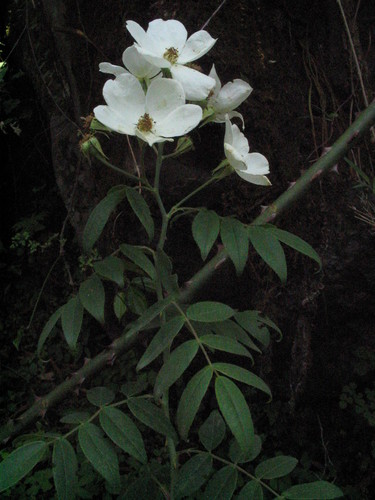
(c) Douglas Goldman, some rights reserved (CC BY-SA), uploaded by Douglas Goldman
iNaturalist· cc-by-nc-nd
(c) Dan Mullen, some rights reserved (CC BY-NC-ND)
iNaturalist· cc-by-nc
(c) Brett Whaley, some rights reserved (CC BY-NC)
Summary
Source: WikipediaPrunus virginiana, commonly called bitter-berry, chokecherry, Virginia bird cherry, and western chokecherry (also black chokecherry for P. virginiana var. demissa), is a species of bird cherry (Prunus subgenus Padus) native to North America.
Description
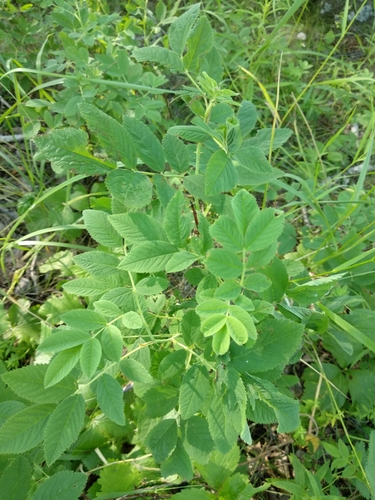
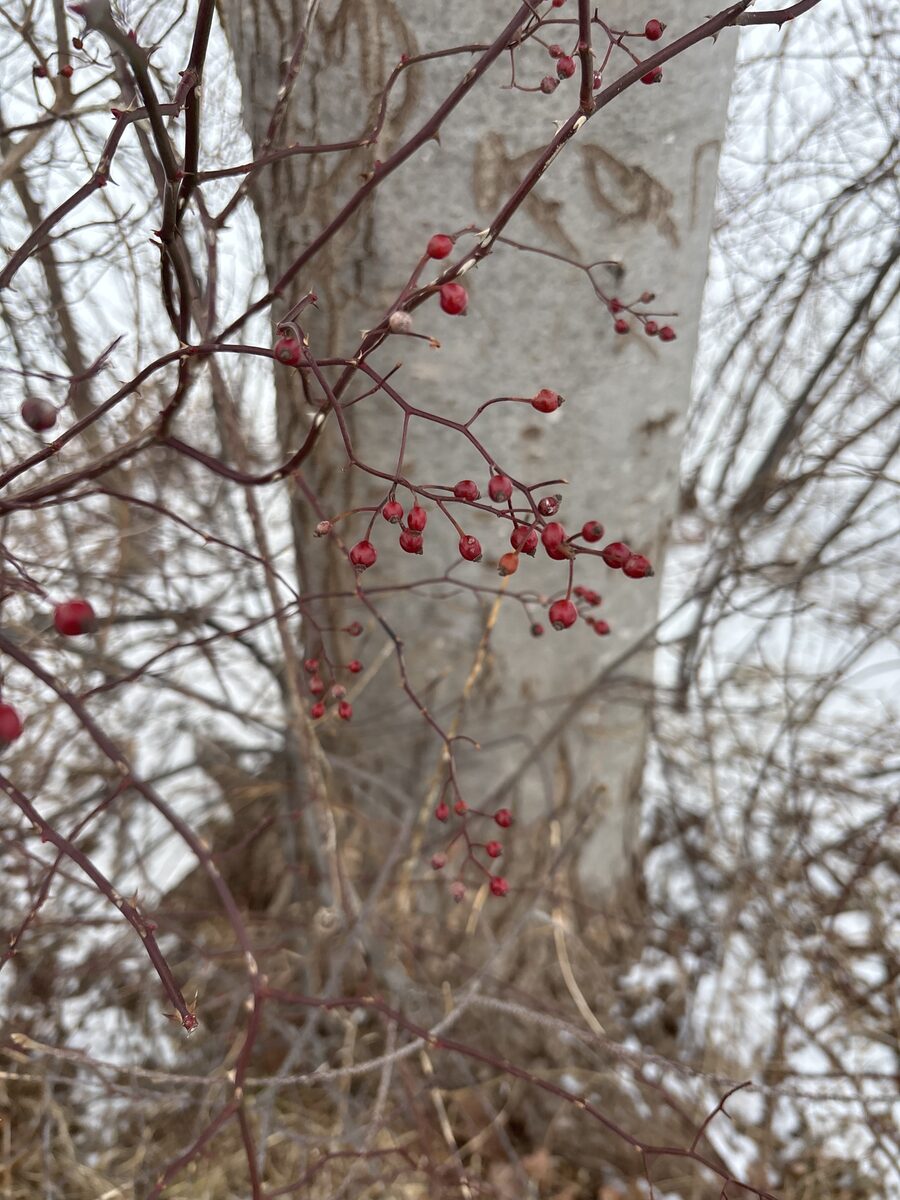
A small tree. It loses its leaves during the year. It grows 8 m tall. It usually has several stems. The leaves are 10 cm long and have teeth along the edge. The leaves have white hairs underneath. The fruit are in groups along a 10 cm long stalk. The fruit ripen to dark red or black.
Edible Uses
The fruit is up to 8mm in diameter, dark and juicy, and can be very harsh in flavour — it is normally best used in pies and jellies, though it becomes edible raw when fully ripe. Dried fruit is quite pleasant to eat as is. The seed can be eaten raw or cooked and is very nutritious, sometimes added to pemmican; avoid it if it tastes too bitter. The bark and twigs can be used as a tea substitute.
Traditional Uses
The fruit are eaten fresh or dried and used for jelly and preserves. They are bitter. The twigs are used to flavour food. The seed kernels are added to dried meat and fat (Pemmican). The bark and twigs are used for tea.
Medicinal Uses
Chokecherry was widely used medicinally by many Native North American peoples, particularly for its astringency and beneficial effects on the respiratory system, though it is little used in modern herbalism. The roots and bark are considered a blood tonic, astringent, pectoral, sedative, tonic and appetite stimulant. An infusion has been used to treat fevers, coughs and colds, while an infusion of root bark has been applied as a wash for burns, old sores and ulcers. The inner bark is used externally on wounds, and a decoction of it has been taken for laryngitis and stomach aches. Bark is sometimes used as a flavouring in cough syrups. Dried and powdered fruits have been used to stimulate appetite, treat diarrhoea and bloody bowel discharges. Unripe fruit has been used by children as a remedy for diarrhoea, and fruit juice has been used for sore throats. Like all members of the genus, this species contains amygdalin and prunasin, which break down in water to form hydrocyanic acid (prussic acid). In small amounts this highly toxic compound can stimulate respiration, aid digestion and produce a sense of well-being.
Known Hazards
The stone of the fruit is poisonous. Chokecherry, including the foliage, is toxic to moose, cattle, goats, deer, and other animals with segmented stomachs (rumens), especially after the leaves have wilted (such as after a frost or after branches have been broken); wilting releases cyanide and makes the plant sweet. About 4.5–9 kilograms (10–20 pounds) of foliage can be fatal. In horses, symptoms include heavy breathing, agitation, and weakness.
Distribution
It is a temperate plant.
Where It Grows
Canada, North America*, Slovenia, USA,
Cultivation
Requires a well-drained moisture retentive soil. Requires a sunny position. Thrives in a loamy soil, doing well on limestone. Prefers some chalk in the soil but apt to become chlorotic if too much is present. A fast-growing but short-lived tree in the wild, it has a tendency to form thickets of considerable extent from root sprouts. Sometimes cultivated for its edible fruit, and sold in local markets, there are a number of named varieties some of which have much less astringent fruit. The fruit is not very freely borne in Britain, though good crops are borne almost annually in the wild. Most members of this genus are shallow-rooted and will produce suckers if the roots are damaged. Plants in this genus are notably susceptible to honey fungus. A sprouting standard sending up shoots from the base. Harvesting typically occurs in late summer to early autumn, with specific timing varying by species. For instance, plums and peaches are usually harvested from July to September (Northern Hemisphere), while almonds are harvested in August to September (Northern Hemisphere). Prunus species usually flower in early spring, often between March and April (Northern Hemisphere), depending on the species and local climate. Growth rates vary among species, but generally, Prunus trees can grow moderately fast, often reaching full height in 3 to 5 years. However, they may take several years to bear fruit, depending on the species and growing conditions.
Propagation
Seed requires 2–3 months of cold stratification and is best sown in a cold frame as soon as it is ripe. Stored seed should be sown in a cold frame as early in the year as possible, with protection from mice. Germination can be slow, sometimes taking up to 18 months. Prick seedlings out into individual pots when large enough to handle, overwinter in a greenhouse or cold frame, and plant out in late spring or early summer the following year. Cuttings of half-ripe wood with a heel can be taken in July/August in a frame. Softwood cuttings from vigorous plants can be taken in spring to early summer in a frame. Layering can be done in spring. Suckers can be divided during the dormant season and planted directly into their permanent positions.
Other Uses
The plant spreads by suckering from an extensive root system and can be used for erosion control. It is a pioneer species of abandoned fields and cut-over lands. A green dye can be obtained from the leaves, and a separate green dye from the inner bark in spring. The fruit yields both a dark grey to green dye and a purplish-red dye. The wood is close-grained, moderately strong, hard and heavy, does not burn easily, and weighs around 36lb per cubic foot. Its small size and irregular form limit its uses, but it has been used for skewers and similar purposes.
Nutrition
| Part | Moisture | kJ | kcal | Protein | Vit A | Vit C | Iron | Zinc |
|---|---|---|---|---|---|---|---|---|
| Fruit | 60.7 | 678 | 162 | 3 | — | — | — | — |
Synonyms
Also Known As
Dooisabui, Pokopisa, Tooisabui, Virginska sliva
References (11)
- Couture, M. D., 1978, Recent and Contemporary Foraging Practices of the Harney Valley Paiute. Thesis, Portland State University
- Coutre, M. D., et al, 1986, Foraging Behaviour of a Contemporary Northern Great Basin Population. Journal of California and Great Bason Anthropology Vol. 8(2) pp 150-160
- Fisk, J. R. & Hoover, E., 2015, Wild Fruits of Minnesota. A Field Guide. University of Minnesota p 15
- http://www.botanic-gardens-ljubljana.com/en/plants
- Jordan, J., et al, 2006, Vascular Plants Utilized by the Plains Apache in Southwestern Oklahoma, Publications of the Oklahoma Biological Survey. 2nd Series. Volume 7: 24-33, 2006
Show all 11 references Hide references
- Kermath, B. M., et al, 2014, Food Plants in the Americas: A survey of the domesticated, cultivated and wild plants used for Human food in North, Central and South America and the Caribbean. On line draft. p 717
- Phillips, K. M., et al, 2014, Nutrient composition of selected traditional United States Northern Plains Native American plant foods. Journal of Food Composition and Analysis 34 (2014) 136–152 141
- Stubbs, R. D., 1966, An investigation of the Edible and Medicinal Plants used by the Flathead Indians. MA thesis University of Montana. p 65
- Toupal, R. S. & Hollenback, K., 2009, An Ethnobotany of Indiana Dunes National Lakeshore: Plant Uses of the Ojibwa People. Bureau of Applied Research in Anthropology. University of Arizona
- Turner, N., et al, 2011, "Up on the Mountain": Ethnobotanical Important of Montane Sites in Pacific Coastal North America. Journal of Ethnobiology 31(1): 4-43
- Wild Edible Plants of the Whitmire Wildflower Garden. Missouri Botanical Gardens.