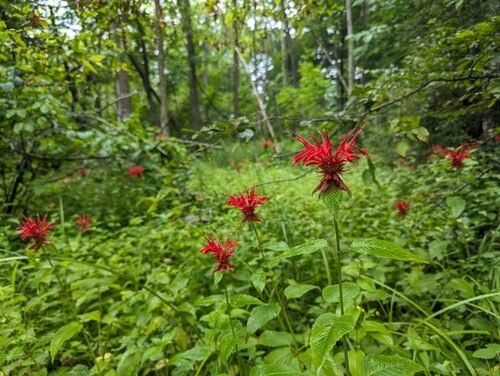
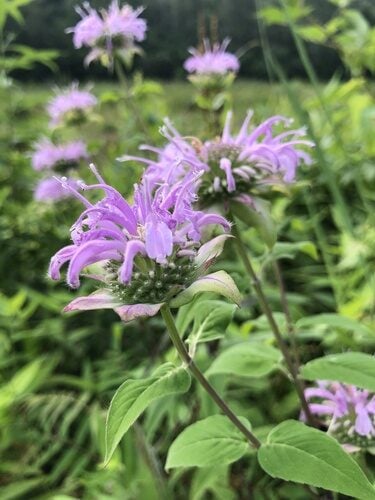
Pycnanthemum virginianum
(L.) T. Durand & B. D. Jacks. ex B. L. Rob. & Fernald
Virginia mountain mint
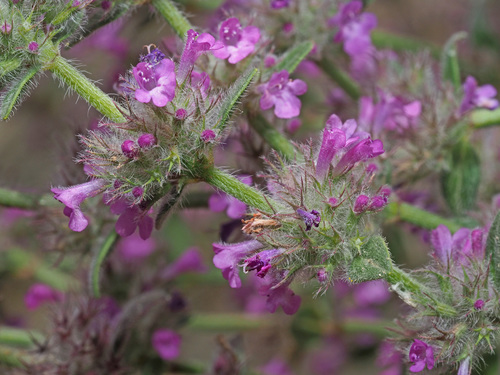
iNaturalist· cc-by-nc
(c) Sherrie Snyder, some rights reserved (CC BY-NC), uploaded by Sherrie Snyder
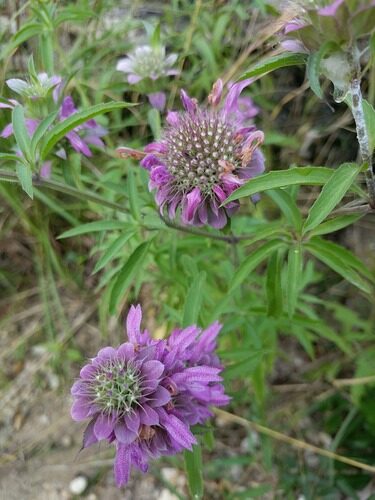
iNaturalist· cc-by-nc
(c) Annette Logan Miller, some rights reserved (CC BY-NC)
Summary
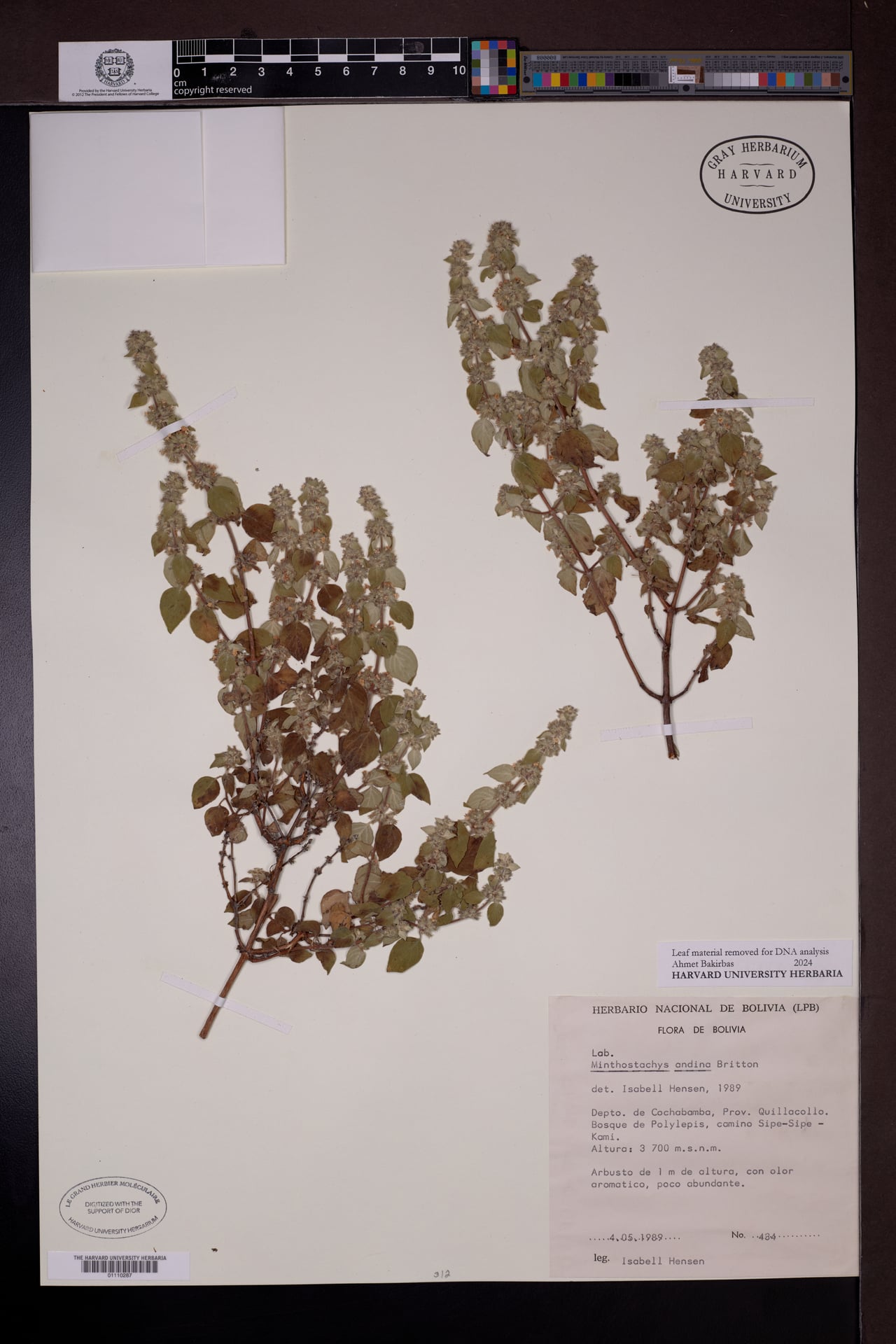
Source: WikipediaPycnanthemum virginianum, the Virginia or common mountain-mint, is a plant in the mint family, Lamiaceae. It is a herbaceous plant with narrow, opposite, simple leaves, on wiry, green stems. The flowers are white with purplish spotting, borne in summer. Like most plants in the genus, the foliage has a strong mint fragrance when crushed or disturbed. It is native to the eastern United States and eastern Canada. The flowers are visited by many insects, including honeybees, cuckoo bees, sweat bees, thread-waisted wasps, potter wasps, tachinid flies, wedge-shaped beetles, and pearl crescent butterflies.
Description
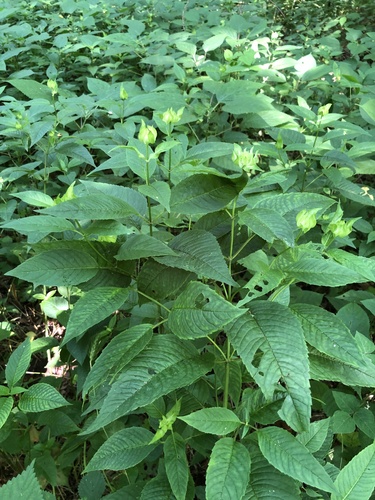
An upright herb. It is more branched than Pycnanthemum muticum. It grows 90-100 cm high and spreads 100 cm wide. The branches are short and leafy. The leaves are sword shaped and taper to the tip. They are 6 cm long. There are teeth along the edge. The flowers are in flat topped heads. The flowers are white or lilac. The plant gives off a mint like smell when crushed.
Edible Uses
Flower buds and leaves can be eaten raw or cooked. Their mint-like flavour makes a pleasant addition to salads and they can also be used as a condiment. Fresh or dried leaves are brewed into a refreshing mint-like tea.
Traditional Uses
The leaves can be used fresh or dried in tea. The flowers are used for flavouring. They are used for seasoning meat and soups.
This uses section is brief — help expand it
Medicinal Uses
A tea made from the leaves is alterative, diaphoretic and carminative, and is used to treat menstrual disorders, indigestion, colic, coughs, colds, chills and fevers. A leaf poultice is applied for headaches. Flowering stems are cut as flowering begins and can be used fresh or dried. There is a suggestion that this plant can cause abortions, so it is best avoided by pregnant women.
Distribution
It is a cool temperate plant. It grows in dry fields. It suits hardiness zones 3-7.
Where It Grows
Asia, Australia, Canada, India, North America, USA,
Propagation
Sow seed in spring or autumn in a cold frame. Prick seedlings into individual pots when large enough to handle and plant out during summer. Where seed is plentiful it can be sown in an outdoor seedbed in April. Divide in spring.
Other Uses
None known Special Uses Food Forest
Synonyms
Also Known As
Prairie hyssop, Wild hyssop
References (12)
- Ambasta S.P. (Ed.), 2000, The Useful Plants of India. CSIR India. p 506
- Beckstrom-Sternberg, Stephen M., and James A. Duke. "The Foodplant Database." http://probe.nalusda.gov:8300/cgi-bin/browse/foodplantdb.(ACEDB version 4.0 - data version July 1994) (As Koellia virginiana)
- Cundall, P., (ed.), 2004, Gardening Australia: flora: the gardener's bible. ABC Books. p 1115
- Facciola, S., 1998, Cornucopia 2: a Source Book of Edible Plants. Kampong Publications, p 133
- A. Gray, Manual ed. 7:707. 1908
Show all 12 references Hide references
- Jackes, D. A., 2007, Edible Forest Gardens
- Kermath, B. M., et al, 2014, Food Plants in the Americas: A survey of the domesticated, cultivated and wild plants used for Human food in North, Central and South America and the Caribbean. On line draft. p 730
- Lawton, B.P., 2002, Mints. A Family of Herbs and Ornamentals. Timber Press, Portland, Oregon. p 74, 178
- Moerman, D. F., 2010, Native American Ethnobotany. Timber Press. p 457
- Toupal, R. S. & Hollenback, K., 2009, An Ethnobotany of Indiana Dunes National Lakeshore: Plant Uses of the Ojibwa People. Bureau of Applied Research in Anthropology. University of Arizona
- Wiersema, J. H. & Leon, B., 2013, World Economic Plants. A Standard Reference CRC Press. 2nd Ed. p 573
- World Checklist of Useful Plant Species 2020. Royal Botanic Gardens, Kew