Trapa natans var. bispinosa
L., (Roxb.) Makino
Caltrop, Water chestnut
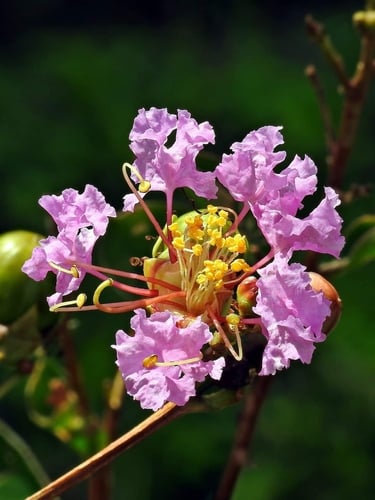
iNaturalist· cc-by-nc
(c) Irina Mitjushina, some rights reserved (CC BY-NC)
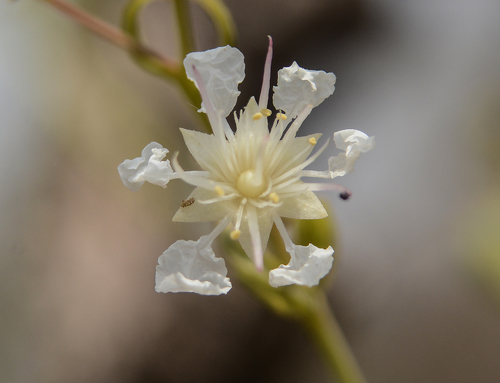
iNaturalist· cc-by-nc
(c) Nykyta, some rights reserved (CC BY-NC)
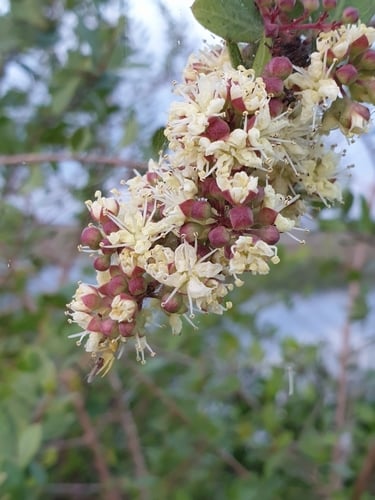
iNaturalist· cc-by-nc
(c) Евгений Беляков, some rights reserved (CC BY-NC)
Description
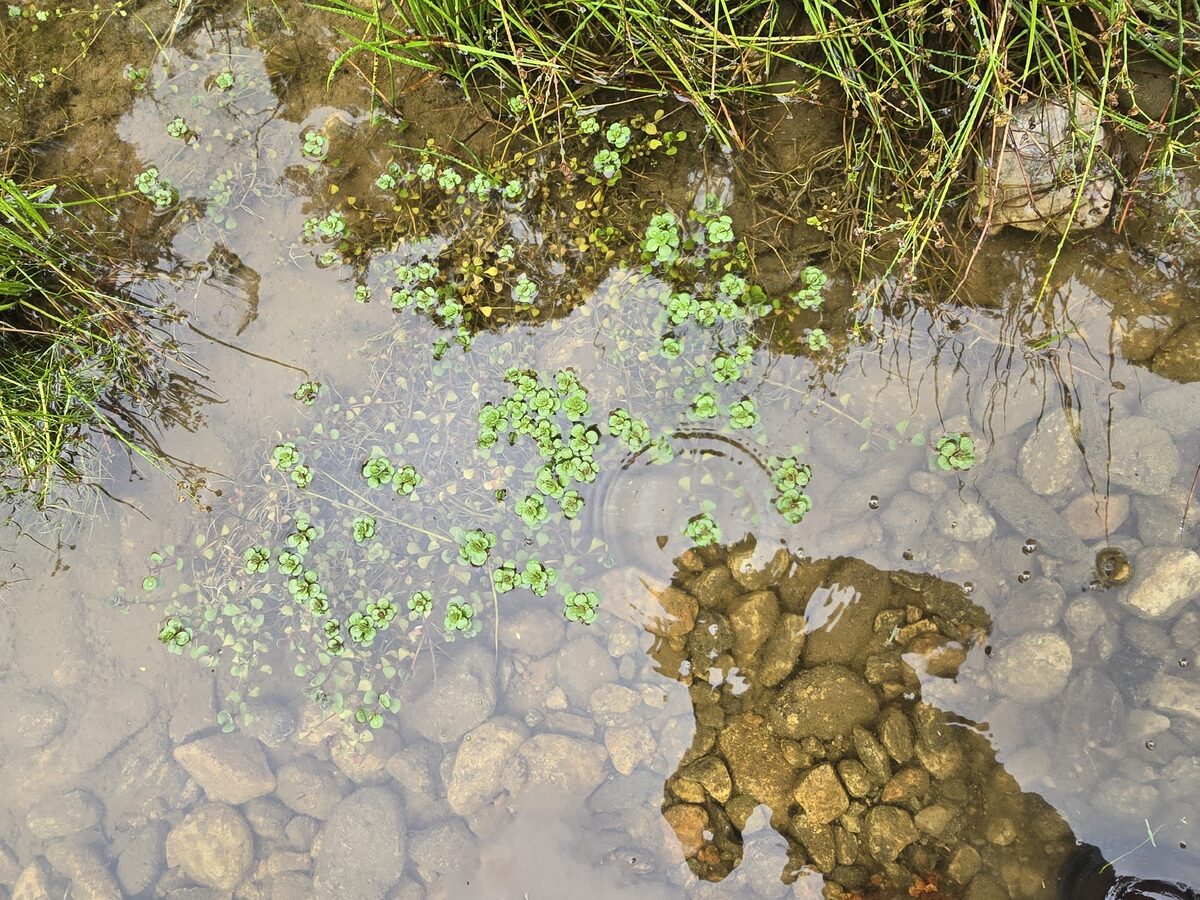
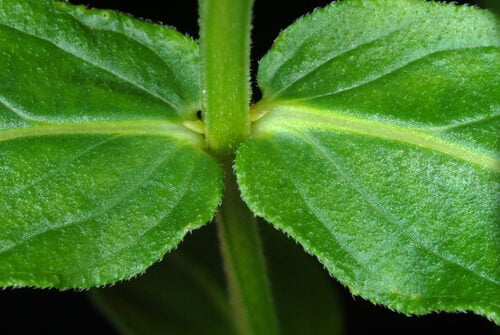
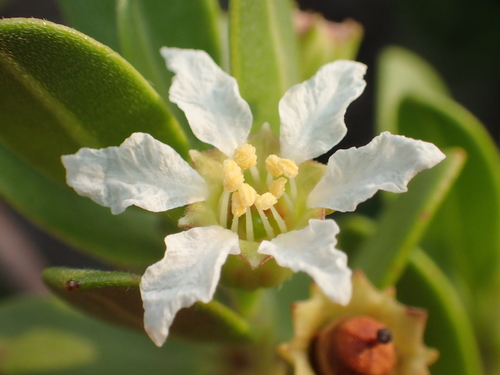
A herb which grows in water. The stems curve upwards. The leaves float. They are in rings close together often with 3 lobes and joined by one of the shorter sides. They are more broad than long. The leaves under the water are like long threads. The stalk is spongy. The flowers are white and occur singly. The fruit is a nut which is angled. There is a short beak at the tip. There is a sharp spiny horn on either side.
Edible Uses
The fleshy, white, starch-rich seed leaves are eaten. Seeds and nuts are cooked or eaten raw, sometimes with rice. Fruits are eaten raw, canned as a dessert, or served as a fresh fruit. It is an important food in some regions.
Traditional Uses
The seed leaf is fleshy, white and rich in starch. It is eaten. The seeds are cooked and eaten. They are also eaten raw. They are sometimes cooked and eaten with rice. The fruit are eaten raw and also canned and eaten as a dessert fruit.
Distribution
It is a tropical plant. In Nepal plants grow up to about 600 m altitude. It grows near Mumbai and Chenai. It grows in lakes and rivers. It grows in wetlands. It can grow in arid places.
Where It Grows
Africa, Angola, Asia, Australia, Bangladesh, Botswana, Central Africa, China, East Africa, Guinea, Guinée, Guinea-Bissau, Himalayas, India, Iran, Japan, Malawi, Malaysia, Middle East, Mozambique, Myanmar, Namibia, Nepal, Niger, Nigeria, Northeastern India, Pakistan, SE Asia, South Africa - Natal, Southern Africa, Sri Lanka, Sudan, Taiwan, Tanzania, West Africa, Zambia, Zimbabwe,
Cultivation
Plants are grown from seeds or rhizomes.
Production
In Manipur in India the seeds are available July to Spetember.
Other Information
It is an important food in some regions.
Notes
It is also put in the family Trapaceae.
Nutrition
| Part | Moisture | kJ | kcal | Protein | Vit A | Vit C | Iron | Zinc |
|---|---|---|---|---|---|---|---|---|
| Nuts | 66.4 | — | 117 | 4.1 | — | — | 1.2 | — |
Synonyms
Also Known As
Bor singori, Daa jo, Hara-nut, Jalaphala, Karimpolam, Keikak, Kubyakama, Kywe-baung, Paniphal, Pani singari, Shingada, Shingara, Shingori, Shringata, Singada, Singera, Singhara-nut, Singhara, Singra kaita, Sringataka, Trikonaphalam, Yelli
References (38)
- Ambasta, S.P. (Ed.), 2000, The Useful Plants of India. CSIR India. p 645
- Arora, R. K., 2014, Diversity in Underutilized Plant Species - An Asia-Pacific Perspective. Bioversity International. p 109
- BARC, 2016, State of Biodiversity for Food and Agriculture in Bangladesh. Bangladesh Agricultural Research Council. (As Trapa bispinosa)
- Burkill, H. M., 1985, The useful plants of west tropical Africa, Vol. 5. Kew.
- Chandrakumar, P., et al, 2015, Ethnobotanical studies of wild edible plants of Gond, Halba and Kawar tribes of Salekasa Taluka, Gondia District, Maharashtra State, India. International Research Journal of Pharmacy 6(8)
Show all 38 references Hide references
- Dalziel, J. M., 1937, The Useful plants of west tropical Africa. Crown Agents for the Colonies London.
- Dangol, D. R. et al, 2017, Wild Edible Plants in Nepal. Proceedings of 2nd National Workshop on CUAOGR, 2017. (As Trapa bispinosa)
- Das, S. and De, B., 2013, Evaluation of Angiotension I-Converting Enzyme (ACE) inhibitory potential of some underutilized indigenous fruits of West Bengal using an in vitro model. Fruits, Vol. 68:499-506 (As Trapa bispinosa)
- Deka, N. & Devi, N., 2015, Wild edible aquatic and marshland angiosperms of Baka district, BTC area, Assam, India. Asian J. Plant Sci. Res. 5(1):32-48
- Dey, A. & Mukhererjee, A., 2015, Living and Survival Amidst Hunger: Wild Edible Botanicals as a Prime Forest Productivity in the Rural Purulia District, West Bengal, India from Colonial to Present. Research Journal of Forestry 9(3): 71-86 (As Trapa bispinosa)
- Dobriyal, M. J. R. & Dobriyal, R., 2014, Non Wood Forest Produce an Option for Ethnic Food and Nutritional Security in India. Int. J. of Usuf. Mngt. 15(1):17-37
- Flora of Pakistan. www.eFloras.org (As Trapa bispinosa)
- Food Composition Tables for use in East Asia FAO http://www.fao.org/infoods/directory No. 1000
- Gautam, R. S., et al, 2020, Wild Edible Fruits of Nepal. Int. J. Appl. Sci. Biotechnol. Vol 8(3): 289-304 (As Trapa bispinosa)
- Hazarika, B. et al. (2020). An overview of the unexplored underutilized fruit crops of Assam, India. Journal of Applied and Natural Science, 12(3): 442 - 453 (As Trapa bispinosa)
- Hedrick, U.P., 1919, (Ed.), Sturtevant's edible plants of the world. p 652
- Jadhav, R., et al, 2015, Forest Foods of Northern Western Ghats: Mode of Consumption, Nutrition and Availability. Asian Agri-History Vol. 19, No. 4: 293-317
- Khan, D. & Shaukat, S.S., 2006, The Fruits of Pakistan: Diversity, Distribution, Trends of Production and Use. Int. J. Biol. Biotech., 3(3):463-499 (As Trapa bispinosa)
- Iinuma, Somoku zusetsu ed. 3, 1:137. 1907
- Majumdar, K and Datta, N., 2009, Traditional wild edible fruits for the forest dwellers of Tripura, India. Pleione 3(2) 167-178
- Manandhar, N.P., 2002, Plants and People of Nepal. Timber Press. Portland, Oregon. p 462 (As Trapa bispinosa)
- Menninger, E.A., 1977, Edible Nuts of the World. Horticultural Books. Florida p 112 (As Trapa bispinosa)
- Pagag, K. & Borthakur, S.K., 2012, Wild edible wetland plants from Lakhimpur district of Assam, India. Pleione 6(2): 322 - 327
- Pasha, M. K. & Uddin, S. B., 2019, Minor Edible Fruits of Bangladesh. Bangladesh J. Plant Taxon. 26(2): 299–313 (As Trapa bispinosa)
- Patiri, B. & Borah, A., 2007, Wild Edible Plants of Assam. Geethaki Publishers. p 59
- Pegu, R., et al, 2013, Ethnobotanical study of Wild Edible Plants in Poba Reserved Forest, Assam, India. Research Journal of Agriculture and Forestry Sciences 1(3):1-10
- Peters, C. R., O'Brien, E. M., and Drummond, R.B., 1992, Edible Wild plants of Sub-saharan Africa. Kew. p 194
- Royal Botanic Gardens, Kew (1999). Survey of Economic Plants for Arid and Semi-Arid Lands (SEPASAL) database. Published on the Internet; http://www.rbgkew.org.uk/ceb/sepasal/internet [Accessed 13th June 2011]
- SHORTT, (As Trapa bispinosa)
- Singh, G. & Kumar, J., 2014, Studies on Indigenous Traditional Knowledge of some Aquatic and Marshy Wild Edible Plants used by the Munda Tribe of District Khunti, Jharkhand, India. International Journal of Bioassays. 3(2), 1738-1743
- Singh, S.R. and Singh, N.I., 1985, A Preliminary Ethnobotanical studies on wild edible plants in the markets of Manipur - 1. J. Econ. Tax. Bot. Vol. 6 No. 3 pp 699-703 (As Trapa bispinosa)
- Terra, G.J.A., 1973, Tropical Vegetables. Communication 54e Royal Tropical Institute, Amsterdam, p 79 (As Trapa quadrispinosa)
- Upreti, K., et al, 2010, Diversity and Distribution of Wild Edible Fruit Plants of Uttarakhand. Bioversity Potentials of the Himalaya. p 192
- USDA, ARS, National Genetic Resources Program. Germplasm Resources Information Network - (GRIN). [Online Database] National Germplasm Resources Laboratory, Beltsville, Maryland. Available: www.ars-grin.gov/cgi-bin/npgs/html/econ.pl (10 April 2000)
- WATT, (As Trapa bispinosa)
- Wickens, G.E., 1995, Edible Nuts. FAO Non-wood forest products. FAO, Rome. p158
- Wiersema, J. H. & Leon, B., 2013, World Economic Plants. A Standard Reference CRC Press. 2nd Ed. p 692
- Wild edible plants of Himachal Pradesh