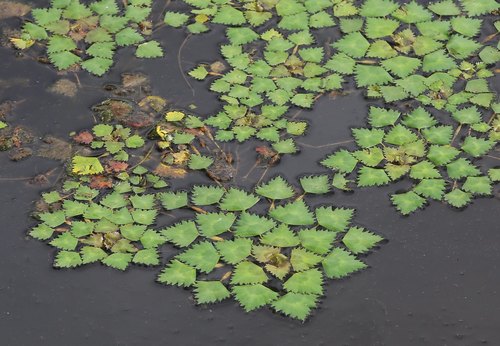
Trapa incisa
Siebold & Zucc.
Kra chap
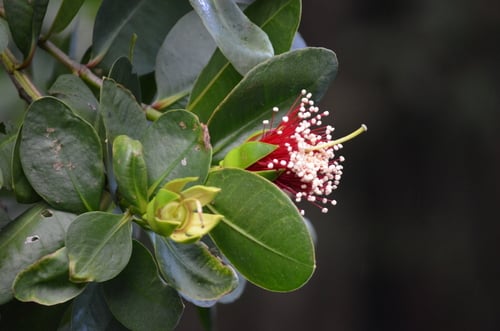
iNaturalist· cc-by
(c) Yi CHEN, some rights reserved (CC BY), uploaded by Yi CHEN
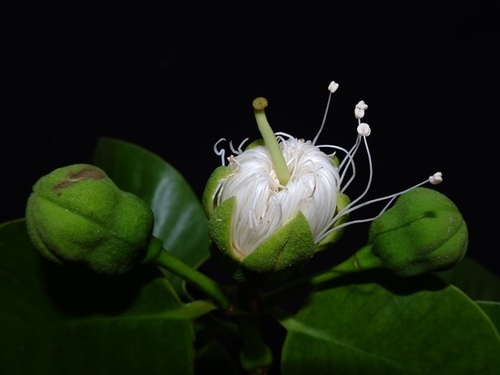
iNaturalist· cc-by-nc
(c) 王美芳, some rights reserved (CC BY-NC), uploaded by 王美芳
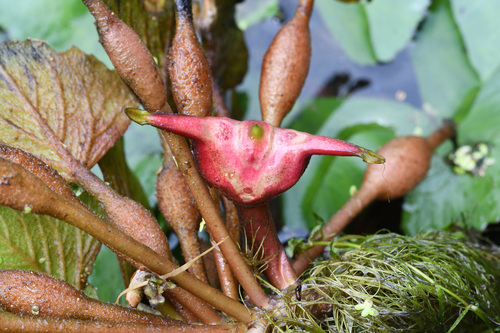
iNaturalist· cc-by-nc
(c) 金翼白眉, some rights reserved (CC BY-NC), uploaded by 金翼白眉
Summary
Source: WikipediaTrapa incisa, the tiny water-chestnut, is a widespread species of flowering plant in the family Lythraceae. It is native to subtropical areas of northeastern India, Southeast Asia, eastern China, Korea, Japan, and the Russian Far East. A hydrosubshrub, it is typically found in freshwater ponds and swamps from sea level to 2,000 m (6,600 ft). Its chromosome number is 2n = 48, with reports of 88, 90, 92, and perhaps 96. It has been assessed as Least Concern.
Description
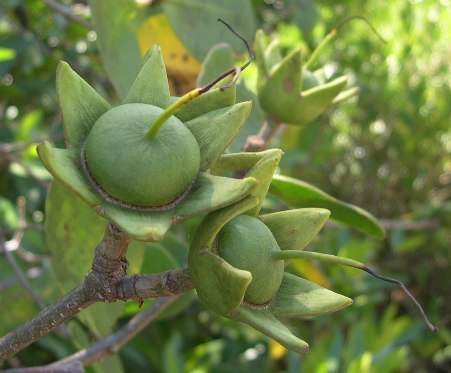
A small floating herb. The stems are 1-3 mm across. The leaf stalks are 5-15 cm long and can be slightly swollen towards the end. The leaves are slightly purplish underneath. They are 2-3 cm long by 2-4 cm wide. There are teeth towards the tip. The fruit are narrow and 1-2 cm long by 1-2 cm wide and 1 cm thick with 4 pointed horns.
Edible Uses
The seed is edible when cooked by boiling. Some caution is advised regarding toxicity.
Traditional Uses
The fruit are boiled or roasted and eaten.
This uses section is brief — help expand it
Medicinal Uses
None known
Known Hazards
We have no specific information for this species, but the raw seed of several members of this genus contains toxins. However, these are destroyed in the cooking process.
Distribution
A tropical plant. It grows in stagnant water. It grows in swamps and ponds from sea level to 1,000 m above sea level and 2,000 m in SW China. It grows in wetlands. In Sichuan and Yunnan.
Where It Grows
Asia, Bangladesh, Cambodia, China, India, Indochina, Indonesia, Japan, Korea, Laos, Malaysia, Northeastern India, Russia, SE Asia, Taiwan, Thailand, Vietnam,
Cultivation
We have very little information on this species and do not know if it will be hardy outdoors in Britain. However, judging by the plants native range, it is likely to succeed outdoors at least in the warmer areas of the country. The following notes are based on the general needs of the genus. An aquatic plant, floating by means of inflated petioles, it succeeds in still or slowly-flowing water requiring a position in full sun and a slightly acidic water with a rich planting medium. Plants require a high summer temperature in order to perform well, they are not frost hardy.
Propagation
Harvest seed in late summer and store it overwinter in a jar of water in a cool but frost-free location. The seed loses viability rapidly if allowed to dry out. In spring, sow one seed per pot and submerge under a few centimetres of water.
Other Uses
None known
Also Known As
Kata singhara, Pani phal, Pani singari, Singra kaita
References (10)
- Abh. Math.-Phys. Cl. Koenigl. Bayer. Akad. Wiss. 4(2):134. 1846
- Deka, N. & Devi, N., 2015, Wild edible aquatic and marshland angiosperms of Baka district, BTC area, Assam, India. Asian J. Plant Sci. Res. 5(1):32-48 (As Trapa natans var. incisa)
- Hedrick, U.P., 1919, (Ed.), Sturtevant's edible plants of the world. p 652
- Jacquat, C., 1990, Plants from the Markets of Thailand. D.K. Book House p 69
- Murakami, A. et al, 2014, Screening for the In Vitro Anti-tumor-promoting Activities of Edible Plants from Malaysia. Bioscience, Biotechnology, and Biochemistry, 64:1, 9-16.
Show all 10 references Hide references
- Pasha, M. K. & Uddin, S. B., 2019, Minor Edible Fruits of Bangladesh. Bangladesh J. Plant Taxon. 26(2): 299–313 (As Trapa maximowiczii)
- Phon, P., 2000, Plants used in Cambodia. © Pauline Dy Phon, Phnom Penh, Cambodia. p 606
- Plants for a Future database, The Field, Penpol, Lostwithiel, Cornwall, PL22 0NG, UK. http://www.scs.leeds.ac.uk/pfaf/
- Wickens, G.E., 1995, Edible Nuts. FAO Non-wood forest products. FAO, Rome. p158
- Zhang, Y., et al, 2014, Diversity of wetland plants used traditionally in China: a literature review. Journal of Ethnobiology and Ethnomedicine. 10:72