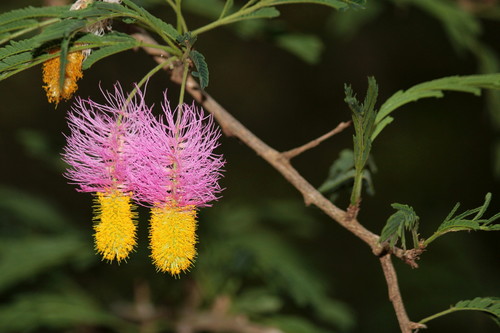
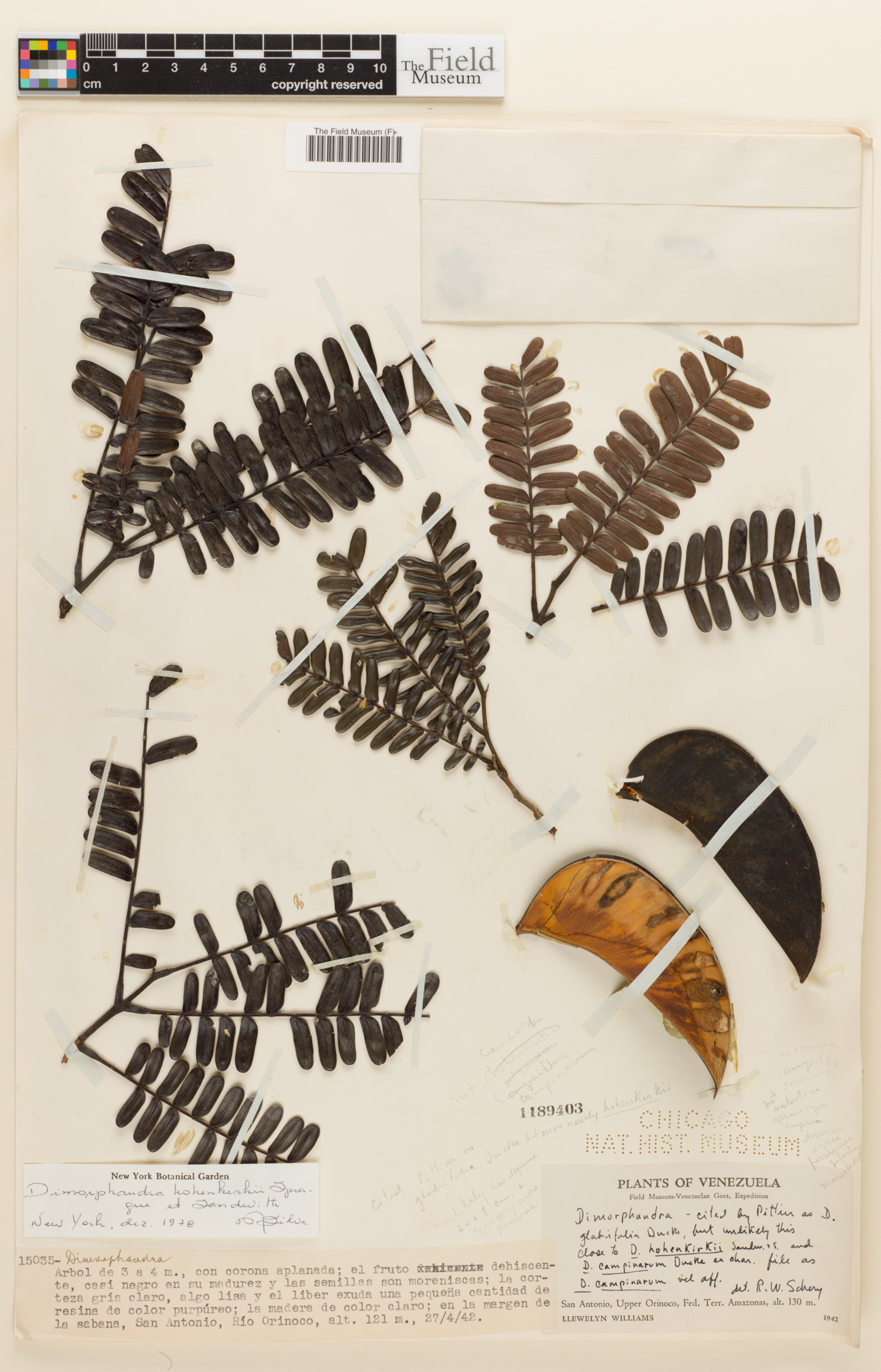
Pueraria tuberosa
(Roxb. ex Willd.) DC.
Indian Kudzu
iNaturalist· cc-by-nc
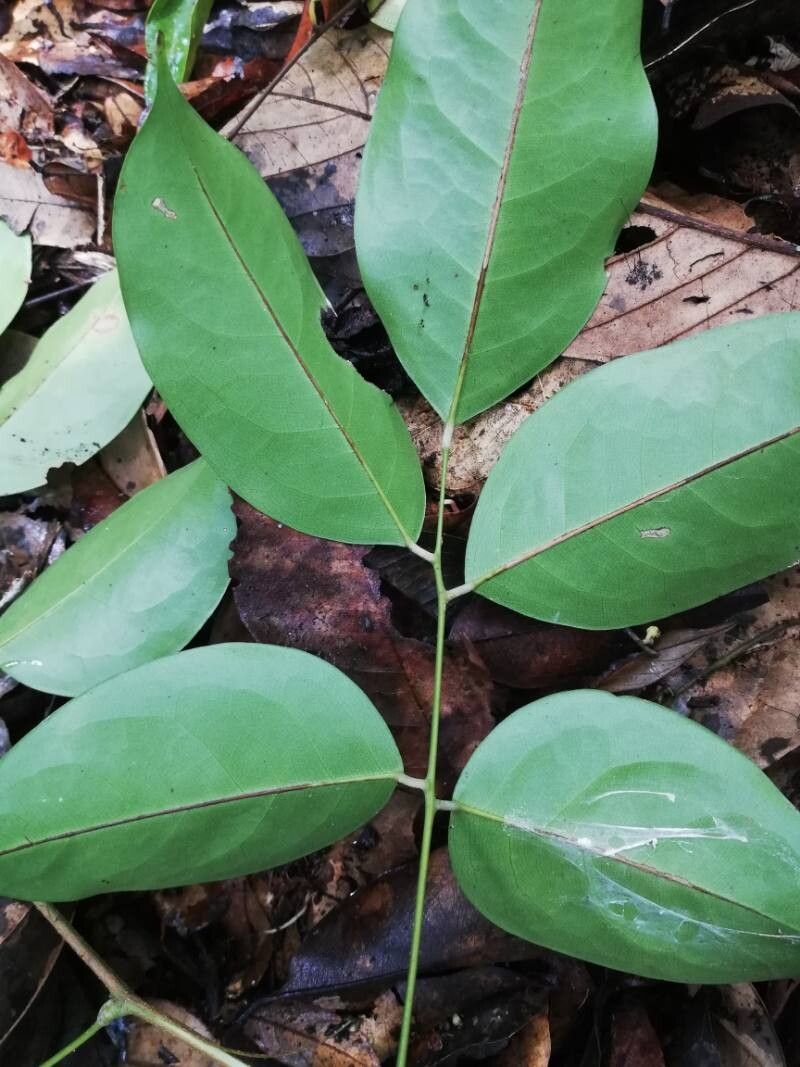
(c) Shiwalee Samant, some rights reserved (CC BY-NC), uploaded by Shiwalee Samant
iNaturalist· cc-by-sa
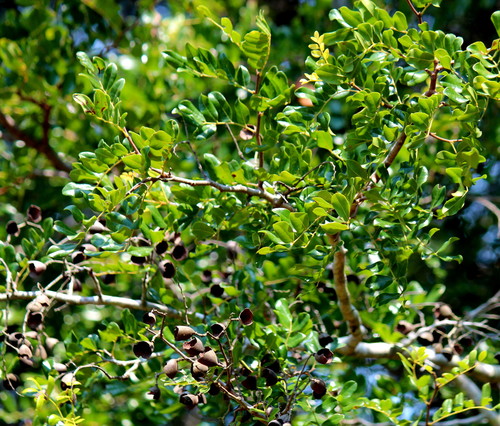
(c) Dinesh Valke, some rights reserved (CC BY-SA)
iNaturalist· cc-by-nc
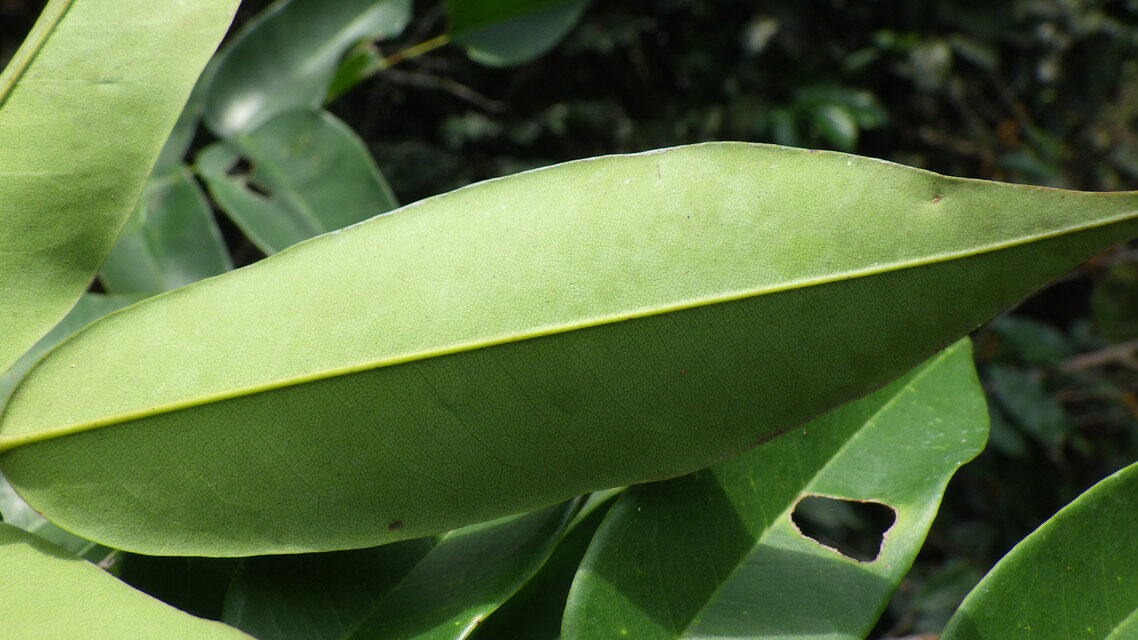
(c) Shiwalee Samant, some rights reserved (CC BY-NC), uploaded by Shiwalee Samant
Summary
Source: WikipediaPueraria tuberosa, commonly known as kudzu, Indian kudzu, or Nepalese kudzu, Vidarikand, Sanskrit: Bhukushmandi (भूकुशमंडी) is a climber with woody tuberculated stem. It is a climbing, coiling and trailing vine with large tuberous roots. The tubers are globose or pot-like, about 25 centimetres (9.8 in) across and the insides are white, starchy and mildly sweet. Leaves are trifoliate and alternate, while the leaflets are egg-shaped, with round base and unequal sides. They are 18 cm (7.1 in) long and 16 cm (6.3 in) wide and are hairless above. Flowers are bisexual, around 1.5 cm (0.59 in) across and blue or purplish-blue in color. The fruit pods are linear, about 2–5 cm (0.79–1.97 in) long and constricted densely between the seeds. They have silky, bristly reddish-brown hair. Seeds vary from 3 to 6 in number. It is native to India, Pakistan, and Nepal. In Telugu, Kudzu is termed as Nela Gummadi, Dari Gummadi, Vidari Kanda.
Description
A herb or shrub. It is a woody twiner or climber. It is hairy. It has long straight tuberous roots. These are like beads and 6-15 cm across and deep in the soil. It looses its leaves during the year. The leaves have 3 leaflets. The leaflets are large. They are 10-20 cm long and have silky hairs when young. The side leaflets have unequal sides. The flowers are pink. They are in long stalks. These can be 15-40 cm long. They appear when the plant is leafless. The petals are 1-1.8 cm across. The pods have 3-6 seeds.
Edible Uses
The root is eaten raw. It is very large — up to 50cm long and 30cm in diameter — and has a liquorice flavour.
Traditional Uses
The tuberous roots are eaten. Young tender ones are eaten raw and older ones are boiled and eaten. They can also be used to extract starch. The leaves are eaten.
Medicinal Uses
The root is used as a demulcent and refrigerant in the treatment of fevers. It is peeled and bruised into a cataplasm to reduce swellings, and crushed and rubbed on the body to treat fevers and rheumatism. The root is also emetic, galactagogue, and tonic.
Known Hazards
Although this species is reported to have an edible root, there are said to be certain forms of the plant where the root is not considered to be edible and is instead used as a fish poison.
Distribution
A subtropical plant. Western Himalayas. It grows on the edges of fields and in wasteland. It grows in higher rainfall areas.
Where It Grows
Asia, Himalayas, India, Myanmar, Nepal, Northeastern India, Pakistan, SE Asia, Sikkim,
Cultivation
Pueraria tuberosa is native to mainly sub-tropical regions in the lower elevations of the Himalayas, though it can be found at elevations up to 2,000 metres. It is unlikely to experience much frost, except at the higher parts of its range. Requires a sunny position in a well-drained soil. This species has a symbiotic relationship with certain soil bacteria, these bacteria form nodules on the roots and fix atmospheric nitrogen. Some of this nitrogen is utilized by the growing plant but some can also be used by other plants growing nearby.
Propagation
Pre-soak seed for 12 hours in warm water and sow in a warm greenhouse in early spring; germination should occur within 2 weeks. Prick seedlings into individual pots when large enough to handle and plant out after the last expected frosts, protecting young plants with a frame or cloche until they are growing well.
Other Uses
No other uses are known.
Production
The tubers can be 20-30 cm across and 30-60 cm long. They can weigh 35 kg.
Nutrition
| Part | Moisture | kJ | kcal | Protein | Vit A | Vit C | Iron | Zinc |
|---|---|---|---|---|---|---|---|---|
| Tuber | 84.2 | — | — | 1.7 | — | — | — | — |
Synonyms
Also Known As
Bankumra, Bharda, Bhuikanda, Bhuin kakharu, Bidda, Bilaikand, Birali panwa, Biralu, Bir kahada, Bisalu, Bohon, Chint lad, Darigummadi, Davankanda, Ghora-bel, Gholbaji, Ghorbel, Gummadi balli, Gumadigida, Kand, Khakarvel, Kyway-byu, Naelagummadi, Nepalese kudzu, Pani alu, Patal kohnda, Patal kumbhda. Phagvelo, Pithana, Shimia batraji, Shirvala, Siali, Sirala, Sural, Tirra, U-hmone-u, Urahi alu, Vidarikand
References (32)
- Ambasta S.P. (Ed.), 2000, The Useful Plants of India. CSIR India. p 504
- Ann. Sci. Nat. (Paris) 4:97. 1824 Jan (Prodr. 2:240. 1825 Nov)
- BHARGAVA,
- Bhatia, H., et al, 2018, Traditionally used wild edible plants of district Udhampur, J&K, India. Journal of Ethnobiology and Ethnomedicine (2018) 14:73
- Chandrakumar, P., et al, 2015, Ethnobotanical studies of wild edible plants of Gond, Halba and Kawar tribes of Salekasa Taluka, Gondia District, Maharashtra State, India. International Research Journal of Pharmacy 6(8)
Show all 32 references Hide references
- Chauhan, S. H., et al, 2018, Consumption patterns of wild edibles by the Vasavas: a case study from Gujarat, India. Journal of Ethnobiology and Ethnomedicine (2018) 14:5
- Dhyani, S.K., & Sharma, R.V., 1987, Exploration of Socio-economic plant resources of Vyasi Valley in Tehri Garwhal. J. Econ. Tax. Bot. Vol. 9 No. 2 pp 299-310
- Egan, A. N. 2020, Economic and ethnobotanical uses of tubers in the genus Pueraria DC. Legume Perspectives. Issue 19. November 2020
- Flora of Pakistan. www.eFloras.org
- Gunjatkar, N., & Vartak, V.D., 1982, Enumeration of wild edible legumes from Pune District, Maharashtra State. J.Econ. Tax. Bot. Vol 3 pp 1-9
- GUPTA,
- Hedrick, U.P., 1919, (Ed.), Sturtevant's edible plants of the world. p 535
- ILDIS Legumes of the World http:www:ildis.org/Legume/Web
- Kay, D.E., 1973, Root Crops, Digest 2, Tropical Products Institute, London, p 87
- Kiran, K. C., et al, 2019, Diversity and Seasonal Availability of Potential Wild Edible Plants from Vidarbha Region of Maharashtra State, India. Int.J.Curr.Microbiol.App.Sci (2019) 8(2): 1434-1446
- Kumar, G.M., & Shiddamallayya, N., 2014, Documentation of Wild Plant Tubers as Food Resources in Hassan District, Karnataka, International Journal of Applied Biology and Pharmaceutical Technology. 5(2) p 91
- Kuvar, S. D. & Shinde, R. D., 2019, Wild Edible Plants used by Kokni Tribe of Nasik District, Maharashtra. Journal of Global Biosciences. Volume 8, Number 2, 2019, pp. 5936-5945
- Lim, T. K., 2015, Edible Medicinal and Non Medicinal Plants. Volume 9, Modified Stems, Roots, Bulbs. Springer p 72
- Macmillan, H.F. (Revised Barlow, H.S., et al) 1991, Tropical Planting and Gardening. Sixth edition. Malayan Nature Society. Kuala Lumpur. p 329
- Marandi, R. R. & Britto, S. J., 2015, Medicinal Properties of Edible Weeds of Crop Fields and Wild plants Eaten by Oraon Tribals of Latehar District, Jharkhand. International Journal of Life Science and Pharma Research. Vo. 5. (2) April 2015
- Misra, R. C., et al, 2013, Genetic resources of wild tuberous food plants traditionally used in Similipal Biosphere Reserve, Odisha, India. Genetic Resources and Crop Evolution. Vol. 60 No. 2. Springer
- Nilegaonkar, S., et al, 1985, Nutritional Evaluation of some wild food plants from the Pune and Nieghbouring districts, Maharashtra state: Part 1. J. Econ. Tax. Bot. Vol. 6 No. 3 pp 629-635
- Patiri, B. & Borah, A., 2007, Wild Edible Plants of Assam. Geethaki Publishers. p 40
- Pegu, R., et al, 2013, Ethnobotanical study of Wild Edible Plants in Poba Reserved Forest, Assam, India. Research Journal of Agriculture and Forestry Sciences 1(3):1-10
- Plants for a Future database, The Field, Penpol, Lostwithiel, Cornwall, PL22 0NG, UK. http://www.scs.leeds.ac.uk/pfaf/
- Polunin, O., & Stainton, A., 2006, Flowers of the Himalaya, Oxford India Paperbacks. p 94
- Prafulla, S., 2017, Wild Food Diversity of Nawegaon-Nagzira Tiger Reserve in Gondia-Bhandara district of Maharashtra, India. Int. J. of Life Sciences, 2017, Vol. 5 (4): 620-626
- PROSEA handbook Volume 9 Plants yielding non-seed carbohydrates. p 179
- Reddy, K. N. et al, 2007, Traditional knowledge on wild food plants in Andhra Pradesh. Indian Journal of Traditional Knowledge. Vol. 6(1): 223-229
- Shah, G.L. et al, 1981, An account of the Ethnobotany of Saurashtra in Gujarat State (India). J. Econ. Tax. Bot. Vol 2 pp 173-182
- Singh, V. and Singh, P., 1981, Edible Wild Plants of Eastern Rajasthan. J. Econ. Tax. Bot. Vol 2 pp 197-207
- Toppo, P. et al, 2016, Wild edible plants of Dhamtari district of Chhattisgarh, India. Van Sangyan Vol. 3, No. 4