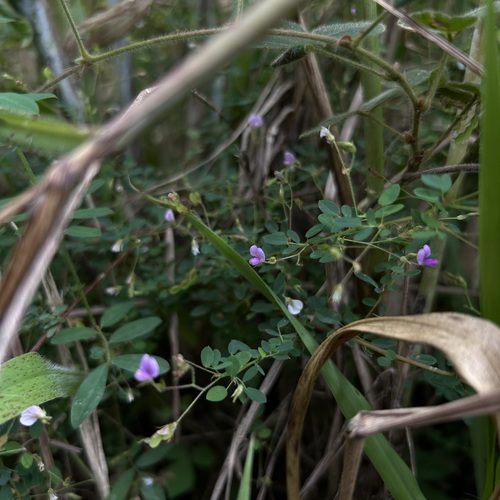
Dalbergia cultrata
J. Graham ex Benth.
Cultrate rosewood, Burma blackwood tree
iNaturalist· cc-by-nc-sa
(c) Smithsonian Institution, National Museum of Natural History, Department of Botany, some rights reserved (CC BY-NC-SA)
iNaturalist· cc-by-nc
(c) lordworm_cryptopsy, some rights reserved (CC BY-NC)
Description
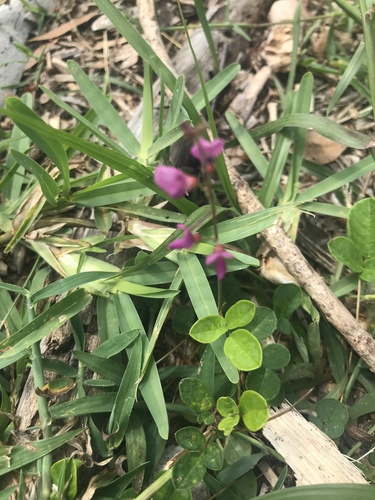
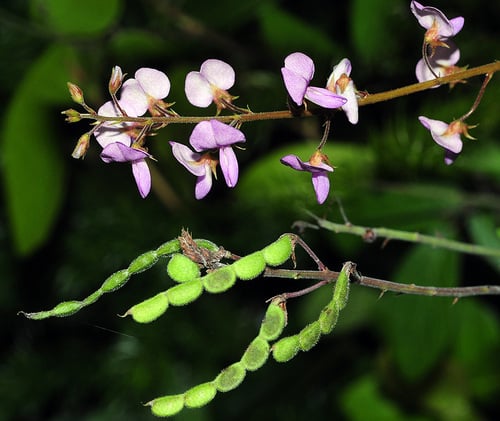
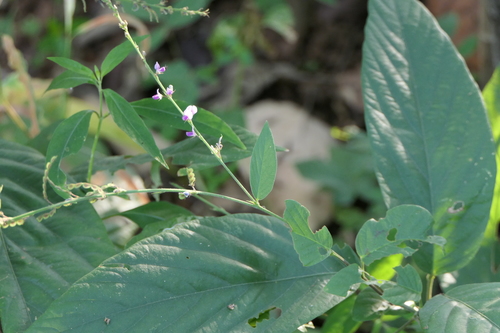
A small tree. It grows 20-30 m high. It loses its leaves during the year. The bark is smooth and cream. The leaves are 10-20 cm long. There are 3-6 pairs of leaflets. These are 3-5 cm long by 2 cm wide. They are round and often with slight notches. The young shoots have silky hairs. The flowers are 5-6 mm long and white or pink. They are in branched clusters. These are 5-8 cm long. The fruit are pods 3-10 cm long by 2 cm wide. There are 1-3 seeds.
Edible Uses
The leaves are edible.
Distribution
It is a tropical plant. It grows in open and fire prone areas. In southern China it grows in mixed forests on mountain slopes at about 1,700 m above sea level.
Where It Grows
Asia, Cambodia, China, Indochina, Indonesia, Laos, Myanmar, SE Asia, Thailand, Vietnam,
Cultivation
Plants can be grown by seeds.
Propagation
Germination rates, especially of fresh seeds is said to be high. Like many species within the family Fabaceae, once they have been dried for storage the seeds of this species may benefit from scarification before sowing in order to speed up germination. This can usually be done by pouring a small amount of nearly boiling water on the seeds (being careful not to cook them!) and then soaking them for 12 - 24 hours in warm water. By this time they should have imbibed moisture and swollen - if they have not, then carefully make a nick in the seedcoat (being careful not to damage the embryo) and soak for a further 12 hours before sowing. Softwood cuttings of many species, especially if taken from younger plants, will root in a well-drained, sandy medium in a closed case with bottom heat.
Other Uses
The tree is said to exude a red resin. A useful oil is obtained from the tree. (from the seed?) The heartwood is dark purple to reddish-black and ebony-like, often streaked with red; the sapwood is pale brown. It is hard and exceedingly durable. A good quality wood, it is used for precious furniture as well as for making wheels, agricultural implements, spear-handles, etc., and sometimes for carving and high quality handicrafts. The wood is used for fuel. The tree is planted as a pioneer species in northern Thailand in reforestation projects to restore native woodland - it is planted in degraded woodland and open areas in a mix with various other species that all have the ability to grow fast; produce dense, weed-suppressing crowns; and attract seed-dispersing wildlife, particularly birds and bats. This species has been used as a shade tree in agroforestry systems.
Nutrition
| Part | Moisture | kJ | kcal | Protein | Vit A | Vit C | Iron | Zinc |
|---|---|---|---|---|---|---|---|---|
| Leaves | 74.4 | 330 | 79 | 5 | — | — | — | — |
Synonyms
Also Known As
Amhri, Camlai, Hkior, Hlwain, Lamz, Mai-viet, Pik nhang, Pohon sonokeling birma, Phamhoang, Sae klui, The-rhe, Trac giao, Yun-daik, Zaungi
References (5)
- Food Composition Tables for use in East Asia FAO http://www.fao.org/infoods/directory No. 696
- Gardner, S., et al, 2000, A Field Guide to Forest Trees of Northern Thailand, Kobfai Publishing Project. p 180
- Sukarya, D. G., (Ed.) 2013, 3,500 Plant Species of the Botanic Gardens of Indonesia. LIPI p 222
- Sutjaritjai, N., et al, 2019, Traditional Uses of Leguminosae among the Karen in Thailand. Plants 2019, 8, 600 p 6
- Van Sam, H. et al, 2004, Trees of Laos and Vietnam: A Field Guide to 100 Economically or Ecologically Important Species. Blumea 29 (2004) 201-349