Psoralea corylifolia
L.
Prairie turnip
iNaturalist· cc-by-nc
(c) Milind Girdhari, some rights reserved (CC BY-NC)
iNaturalist· cc-by-nc
(c) Milind Girdhari, some rights reserved (CC BY-NC)
iNaturalist· cc-by-nc
(c) Milind Girdhari, some rights reserved (CC BY-NC)
Summary
Source: WikipediaAn annual herb growing to 2 feet tall with flowers from July to August and seed ripening from September to October. Adaptable to light sandy, medium loamy, and heavy clay soils with good drainage and varied pH tolerance. Prefers moist soil and full sun exposure. Hermaphroditic flowers are insect-pollinated, and the plant fixes nitrogen.
Description
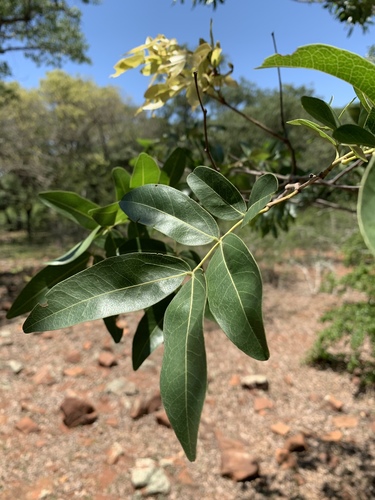
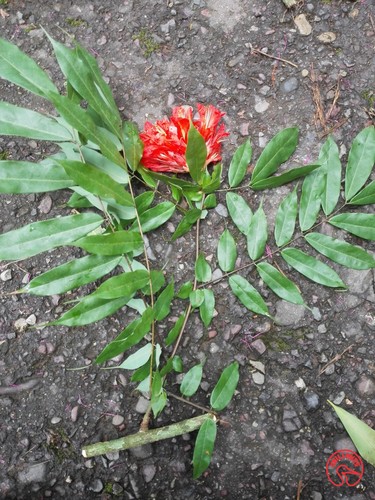
An annual herb. It is erect and grows 60-125 cm high. The stems are hairy. The leaves are alternate and have one leaflet. The leaf blade is 4-8 cm long by 3-5 cm wide. They are heart shaped. There are teeth along the edge and a tip at the end. The flowers are in a group. There are 3 flowers in the axil of each bract. The fruit are 4.5 mm long and oval. They are black and have pits.
Edible Uses
The seeds are edible, though no further preparation details are recorded.
Medicinal Uses
Bu Gu Zhi is valued in Chinese herbal medicine as a tonic remedy used to improve general vitality, and modern research supports its use in treating skin disorders including vitiligo. The seed is anthelmintic, antibacterial, aphrodisiac, astringent, cardiac, cytotoxic, deobstruent, diaphoretic, diuretic, stimulant, stomachic, and tonic. The one-seeded fruits (or seed plus seedpod) are highly regarded as an aphrodisiac and tonic to the genital organs, and are used to treat febrile diseases, premature ejaculation, impotence, lower back pain, frequent urination, incontinence, and bed wetting. Externally, the seed is applied to treat skin ailments including leprosy, leucoderma, and hair loss. The seed and fruit contain psoralen, which stimulates new skin pigment production when exposed to sunlight, making it useful for treating vitiligo and psoriasis. The antibacterial action of the fruit inhibits the growth of Mycobacterium tuberculosis. Fruit is gathered when ripe in autumn and can be dried for later use. The root is used to treat dental caries. The plant also yields a medicinal oleoresin used for kidney disorders, impotence, premature ejaculation, and lumbago. Some caution is warranted when applying the herb externally, as it can sensitise the skin and cause an allergic reaction to sunlight.
Known Hazards
Although no specific mention of toxicity for this species has been found, at least some members of this genus contain furanocoumarins, these substances can cause photosensitivity in some people.
Distribution
A tropical and subtropical plant.
Where It Grows
Africa, Arabia, Asia, China, Himalayas, India, Indochina, Iran, Laos, Middle East, Myanmar, Nepal, Pakistan, SE Asia, Socotra, Somalia, Sri Lanka, Taiwan, Vietnam,
Cultivation
We have very little information for this species and do not know if it will be hardy in Britain, though judging by its native range it should succeed outdoors at least in the milder parts of the country. The following notes are based on the general needs of the genus. Succeeds in an ordinary garden soil. Requires a well-drained soil in a sunny position. Plants are very intolerant of root disturbance, they are best planted out into their permanent positions whilst still small. This species has a symbiotic relationship with certain soil bacteria, these bacteria form nodules on the roots and fix atmospheric nitrogen. Some of this nitrogen is utilized by the growing plant but some can also be used by other plants growing nearby.
Propagation
Pre-soak the seed for 24 hours in warm water, then sow in early to mid spring in a greenhouse. Sow directly into individual pots, or pot up seedlings as soon as possible to avoid root disturbance, growing them on in pots until planting out in their final positions. Transplanting this species almost always causes fatal root damage. Division can be attempted in spring with great care, but the plant strongly resents root disturbance and successful division is virtually impossible.
Other Uses
Nitrogen fixer.
Notes
The seeds are used in medicine. They contain psoralens or furocoumarins.
Also Known As
Arisi, Baavanchalu, Babachi, Babchi, Bakuchi, Bapunga, Bavachi, Bavachya, Bavanchi, Bavanchigida, Bavchi, Bawuchee, Bu Gu Zhi, Bukchi, Dau-mieu, Kaarboka, Kakuch, Karbekhiga, Karpokkari, Karporgam, Kaurkoalari, Kushthanashini, Latakasturi, Nehle, Phacotchi, Phacottu, Sugandhakantak
References (5)
- Ambasta S.P. (Ed.), 2000, The Useful Plants of India. CSIR India. p 500
- Duke, J. A., 1987, Psoralea corylifolia L. (Fabaceae). Economic Botany 41(4): 524-526
- Flora of Pakistan. www.eFloras.org
- Plants for a Future database, The Field, Penpol, Lostwithiel, Cornwall, PL22 0NG, UK. http://www.scs.leeds.ac.uk/pfaf/
- Sp. pl. 2:764. 1753