Crotalaria incana
L.
Narrowleaf rattlepod
iNaturalist· cc-by-nc
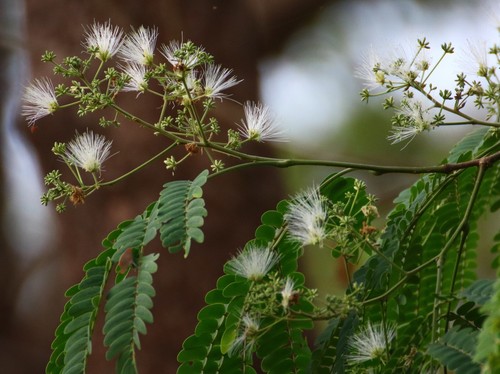
(c) Analía Benavidez, some rights reserved (CC BY-NC), uploaded by Analía Benavidez
iNaturalist· cc-by-sa
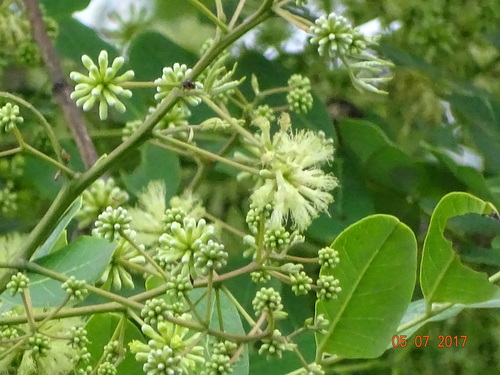
(c) Oscar Alejandro Morales Juárez, some rights reserved (CC BY-SA)
iNaturalist· cc-by-nc
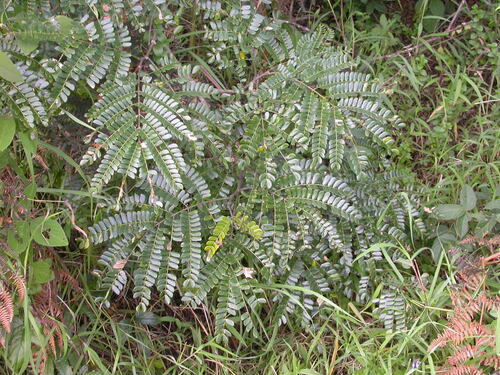
(c) James K. Wetterer, some rights reserved (CC BY-NC)
Summary
Source: WikipediaCrotalaria incana is a species of flowering plant in the Fabaceae family known by various names including shake-shake, velvety rattlebox, silver rattlepod, and woolly rattlepod. It grows in disturbed areas, primarily in the seasonally dry tropical biome. The plant contains toxic alkaloids and is used in traditional medicine after preparation, as well as for poison.
Description
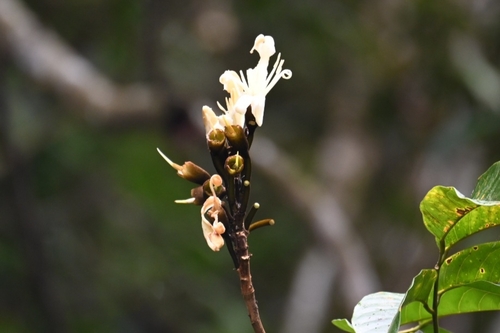
A herb or small shrub. It grows 1 m tall. The stems are yellow to brown and hairy. The leaves have 3 leaflets. These are oval and 2-4 cm long by 1-2 cm wide. The end one is largest. There are 5-15 flowers in a group about 10-20 cm long at the ends of the branches. They are yellow. The pod is 2-3 cm long by 1 cm wide. There are 20-30 seeds.
Edible Uses
The leaves are eaten.
Medicinal Uses
Flowers and unripe fruits are used as abortifacient in Paraguay, where the pods are seen as a magic cure for treating mute and stuttering children. The plant is widely used in folk medicine in Colombia to cure gonorrhea, for baths and poultices, and as a disinfectant for wounds and sores.
Known Hazards
The plant contains toxins, including pyrrolizidine alkaloids. Cattle avoid eating it. Many members of this genus are known to contain pyrrolizidine alkaloids, the most potent of which in this genus are monocrotaline, retrorsine and retronecine. These alkaloids have a cumulative effect upon the body and, unless concentrations in a plant are high, occasional consumption is generally completely safe. Pyrrolizidine alkaloids are derived from amino acids including ornithine. Many of these alkaloids have pronounced hepatic toxicity, but the lungs and other organs may be affected as well. Mutagenic and carcinogenic activities of pyrrolizidine alkaloids have also been reported.
Distribution
It is a tropical plant. In Argentina it grows from sea level to 1,500 m above sea level. In Yunnan.
Where It Grows
Africa, Argentina, Aruba, Asia, Australia, Bahamas, Bangladesh, Belize, Brazil, Burundi, Cameroon, Chad, Chile, China, Congo DR, Cuba, Dominican Republic, East Africa, Ecuador, El Salvador, Eritrea, Ethiopia, Guatemala, Guyana, Haiti, Hawaii, Himalayas, Honduras, India, Indochina, Indonesia, Jamaica, Kenya, Madagascar, Malawi, Malaysia, Mauritius, Mexico, Mozambique, New Caledonia, Northeastern India, Papua New Guinea, PNG, Paraguay, Peru, Puerto Rico, Rwanda, Saudi Arabia, SE Asia, Solomon Islands, Somalia, South America, Sri Lanka, Sudan, Taiwan, Tanzania, Thailand, Trinidad-Tobago, Uganda, Uruguay, Vanuatu, Venezuela, Vietnam, West Indies, Yemen, Zambia, Zimbabwe,
Cultivation
Plants in this genus generally prefer a sunny position, succeeding in dry to moist, well-drained soils. The plan has often escaped from cultivation - it is naturalized in disturbed areas such as roadsides, pastures, and agricultural fields in Hawaii, and t is found as a weed in oil-palm and rubber plantations in southeast Asia. Cultivation of the plant was discontinued in Bogor, Indonesia, because it was attacked by insects. This species has a symbiotic relationship with certain soil bacteria; these bacteria form nodules on the roots and fix atmospheric nitrogen. Some of this nitrogen is utilized by the growing plant but some can also be used by other plants growing nearby.
Propagation
Seed - sow in situ. Pre-soaking the seed for 12 hours in warm water can help to reduce germination time.
Other Uses
Used as a green manure and cover crop, showing promise when grown amongst coffee.
Synonyms
Also Known As
Aikaberavina, Entarta shilako, Qulibish, Sucsac trang, Toro
References (11)
- Addis, G., Asfaw, Z & Woldu, Z., 2013, Ethnobotany of Wild and Semi-wild Edible Plants of Konso Ethnic Community, South Ethiopia. Ethnobotany Research and Applications. 11:121-141
- Jackes, B.R., 2001, Plants of the Tropics. Rainforest to Heath. An Identification Guide. James Cook University. p 54 (As Crotalaria montana)
- Kew Plants of the World Online
- Kidane, B., et al, 2014, Wild and semi-wild leafy vegetables used by the Maale and Ari ethnic communities in southern Ethiopia. Genetic Resour Crop Evol. Springer. p 8
- Lulekal, E., et al, 2011, Wild edible plants in Ethiopia: a review on their potential to combat food insecurity. Afrika Focus - Vol. 24, No 2. pp 71-121
Show all 11 references Hide references
- Paczkowska, G . & Chapman, A.R., 2000, The Western Australian Flora. A Descriptive Catalogue. Western Australian Herbarium. p 422 (As Crotalaria montana)
- Pham-Hoang Ho, 1999, An Illustrated Flora of Vietnam. Nha Xuat Ban Tre. p 989 (As Crotalaria montana)
- Tent. fl. abyss. 152. 1847 (As Crotalaria montana)
- Verdcourt, B., 1979, Manual of New Guinea Legumes. Botany Bulletin No 11, Division of Botany, Lae, Papua New Guinea. p 581 (As Crotalaria montana)
- Wheeler, J.R.(ed.), 1992, Flora of the Kimberley Region. CALM, Western Australian Herbarium, p 386 (As Crotalaria montana)
- World Checklist of Useful Plant Species 2020. Royal Botanic Gardens, Kew