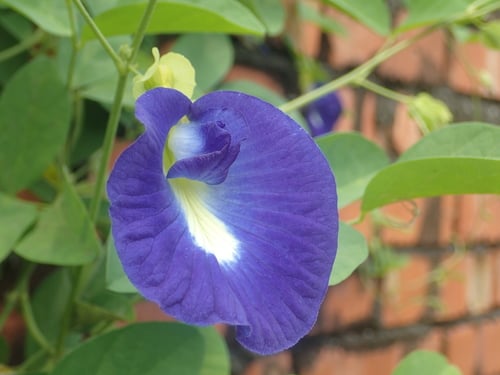
Psophocarpus scandens
(Endl.) Verdc.
African winged bean
iNaturalist· cc-by-nc
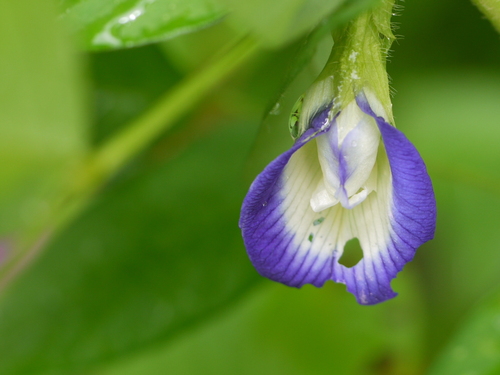
(c) merveille, some rights reserved (CC BY-NC)
iNaturalist· cc-by-nc
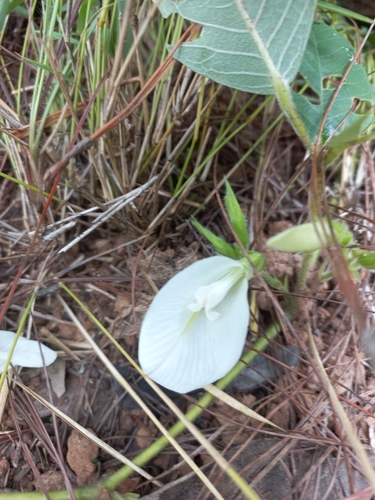
(c) merveille, some rights reserved (CC BY-NC)
iNaturalist· cc-by-nc
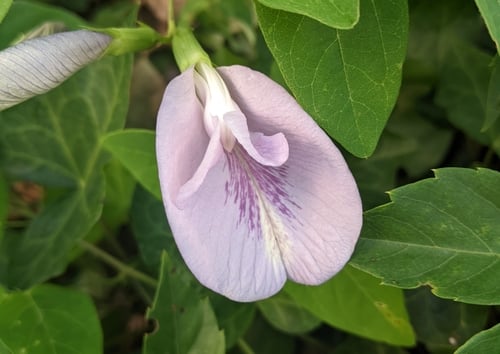
(c) cortniborgerson, some rights reserved (CC BY-NC)
Description
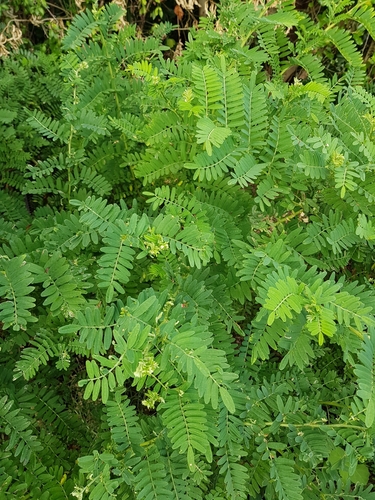
A climbing herb. It continues to grow from year to year. It has long stems which can be slightly hairy. The stems can be 1-6 m long. The leaflets are oval or broadly rounded. They are 2.5-12 cm long and 1.8-10 cm wide. They can taper to a point at the tip. They are rounded or wedge shaped at the base. The leaf stalks are 5-18 cm long. The flower cluster is 5-12 cm long. The flower stalk is 3-40 cm long. The flower petals are pale blue. The fruit are long pods 3.5-8 cm long by 6-7 mm wide. They are square in cross section. There are 4-8 seeds inside. The pods have prominent wings which can have slight teeth along the edge. The seeds are blackish purple. They are 5-7.5 mm long and 3.5-6 mm wide.
Edible Uses
The young leaves and shoots are eaten as a vegetable and can be dried and stored. The immature pods and ripe seeds are cooked and eaten.
Traditional Uses
The young leaves and shoots are eaten as a vegetable. They can be dried and stored. The immature pods and ripe seeds are also cooked and eaten.
This uses section is brief — help expand it
Medicinal Uses
A tea made from the fresh or dried leaves is taken to relieve stomach-ache. The leaves are a good source of protein and minerals and are recommended as a galactagogue for women who are breastfeeding. The leaves are bruised and made into a poultice are applied in the treatment of lumbago, wounds and haemorrhoids. The seedpods are eaten by nursing mothers in order to stimulate milk production.
Distribution
It is a tropical plant. It is a short day plant. In Africa it grows between sea level and 950 m altitude. It grows in areas with a rainfall of 1,200-1,800 mm per year. The average temperature is 25°C.
Where It Grows
Africa, Angola, Asia, Brazil, Burundi, Cameroon, Caribbean, Central Africa, Central African Republic, CAR, Comoros, Congo DR, Congo R, East Africa, Gabon, India, Indochina, Indonesia, Jamaica, Kenya, Madagascar, Malawi, Mauritius, Mozambique, Myanmar, Nigeria, Pacific, Papua New Guinea, PNG, Sao Tome and Principe, SE Asia, Sierra Leone, Southern Africa, South America, Sudan, Tanzania, Trinidad-Tobago, Uganda, Vietnam, West Africa, West Indies, Zambia,
Cultivation
Plants are grown from seed. Seed can be stored. Seeds need to have the hard seed coat broken by scratching before planting. Plants can be allowed to climb over fences or shrubs.
Propagation
Seed - requires pre-treatment. Pre-soaking for 12 - 24 hours in warm water should soften the hard seedcoat and allow the seed to swell. If it does not swell, then making a small nick in the seedcoat (being careful not to damage the embryo) should allow the seed to take up water.
Other Uses
The plant is a source of tannins. Psophocarpus scandens is grown as a cover crop and green manure in Africa and Asia in oil palm or rubber plantations; with bananas, maize, cassava etc. In DR Congo, people plant African winged bean on open land, often in association with sweet potatoes. The plant produces an extensive root system and can be used to stabilize soils on slopes and reduce erosion.
Production
Leaves are usually picked before fruit form.
Other Information
It is a nutritious and easy to grow vegetable. It has been used as a famine food in West Africa. It was accidentally introduced to Papua New Guinea in seed of a cover crop.
Nutrition
| Part | Moisture | kJ | kcal | Protein | Vit A | Vit C | Iron | Zinc |
|---|---|---|---|---|---|---|---|---|
| Leaves | 82 | — | — | 7.1 | — | — | — | — |
| Pods | 87 | — | — | 3.6 | — | — | — | — |
Synonyms
Also Known As
Dau-rong rach, Kikalakasa, M'pava
References (11)
- Burkill, H. M., 1985, The useful plants of west tropical Africa, Vol. 3. Kew.
- Fowler, D. G., 2007, Zambian Plants: Their Vernacular Names and Uses. Kew. p 81
- Grubben, G. J. H. and Denton, O. A. (eds), 2004, Plant Resources of Tropical Africa 2. Vegetables. PROTA, Wageningen, Netherlands. p 433
- Harder, D., Lolema, O. P. M. & Tshisand, M., 1990, Use, Nutritional Composition and Ecogeography of Four Species of Psophocarpus (Fabaceae, Phaseoleae) in Zaire. Economic Botany, Vol. 44, No. 3 pp. 391-409
- ILDIS Legumes of the World http:www:ildis.org/Legume/Web
Show all 11 references Hide references
- Latham, P., 2004, Useful Plants of Bas-Congo province. Salvation Army & DFID p 228
- Nkeoua, G. & Boundzanga, G. C., 1999, Donnees sur les produits forestieres non ligneux en Republique du Congo. FAO. p 35
- Pham-Hoang Ho, 1999, An Illustrated Flora of Vietnam. Nha Xuat Ban Tre. p 956
- Schippers, R.R., 2004. Psophocarpus scandens (Endl.) Verdc. [Internet] Record from Protabase. Grubben, G.J.H. & Denton, O.A. (Editors). PROTA (Plant Resources of Tropical Africa), Wageningen, Netherlands. < http://database.prota.org/search.htm>. Accessed 22 October 2009.
- Taxon 17:539. 1968
- Verdcourt, B., 1979, Manual of New Guinea Legumes. Botany Bulletin No 11, Division of Botany, Lae, Papua New Guinea. p 532