Andira inermis
(Wright) HBK ex DC.
Cabbage tree
iNaturalist· cc-by-nc
(c) Mario Guzmán, some rights reserved (CC BY-NC)
iNaturalist· cc-by-nc
(c) Mario Guzmán, some rights reserved (CC BY-NC)
iNaturalist· cc-by-nc
(c) Mario Guzmán, some rights reserved (CC BY-NC)
Summary
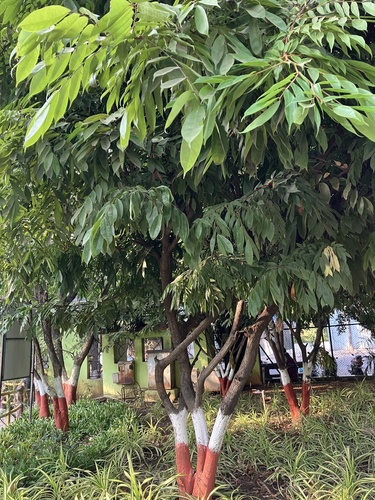
Source: WikipediaAndira inermis is a nitrogen-fixing tree with medicinal properties native to the area from southern Mexico through Central America to northern South America (Peru, Bolivia, and Brazil); it has been introduced to the Caribbean, the Antilles, Florida, and Africa and is often pollinated by bees. The tree has many names due to its wide distribution and multiple uses: it is also known as the almendro macho (in El Salvador), almendro de río or river almond (Honduras), bastard cabbage tree, cabbage angelin (United States), cabbage bark (in Belize and the United States), cabbage tree, carne asada (Costa Rica), guacamayo (Honduras), Jamaica cabbage tree, harino (Panama), moca (Puerto Rico), partridge wood (United States), worm bark, or yellow cabbage tree. The tree grows to approximately 35 metres in height and 0.7 metre in diameter. It is evergreen and unbuttressed and has a dense crown and pink flowers. It grows primarily in riparian zones in forests along rivers. It can also be found in drier areas, including roadsides, pastures, and woodlands. Known for its unpleasant cabbage-like smell, the leaves of Andira inermis are large and green when mature and tan in color when developing. The tree's wood is used for lumber, and its smooth gray bark reportedly has narcotic, laxative, and vermifuge properties.
Description
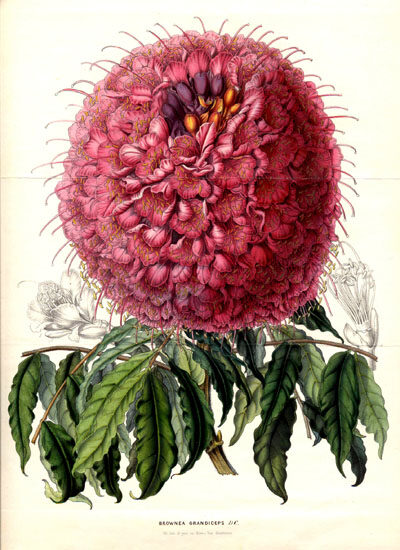
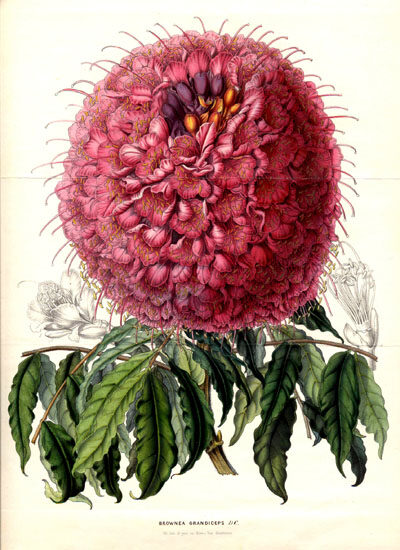
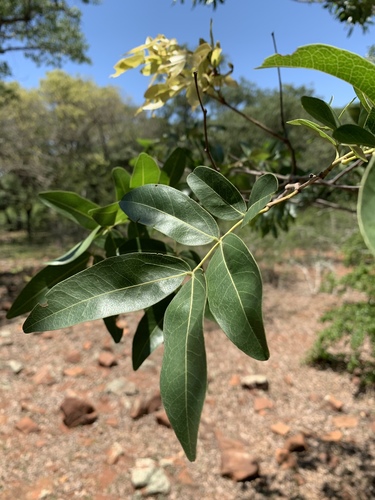
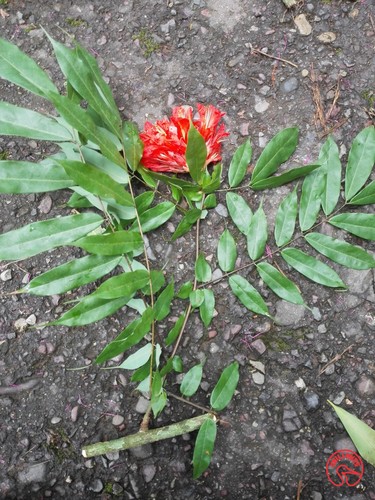
An evergreen tree. It grows 30 m high. The trunk has buttresses. It has a round crown. The leaves are 40 cm long. The leaves have leaflets along the stalk. There are 7-13 leaflets. They are oblong. The flowers are pink. They occur in large masses. They are pea like. The fruit is hard and round. It is a legume pod. It is 4 cm across. It is fleshy. It has a single seed.
Edible Uses
A decoction of the leaves is used as a beverage. The fruits are edible. Some caution should be employed here, the seeds are toxic.
Traditional Uses
The leaves are used to make a drink. The fruit are eaten. CAUTION: The seeds cause diarrhoea.
This uses section is brief — help expand it
Medicinal Uses
Andira inermis has many connections to traditional medicine in Nigeria, where it has been historically used to alleviate sickness and treat diabetes. A study conducted on rats measuring toxicity and glucose levels confirmed that Andira inermis is a viable treatment for diabetes. Rats treated with Andira inermis had decreased blood glucose. Andira inermis is often used by TMPs to get rid of intestinal worms.
Known Hazards
Many members of this genus are used medicinally, particularly to treat parasitic and other skin conditions, and to act as a drastic purgative. The powdered wood, bark and seeds are the parts most commonly used. However the medicinal use of these plants needs to be tempered with caution since the active compounds (the alkaloid andirine is most commonly mentioned) are toxic and, in all but small doses, can cause fever, delerium, vomiting and, in extreme cases, death. Both caster oil (from Ricinus communis) and lemon juice are said to be effective antidotes. The smoke from the wood is said to be toxic and to cause blindness if it gets in the eyes.
Distribution
It is a tropical plant. It can grow in humid or dry coastal woodland and in swamps and savannah. It is often along rivers. In the Cairns Botanical Gardens.
Where It Grows
Africa, America, Asia, Australia, Belize, Bolivia, Brazil, Burkina Faso, Cameroon, Central Africa, Central African Republic, CAR, Central America, Colombia, Costa Rica, Cuba, Dominican Republic, El Salvador, Fiji, Grenada, Guatemala, Guiana, Guianas, Guyana, Haiti, Hawaii, Honduras, India, Indonesia, Jamaica, Mexico, Nicaragua, Nigeria, North America, Pacific, Panama, Peru, Puerto Rico, SE Asia, Singapore, South America, St Lucia, Sudan, Suriname, Trinidad & Tobago, USA, Venezuela, West Africa, West Indies,
Cultivation
Plants are grown from seed. The seeds don't germinate regularly. It can be grown by air layering or cuttings.
Propagation
Seed - the large, hard seeds need to be scarified before planting - making a cut on the hard fruit endocarp with a file and then planting them in seed beds or plastic bags is recommended. The seed does well when sown directly. Two to three seeds per station are planted directly in the field. Seeds start to germinate at week 5 and maximum germination is observed at week 16. Germination rate is 43% - 56%. One year-old plants 50 cm tall or more can be transplanted during the rainy season. Seedlings require low light for establishment and more light for development. In the field, little or no management is necessary.
Other Uses
An insecticide and a piscicide are obtained from the tree. The seeds are burnt in a room, the smoke driving out bats from the home. A leaf decoction is used for washing in Africa. . The heartwood is highly figured and decorative varying from yellowish-brown to dark reddish-brown; it is clearly demarcated from the narrow band of light brown to greyish-yellow sapwood. The texture is very coarse; the grain is straight to slightly irregular; lustre is raher low; there is no distinctive odour or taste. Bands of light coloured parenchyma tissue give the wood a distinctive figure. The wood is very hard, heavy, and very resistant to attack by fungi and termites. The wood air-seasons at a moderate rate with little degrade; once dry it is stable in service. It saws and works fairly well, except that it is difficult to plane to a smooth surface because of the alternating bands of hard and soft tissue; even using sharp cutting edges, a fine ridged appearance commonly results. This surface, called raised grain, is usually eliminated in the final sanding. The wood works well in the lathe, takes nails and screws well, and glues satisfactorily; however, the surface lacks lustre after planing and sanding because of the large amount of soft tissue. This soft tissue also absorbs polish more readily than the hard fibre tissue and may cause some difficulty in French polishing. However, the wood is generally reported to finish smoothly. It has been used for bridges, railroad tracks and waterfront docks and also to make poles, high grade furniture, billiard-cues, umbrella handles and boats. The wood has no resonance, making it particularly suitable for radio and television cabinets and other similar uses. Prunings from shade trees in coffee plantations are used as firewood. The tree has been used in conservation programmes to restore degraded watersheds where moist conditions are prevalent. It is used as a shade tree in coffee plantations because it has a spreading crown and responds well to pruning. Plants are fairly tolerant of salt-laden winds and have a low-branching habit, making them potentially useful as part of a shelterbelt or windbreak. The flowers are a good source of nectar for bees.
Notes
There are 30 Andira species. Also as Papilionaceae.
Synonyms
Also Known As
Angelin, Bastard Mahogany, Bat seed, Brown heart, Cabbage bark, Ikong-ebonko, Partridgewood, Pohon kol
References (14)
- Ambasta S.P. (Ed.), 2000, The Useful Plants of India. CSIR India. p 39
- Barwick, M., 2004, Tropical and Subtropical Trees. A Worldwide Encyclopedic Guide. Thames and Hudson p 25
- Burkill, I.H., 1966, A Dictionary of the Economic Products of the Malay Peninsula. Ministry of Agriculture and Cooperatives, Kuala Lumpur, Malaysia. Vol 1 (A-H) p 157
- Condit, R., et al, 2011, Trees of Panama and Costa Rica. Princeton Field Guides. p 216
- Grandtner, M. M., 2008, World Dictionary of Trees. Wood and Forest Science Department. Laval University, Quebec, Qc Canada. (Internet database http://www.WDT.QC.ca)
Show all 14 references Hide references
- Jardin, C., 1970, List of Foods Used In Africa, FAO Nutrition Information Document Series No 2.p 120
- Plants of Haiti Smithsonian Institute http://botany.si.edu/antilles/West Indies
- Prodr. 2:475. 1825
- Smith, A.C., 1985, Flora Vitiensis Nova, Lawaii, Kuai, Hawaii, Volume 3 p 156
- Staples, G.W. and Herbst, D.R., 2005, A tropical Garden Flora. Bishop Museum Press, Honolulu, Hawaii. p 303
- Sukarya, D. G., (Ed.) 2013, 3,500 Plant Species of the Botanic Gardens of Indonesia. LIPI p 126
- Vivien, J. & Faure, J.J., 1985, Abres des forets dense d'Afrique Centrale. Agence de Cooperation Culturelle et Technique. Paris. p 346
- World Checklist of Useful Plant Species 2020. Royal Botanic Gardens, Kew
- www.worldagroforestrycentre.org/sea/products/afdbases/af/asp/SpeciesInfo.asp?SpID=17942