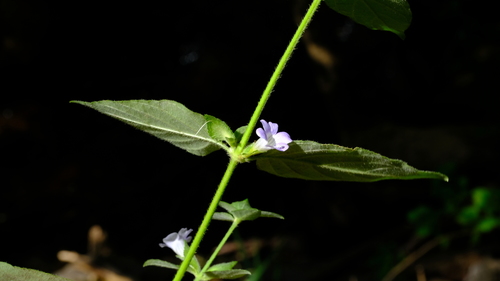
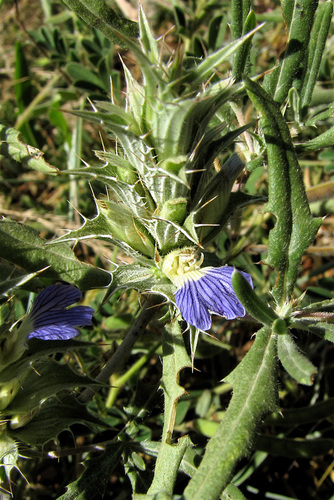
Justicia calyculata
Deflers
iNaturalist· cc-by-nc
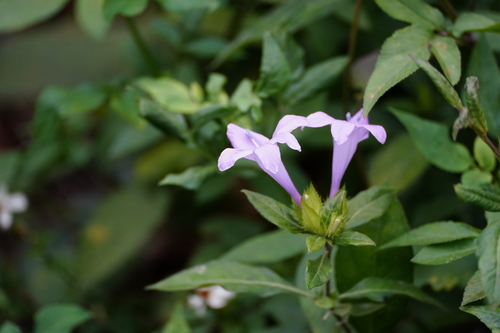
(c) Abigail Church, some rights reserved (CC BY-NC)
gbif· cc-by-sa
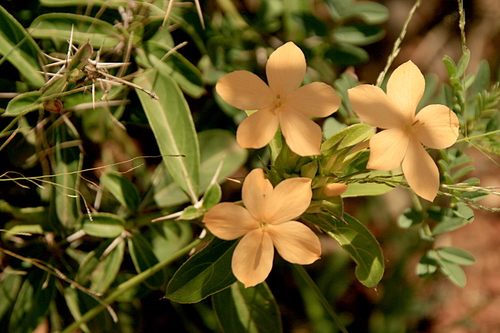
Susan Brown
gbif· cc-by-sa
Susan Brown
Description
A herb. It lives for a short time. It grows 30 cm tall. The stems are hairy. The flowers are in groups of 3-5 in spikes opposite the leaf axils.
This description is brief — help expand it
Edible Uses
The leaves are boiled and eaten or made into a paste as a vegetable.
Traditional Uses
The leaves are boiled and eaten or made into a paste.
This uses section is brief — help expand it
Distribution
It is a tropical plant. It grows between 25-450 m above sea level.
Where It Grows
Africa, East Africa, Ethiopia, Kenya, Somalia, Sudan, Tanzania, Uganda, Yemen,
Also Known As
Kachuma, Kolaybuchi, Kurkuncha, Randolla, Zuma
References (6)
- Addis, G., Asfaw, Z & Woldu, Z., 2013, Ethnobotany of Wild and Semi-wild Edible Plants of Konso Ethnic Community, South Ethiopia. Ethnobotany Research and Applications. 11:121-141
- Addis, G., et al, 2013, The Role of Wild and Semi-wild Edible Plants in Household Food Sovereignty in Hamer and Konso Communities, South Ethiopia. Ethnobotany Research & Applications. 11:251-271
- Kidane, B., et al, 2014, Wild and semi-wild leafy vegetables used by the Maale and Ari ethnic communities in southern Ethiopia. Genetic Resour Crop Evol. Springer.
- Lulekal, E., et al, 2011, Wild edible plants in Ethiopia: a review on their potential to combat food insecurity. Afrika Focus - Vol. 24, No 2. pp 71-121
- Mutie, F. M., et al, 2023, Important Medicinal and Food Taxa (Orders and Families) in Kenya, Based on Three Quantitative Approaches. Plants 2023, 12, 1145
Show all 6 references Hide references
- Vainio-Mattila, K., 2000, Wild vegetables used by the Sambaa in the Usumbara Mountains, NE Tanzania. Ann. Bot. Fennici 37:57-67