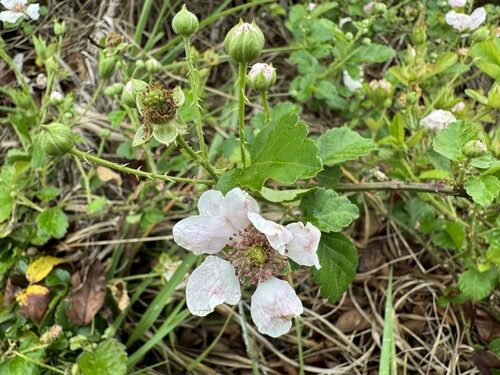
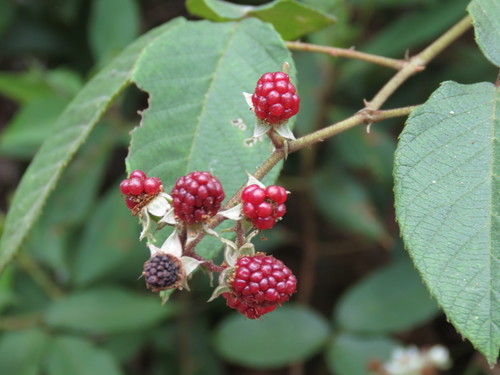
Prunus salicifolia
Kunth
Capulin, Mexican bird cherry
iNaturalist· cc-by-nc
(c) Oscar Contreras, some rights reserved (CC BY-NC)
iNaturalist· cc-by-nc
(c) Oscar Contreras, some rights reserved (CC BY-NC)
iNaturalist· cc-by-nc
(c) Oscar Contreras, some rights reserved (CC BY-NC)
Summary
Source: WikipediaA fast-growing deciduous tree reaching 25 m tall. Hardy to UK zone 6. Flowers appear May to June. Hermaphrodite flowers are insect-pollinated. Tolerates light sandy, medium loamy, and heavy clay soils with good drainage; grows in acidic, neutral, and alkaline conditions. Requires full sun and prefers moist soil. Cannot tolerate shade.
Description
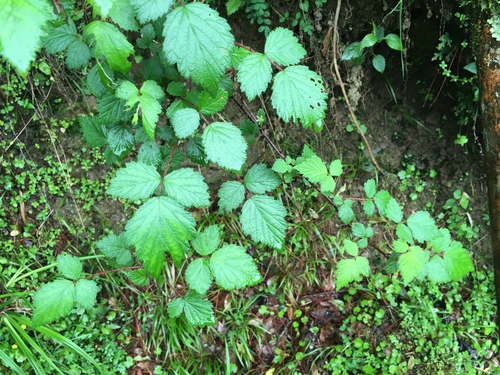
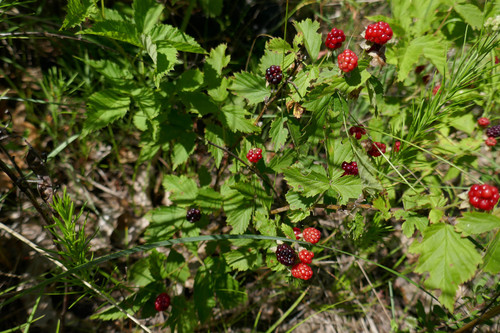
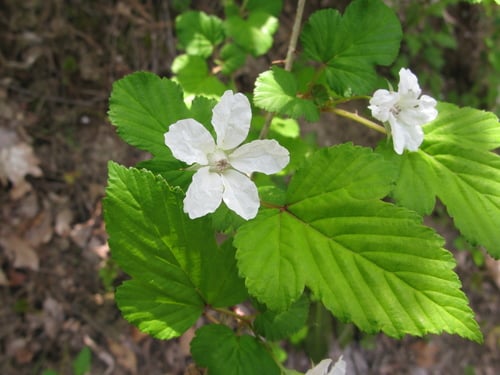
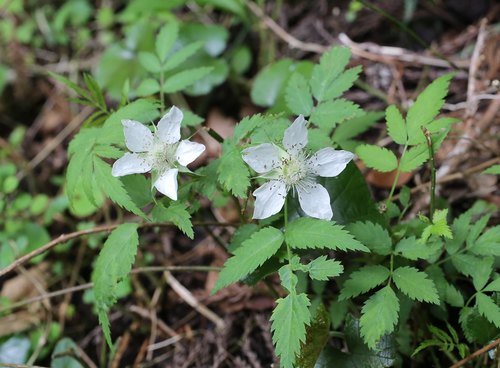
An erect umbrella shaped tree which loses many leaves during the year. It has a short stout trunk. The bark is rough and grey. The leaves are produced one after another along the branch. They are 10-11 cm long and have a sweet smell. The edges of the leaves have teeth. The leaves are deep green and shiny on top and dull underneath. New leaves can be red. The flowers are produced in clusters in the angles of leaves. The flowers are about 2 cm across with white petals and easy to see stamens. About 15-20 fruit can develop on a cluster. Some fall before ripening. The fruit are 1-2 cm across and with one large stone inside. The flesh of the fruit is pale green and firm. There are several named cultivated varieties.
Edible Uses
The fruit is thin-skinned with juicy, sub-acid to sweet flesh and a slightly astringent aftertaste. It can be eaten fresh or used in preserves, pies, and similar preparations. The juice is sometimes mixed with cornmeal to make a cake. Fruit is about 17mm in diameter with one large seed. The seed is also edible raw or cooked, but should not be eaten if it tastes excessively bitter.
Traditional Uses
The fruit are eaten raw or used in preserves. They are stewed and used for jams and preserves.
This uses section is brief — help expand it
Medicinal Uses
No specific research has been recorded for this species, but all Prunus members contain amygdalin and prunasin, which break down in water to release hydrocyanic acid (prussic acid or cyanide). In small amounts, this highly toxic compound can stimulate respiration, aid digestion, and produce a sense of well-being.
Known Hazards
Although no specific mention has been seen for this species, it belongs to a genus where most, if not all members of the genus produce hydrogen cyanide, a poison that gives almonds their characteristic flavour. This toxin is found mainly in the leaves and seed and is readily detected by its bitter taste. It is usually present in too small a quantity to do any harm but any very bitter seed or fruit should not be eaten. In small quantities, hydrogen cyanide has been shown to stimulate respiration and improve digestion, it is also claimed to be of benefit in the treatment of cancer. In excess, however, it can cause respiratory failure and even death.
Distribution
A tropical plant. They suit a subtropical to warm temperate climate. It grows in the highlands in the tropics. In the mountains in Mexico is grows between 1200 and 3000 m altitude. It is frost tolerant and can stand temperatures down to -7°C. They do not have specific daylength requirements and do not require chilling prior to fruiting. The require full sunlight. Trees need wind protection when young. They do best on sandy soils with a pH 5.5 to 6.5. It suits hardiness zones 6-10.
Where It Grows
Asia, Australia, Central America, China, Colombia, Costa Rica, Ecuador, El Salvador, Guatemala, Honduras, Mexico, Nicaragua, North America, Panama, Peru, South America,
Cultivation
Not North American native, All or parts of this plant are poisonous, Attractive flowers or blooms. Thrives in a well-drained moisture-retentive loamy soil, growing well on limestone. Prefers some lime in the soil but is likely to become chlorotic if too much is present. Plants are not exacting in their soil requirements, succeeding in poor soils and in clays. Requires a sunny position. Plants have tolerated temperatures down to about -22°c in Massachusetts, N. America. This species is closely related to P. serotina, but it has larger edible fruits. A fast growing and vigorous species, it can fruit in its third year from seed. Trees have a very low chilling requirement and are adapted to grow in warm winter areas where true cherries are unable to fruit. They are cultivated in C. America, from Mexico to Peru, for their edible fruit. There are some named varieties. 'Ecuadorian' has large sweet fruit and is a heavy cropper. 'Fausto' has large sweet fruit and is a good cropper. 'Harriet' is a dwarf tree with large fruit. 'Hauchi Grande' has large mild-flavoured fruit and is a very heavy cropper. Most members of this genus are shallow-rooted and will produce suckers if the roots are damaged. Plants in this genus are notably susceptible to honey fungus.
Propagation
Seed requires 2–3 months of cold stratification and is best sown in a cold frame as soon as it is ripe. Stored seed should be sown in a cold frame as early in the year as possible, with protection from mice. Germination can be slow, sometimes taking up to 18 months. Prick out seedlings into individual pots when large enough to handle, overwinter in a greenhouse or cold frame, and plant out in late spring or early summer the following year. Cuttings of half-ripe wood with a heel can be taken in July/August in a frame. Softwood cuttings from vigorous plants can be taken in spring to early summer in a frame. Layering can be done in spring.
Other Uses
A green dye can be extracted from the leaves, and the fruit yields a dark grey to green dye. The wood is hard and insect-resistant, making it suitable for furniture, musical instruments, and similar uses. It also serves as a good fuel source.
Production
Trees are fast growing. They can reach 3 m in 12-18 months. Fruit are produced 6-8 years after planting from seeds and 2-3 years after planting from grafts. There can be more than one crop of fruit per year. Fruit will store in cool conditions for 4-6 weeks.
Notes
There are about 200 Prunus species.
Synonyms
References (12)
- Cundall, P., (ed.), 2004, Gardening Australia: flora: the gardener's bible. ABC Books. p 1096
- Facciola, S., 1998, Cornucopia 2: a Source Book of Edible Plants. Kampong Publications, p 204
- Hibbert, M., 2002, The Aussie Plant Finder 2002, Florilegium. p 241
- John, L., & Stevenson, V., 1979, The Complete Book of Fruit. Angus & Robertson p 284
- Kang, J. et al, 2016, Wild food plants and fungi used in the mycophilous Tibetan community of Zhagana (Tewo Country, Gansu, China) Journal of Ethnobiology and Ethnomedicine. 12:21
Show all 12 references Hide references
- Kiple, K.F. & Ornelas, K.C., (eds), 2000, The Cambridge World History of Food. CUP p 1744
- Macmillan, H.F. (Revised Barlow, H.S., et al) 1991, Tropical Planting and Gardening. Sixth edition. Malayan Nature Society. Kuala Lumpur. p 317
- Martin, F. W., et al, 1987, Perennial Edible Fruits of the Tropics. USDA Handbook 642 p 54
- Morton, J. F., 1987, Fruits of Warm Climates. Wipf & Stock Publishers p 108
- Plants for a Future, The Field, Penpol, Lostwithiel, Cornwall, PL22 0NG, UK. http://www.scs.leeds.ac.uk/pfaf/
- Popenoe,
- F. W. H. A. von Humboldt et al., Nov. gen. sp. 6:190[folio]; 6:241[quarto], t. 563. 1824