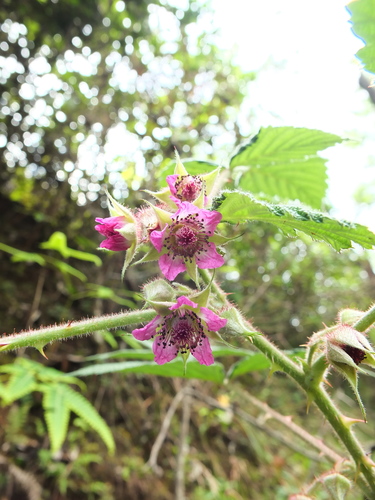
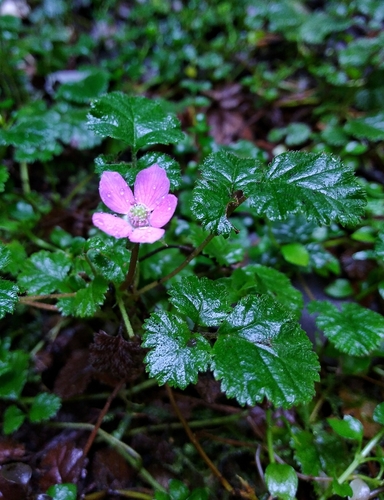
Prunus pilosiuscula
(C.K.Schneid.) Koehne.
wikimedia· cc-by-sa
Ian W. Fieggen (via Wikimedia Commons)
Summary
Source: WikipediaA deciduous tree reaching 9 m tall. Hardy to UK zone 5. Flowers appear April to May with seeds ripening July to August. Hermaphroditic flowers are insect-pollinated. Tolerates light sandy, medium loamy, and heavy clay soils with good drainage. Grows in mildly acid to mildly alkaline pH. Thrives in semi-shade or full sun and prefers moist soil.
Description
A deciduous tree reaching 9 m tall. Hardy to UK zone 5. Flowers appear April to May with seeds ripening July to August. Hermaphroditic flowers are insect-pollinated. Tolerates light sandy, medium loamy, and heavy clay soils with good drainage. Grows in mildly acid to mildly alkaline pH. Thrives in semi-shade or full sun and prefers moist soil.
Edible Uses
The fruit is a cherry about 10mm in diameter with a single large seed, and is possibly edible raw or cooked. The seed is also edible raw or cooked, but should be avoided if it tastes too bitter due to potential toxicity.
Medicinal Uses
No specific research has been recorded for this species, but like all members of the genus it contains amygdalin and prunasin, compounds that break down in water to release hydrocyanic acid (prussic acid). In small amounts this highly poisonous substance can stimulate respiration, aid digestion, and produce a sense of well-being.
Known Hazards
Seeds containing excessive bitterness indicate high hydrocyanic acid content and should not be consumed.
Distribution
Temperate.
Where It Grows
Asia, China,
Propagation
Seed requires 2–3 months of cold stratification and is best sown in a cold frame as soon as it is ripe. Stored seed should be sown as early in the year as possible. Protect seed from mice. Germination can be slow, sometimes taking 18 months. Prick seedlings into individual pots when large enough to handle, overwinter in a greenhouse or cold frame, then plant out in late spring or early summer the following year. Cuttings of half-ripe wood with a heel can be taken in July/August in a frame. Softwood cuttings from vigorous plants can be taken in spring to early summer in a frame. Layering can be done in spring.
Other Uses
A green dye can be extracted from the leaves, while the fruit yields a dark grey to green dye.
Notes
There are about 200 Prunus species.
Also Known As
Yeyingtao
References (3)
- Kang, Y., et al, 2012, Wild food plants and wild edible fungi in two valleys on the Qinling Mountains (Shaanxi, central China) Journal of Ethnobiology and Ethnomedicine; 9:26
- Plants for a Future, The Field, Penpol, Lostwithiel, Cornwall, PL22 0NG, UK. http://www.scs.leeds.ac.uk/pfaf/
- C. S. Sargent, Pl. wilson. 1:202. 1912