Chaenomeles cathayensis
(Hemsl.) C. K. Schneid.
Chinese quince, Cathay quince
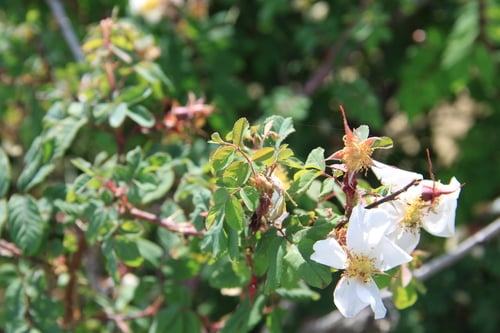
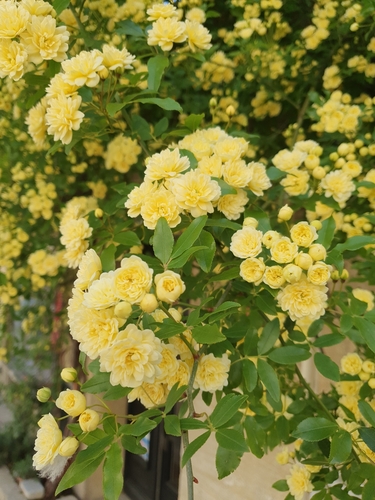
iNaturalist· cc-by-nc
(с) 小铖/Smalltown, некоторые права защищены (CC BY-NC), загрузил 小铖/Smalltown
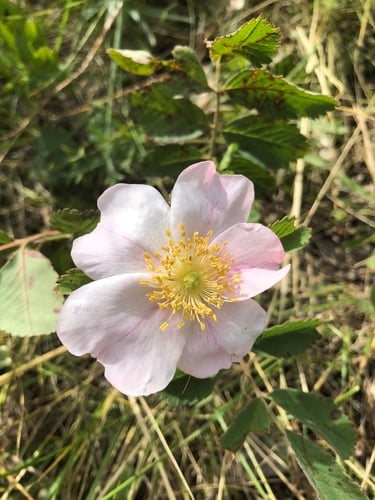
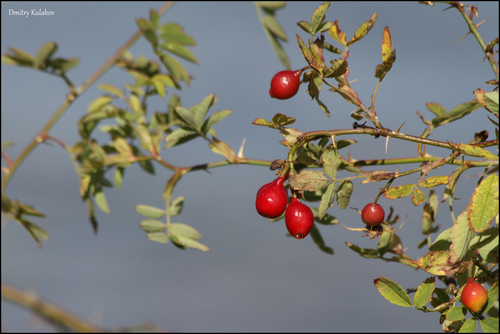
iNaturalist· cc-by-nc
(с) Johann, некоторые права защищены (CC BY-NC), загрузил Johann
Summary
Source: WikipediaChaenomeles cathayensis is a species of flowering plant in the rose family, Rosaceae. It is native to China, Bhutan, and Myanmar. In Chinese, its common name is mùguā hǎitáng (木瓜海棠) or máo yè mùguā (毛葉木瓜). This is a thorny deciduous shrub or tree growing up to 6 meters tall. The leaves are pointed, often toothed, and oval to lance-shaped. They are woolly-haired on the undersides, at least when new. The pink or white bell-shaped flowers are up to 4 centimeters wide. The fruit is a fragrant yellow-red pome 6 or 7 centimeters wide. Its habitats include slopes, forest margins and roadsides. The plant is cultivated.
Description
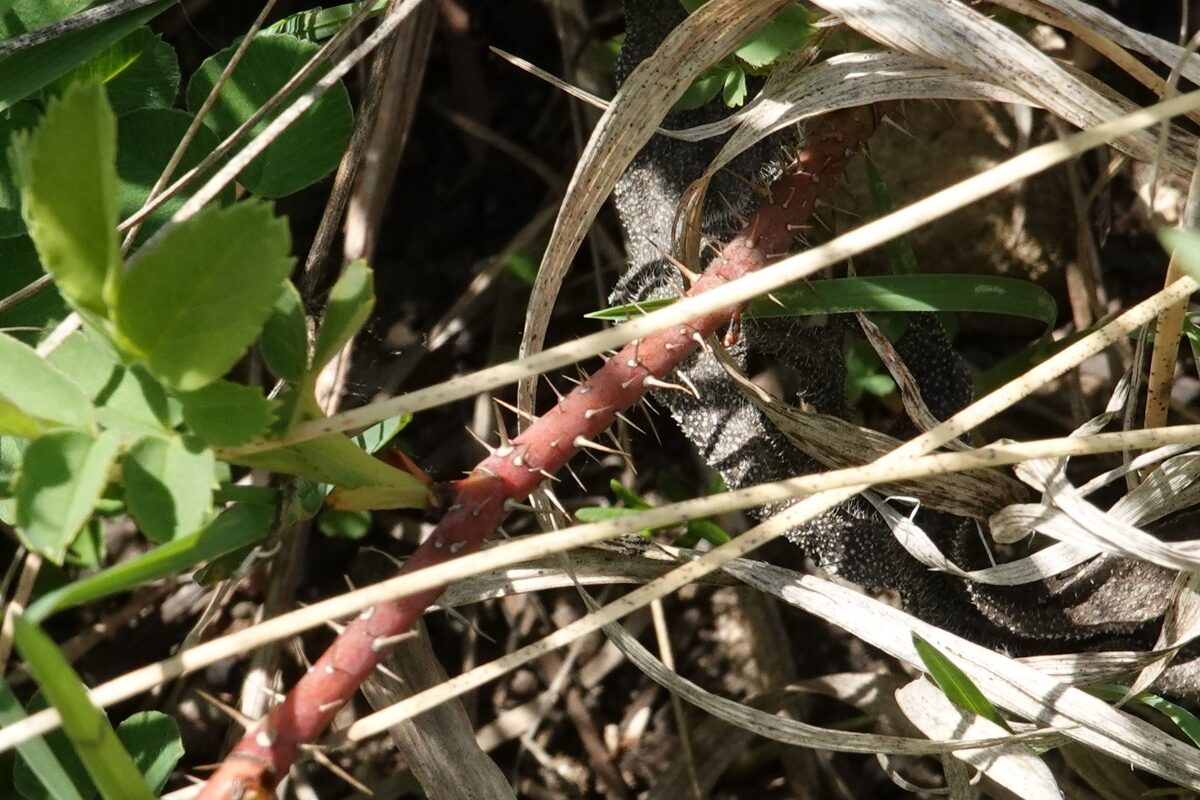
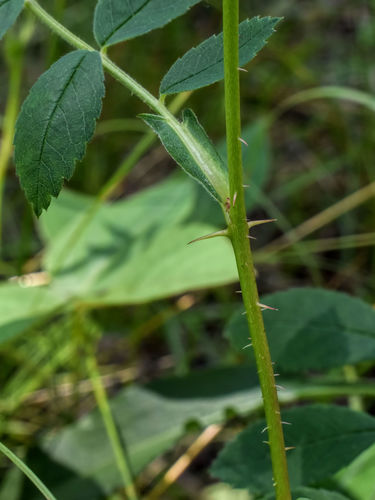
A small tree or large sparsely branched evergreen shrub. It can be 6 m high but is often only 3 m high. It has spiny branches. The leaves are shiny and mid-green. They are sword shaped and have teeth along the edge. The leaves are often red and velvety underneath. The flowers are often in clusters of 2 or 3. They are white with a pink flush. The fruit are green and have a scent. They are 15 cm long. They turn yellow as they ripen.
Edible Uses
The fruit is very harsh eaten raw but becomes fragrant when cooked, making an excellent jelly and a very good jam. It is especially good cooked with apples in apple pies. The fruit is very large, reaching up to 15cm long and 9cm wide.
Traditional Uses
The fruit can be used for jelly. They can also be stewed or preserved.
This uses section is brief — help expand it
Medicinal Uses
The fruit is antiemetic, antirheumatic, antispasmodic, and digestive. It is used in the treatment of rheumatic pain, convulsions of the calf muscles, vomiting, dyspepsia, and diarrhoea.
Distribution
It is a temperate plant. It is best in well-composted, well-drained moist soils. It is resistant to frost and drought. It does best in a warm climate to help ripen the fruit. It suits hardiness zones 5-10. In Sichuan and Yunnan. Arboretum Tasmania.
Where It Grows
Asia, Australia, Britain, China*, Europe, Indochina, Myanmar, SE Asia, Tasmania, Tibet,
Cultivation
Plants can be grown from fresh seed. Plants take 3-5 years before they are large enough to plant out. Plants can also be grown from cuttings. Larger cuttings over 20 cm long root more easily. Plants can be grafted.
Propagation
Seed is best sown as soon as it is ripe in a sheltered position outdoors or in a cold frame. Stored seed should be sown in February in a greenhouse; germination usually takes place within 6 weeks. Prick seedlings into individual pots as soon as they are large enough to handle. Well-grown seedlings may be large enough to plant out in summer, but should be given some protection in their first winter; otherwise plant out in late spring of the following year. Cuttings of half-ripe wood can be taken in July/August in a frame. Cuttings of mature wood of the current year's growth can be taken in November in a cold frame. Layering in late spring or autumn is a reliable method, though it takes 12 months.
Other Uses
None known
Production
A fruit can weigh 200 g.
Other Information
It is a cultivated plant.
Notes
There are about 3 Chaenomeles species.
Synonyms
Also Known As
Chinsaw-ga, Mawau, Tong-ju-bha-bu
References (18)
- Bodkin, F., 1991, Encyclopedia Botanica. Cornstalk publishing, p 243
- Brickell, C. (Ed.), 1999, The Royal Horticultural Society A-Z Encyclopedia of Garden Plants. Convent Garden Books. p 251
- Cundall, P., (ed.), 2004, Gardening Australia: flora: the gardener's bible. ABC Books. p 363
- Davis, S.D., Heywood, V.H., & Hamilton, A.C. (eds), 1994, Centres of plant Diversity. WWF. Vol 1 or 2. p 109 (As Cydonia cathayensis)
- Etherington, K., & Imwold, D., (Eds), 2001, Botanica's Trees & Shrubs. The illustrated A-Z of over 8500 trees and shrubs. Random House, Australia. p 202
Show all 18 references Hide references
- Facciola, S., 1998, Cornucopia 2: a Source Book of Edible Plants. Kampong Publications, p 196
- Flora of China. www.eFloras.org Volume 9
- Glowinski, L., 1999, The Complete Book of Fruit Growing in Australia. Lothian. p 43
- Hooker's Icon. Pl. 27: t. 2657-2658. 1900 (As Cydonia cathayensis)
- Ill. Handb. Laubholzk. 1:730. 1906
- John, L., & Stevenson, V., 1979, The Complete Book of Fruit. Angus & Robertson p 163
- Li, S., et al, 2020, Monpa, memory, and change: an ethnobotanical study of plant use in Mêdog County, South-east Tibet, China. Journal of Ethnobiology and Ethnomedicine. (2020) 16:5 p 22
- Lyle, S., 2006, Discovering fruit and nuts. Land Links. p 173
- Plants for a Future database, The Field, Penpol, Lostwithiel, Cornwall, PL22 0NG, UK. http://www.scs.leeds.ac.uk/pfaf/
- Ryan, S., 2008, Dicksonia. Rare Plants Manual. Hyland House. p 14
- Tanaka,
- www.efloras.org Flora of China Volume 9
- Yamina rare plants, 25 Moores Road Monbulk Victoria (As Cydonia cathayensis)