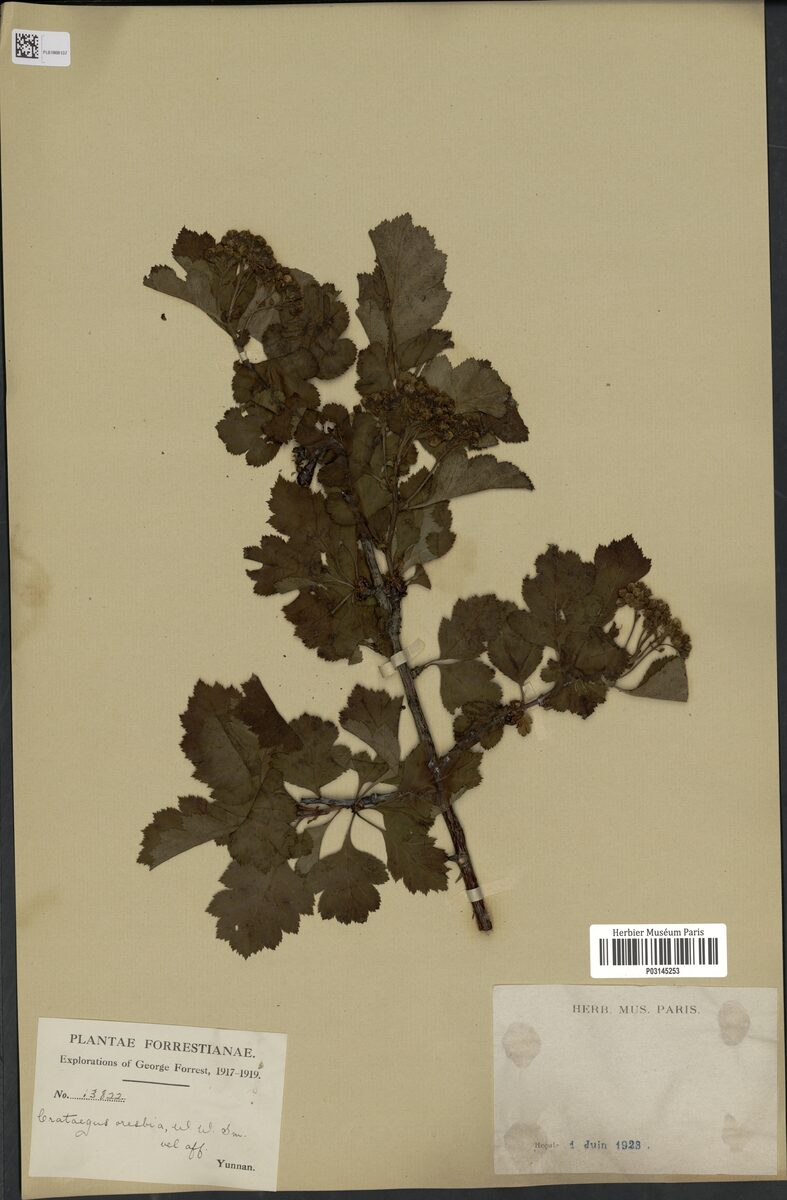
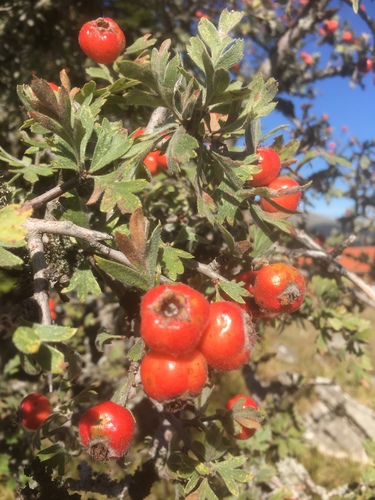
Chaenomeles speciosa
(Sweet) Nakai
Japanese flowering quince, Chinese-quince
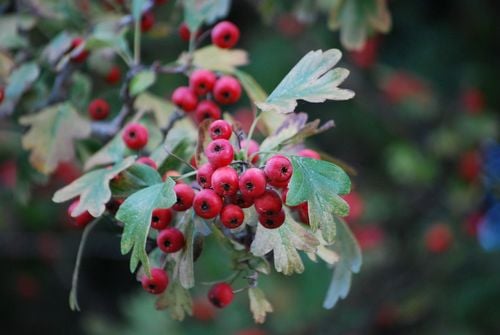
iNaturalist· cc-by-nc-sa
(c) rachelgreenbelt, some rights reserved (CC BY-NC-SA)
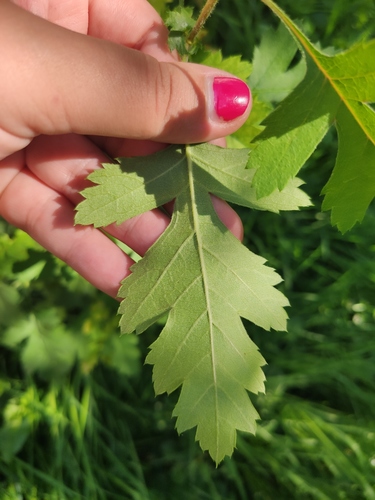
iNaturalist· cc-by
(c) Thomas Mesaglio, some rights reserved (CC BY), uploaded by Thomas Mesaglio
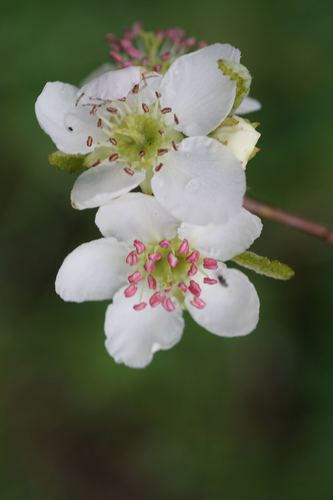
iNaturalist· cc-by
(c) Kim, Hyun-tae, some rights reserved (CC BY), uploaded by Kim, Hyun-tae
Summary
Source: WikipediaChaenomeles speciosa, the flowering quince, Chinese quince or Japanese quince, is a thorny deciduous or semi-evergreen shrub native to eastern Asia. It is taller than another commonly cultivated species, C. japonica, usually growing to about 2 m (6 ft 7 in). The flowers are usually red, but may be pink, white or green. The fruit is a fragrant, hard pome that resembles a quince.
Description
A shrub or small tree. It grows 1.8-2.5 m tall and spreads 2.5-3.7 m wide. The leaves are 10 cm long and 3.5 cm wide. The flowers are red and occur singly. They are 3-5 cm across. The flowers and fruit have short stalks. The fruit is small. They are 4-7 cm long. It smells like a quince. The fruit form on the older wood. There are some named cultivated varieties.
Edible Uses
The fruit is best cooked, as it is very harsh and acid when raw but becomes fragrant with cooking. It is used for jams, jellies, and as a flavouring with cooked apples. The fruit can be apple- or pear-shaped and reaches up to 6.5cm long by 6.5cm wide.
Traditional Uses
The fruit are normally made into jelly or jam. They can be used to flavour fruit pies. They can be parboiled or cooked and mashed after the seeds are removed then honey and ginger added to make a drink. The fruit are used as a spice and to prepare wine.
Medicinal Uses
The fruit is analgesic, anti-inflammatory, antispasmodic, astringent, and digestive. A decoction is used internally in the treatment of nausea, joint pains, cholera, and associated cramps.
Distribution
It is a temperate plant. It is frost hardy. It does best in a warm climate to fully ripen the fruit. Plants fruit best in the sun. It suits hardiness zones 6-9. In Sichuan and Yunnan.
Where It Grows
Africa, Asia, Australia, Bhutan, Britain, China*, Europe, Himalayas, Indochina, Japan, Madagascar, Myanmar, SE Asia, Slovenia, Tibet, USA,
Cultivation
Plants can be grown by seed. They can also be grown by semi-ripe cuttings or by layering.
Propagation
Seed is best sown as soon as it is ripe in a sheltered position outdoors or in a cold frame. Stored seed should be sown in February in a greenhouse; germination usually takes place within 6 weeks. Prick seedlings into individual pots as soon as they are large enough to handle. Well-grown seedlings may be large enough to plant out in summer, but should be given some protection in their first winter; otherwise plant out in late spring of the following year. Cuttings of half-ripe wood can be taken in July/August in a frame. Cuttings of mature wood of the current year's growth can be taken in November in a cold frame. Layering in late spring or autumn is a reliable method, though it takes 12 months.
Other Uses
Plants can be grown as a medium-sized hedge. Some cultivars, such as 'Jet Trail', are suitable for use as ground cover. Also used as an espalier and valued for attracting wildlife.
Production
In Yunnan fruit are harvested in September and October.
Notes
There are about 3 Chaenomeles species.
Synonyms
Also Known As
Japonica, Japonska kutina, Kaontsisinoa, Suomugua, Wrinkled-skinned quince, Zhoupi Mugua
References (33)
- Arora, R. K., 2014, Diversity in Underutilized Plant Species - An Asia-Pacific Perspective. Bioversity International. p 62
- Bodkin, F., 1991, Encyclopedia Botanica. Cornstalk publishing, p 244
- Bodkin, F., 1991, Encyclopedia Botanica. Cornstalk publishing, p 244 (As Chaenomeles lagenaria)
- Brickell, C. (Ed.), 1999, The Royal Horticultural Society A-Z Encyclopedia of Garden Plants. Convent Garden Books. p 251
- Brown, D., 2002, The Royal Horticultural Society encyclopedia of Herbs and their uses. DK Books. p 163
Show all 33 references Hide references
- Cheng, Z., et al, 2022, Ethnobotanical study on wild edible plants used by Dulong people in northwestern Yunnan, China. Journal of Ethnobiology and Ethnomedicine (2022) 18:3
- Cundall, P., (ed.), 2004, Gardening Australia: flora: the gardener's bible. ABC Books. p 363
- Etherington, K., & Imwold, D., (Eds), 2001, Botanica's Trees & Shrubs. The illustrated A-Z of over 8500 trees and shrubs. Random House, Australia. p 202
- Facciola, S., 1998, Cornucopia 2: a Source Book of Edible Plants. Kampong Publications, p 196
- Flora of China. www.eFloras.org Volume 9
- Glowinski, L., 1999, The Complete Book of Fruit Growing in Australia. Lothian. p 42
- Heywood, V.H., Brummitt, R.K., Culham, A., and Seberg, O. 2007, Flowering Plant Families of the World. Royal Botanical Gardens, Kew. p 282
- Hibbert, M., 2002, The Aussie Plant Finder 2002, Florilegium. p 64
- Jackes, D. A., Edible Forest Gardens
- Jap. J. Bot. 4:331. 1929
- John, L., & Stevenson, V., 1979, The Complete Book of Fruit. Angus & Robertson p 163 (As Chaenomeles lagenaria)
- Joyce, D., 1998, The Garden Plant Selector. Ryland, Peters and Small. p 131
- Ju, Y., et al, 2013, Eating from the wild: diversity of wild edible plants used by Tibetans in Shangri-la region, Yunnan, China, Journal of Ethnobiology and Ethno medicine 9:28
- Kermath, B. M., et al, 2014, Food Plants in the Americas: A survey of the domesticated, cultivated and wild plants used for Human food in North, Central and South America and the Caribbean. On line draft. p 210
- Kiple, K.F. & Ornelas, K.C., (eds), 2000, The Cambridge World History of Food. CUP p 1792
- Lord, E.E., & Willis, J.H., 1999, Shrubs and Trees for Australian gardens. Lothian. p 213
- Lyle, S., 2006, Discovering fruit and nuts. Land Links. p 173
- Morley, B. & Everard, B., 1970, Wild Flowers of the World. Ebury press. Plate 92
- Plants for a Future database, The Field, Penpol, Lostwithiel, Cornwall, PL22 0NG, UK. http://www.scs.leeds.ac.uk/pfaf/
- Ryan, S., 2008, Dicksonia. Rare Plants Manual. Hyland House. p 14
- USDA, ARS, National Genetic Resources Program. Germplasm Resources Information Network - (GRIN). [Online Database] National Germplasm Resources Laboratory, Beltsville, Maryland. Available: www.ars-grin.gov/cgi-bin/npgs/html/econ.pl (10 April 2000)
- Valder, P., 1999, The Garden Plants of China. Florilegium. p 153
- van Wyk, B., 2005, Food Plants of the World. An illustrated guide. Timber press. p 168
- Wiersema, J. H. & Leon, B., 2013, World Economic Plants. A Standard Reference CRC Press. 2nd Ed. p 164
- World Checklist of Useful Plant Species 2020. Royal Botanic Gardens, Kew (As Chaenomeles lagenaria)
- Yeshi, K. et al, 2017, Taxonomical Identification of Himalayan Edible Medicinal Plants in Bhutan and the Phenolic Contents and Antioxidant Activity of Selected Plants. TBAP 7 (2) 2017 pp 89 - 106 (As Chaenomeles lagenaria)
- Young, J., (Ed.), 2001, Botanica's Pocket Trees and Shrubs. Random House. p 230
- Zhang, L., et al, 2016, Ethnobotanical study of traditional edible plants used by the Naxi people during droughts. Journal of Ethnobiology and Ethnomedicine. 12:39