Prunus pensylvanica
L. f.
Pin cherry, Wild red cherry, Fire cherry
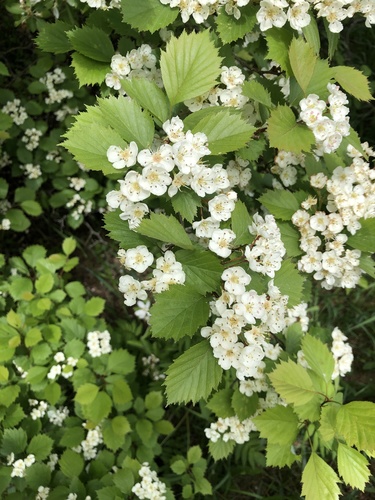
iNaturalist· cc-by-nc
(c) cgbb2004, some rights reserved (CC BY-NC), uploaded by cgbb2004
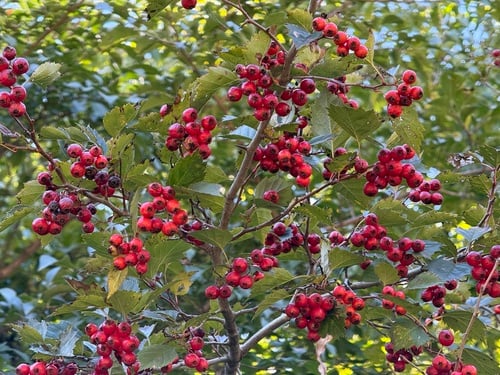
iNaturalist· cc-by-nc
(c) Daniel Pohl, some rights reserved (CC BY-NC)
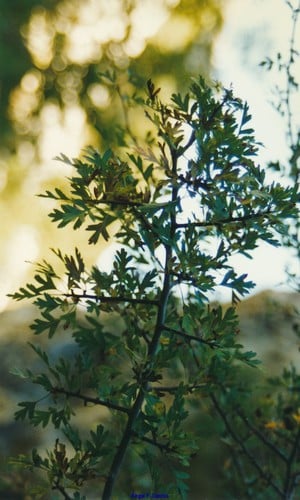
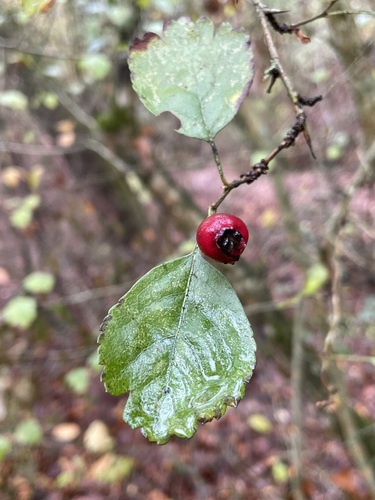
iNaturalist· cc-by-nc
(c) Daniel Pohl, some rights reserved (CC BY-NC)
Summary
Source: WikipediaPrunus pensylvanica, also known as bird cherry, fire cherry, pin cherry, and red cherry, is a North American cherry species in the genus Prunus.
Description
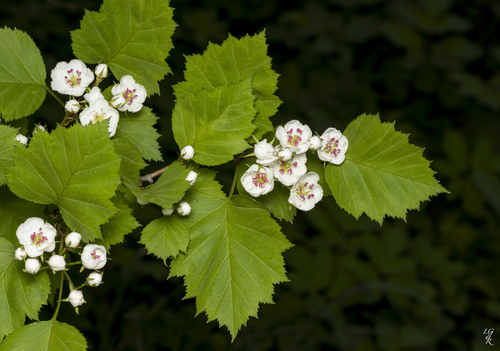
A small tree. It grows to 12 m high. The trunk is 25 cm across. The bark is smooth, shiny and dark reddish-brown. The leaves are sword shaped and 8-15 cm long. They taper gradually to a slender sharp tip. The leaves are thin and fragile. There are very small uneven teeth around the edge. The flowers are white and attractive. They occur in clusters of 4-7. The fruit occur in clusters and are dark red. They are on long stalks. The fruit are 6-8 mm across. The flesh is edible. It is sour.
Edible Uses
The fruit is about 6mm in diameter with a single large seed and has a thin, sour flesh — generally too tart to eat raw, it is best used for pies, jellies, and similar preparations. A gum that seeps from the trunk can be used as a chewing gum. The seed is edible raw or cooked but should not be eaten if too bitter due to potential toxicity.
Traditional Uses
The fruit are used for jellies and desserts. They are also used for pies and jam. The fruit are dried and stored for later use. The dried fruit are ground into powder and used to make soup.
Medicinal Uses
An infusion of the bark has been used to treat fevers, bronchitis, coughs, colds, infections, and blood poisoning. A decoction of the inner bark has been used for laryngitis. A poultice of boiled, shredded inner bark has been applied to a bleeding umbilical cord. An infusion of the inner bark has served as an eye wash for sore eyes. The astringent root bark has been used as a wash on old sores and ulcers. A decoction of the root has been used for stomach pains. The fruit is commonly used in homemade cough mixtures. Like all members of the genus, this species contains amygdalin and prunasin, which break down in water to produce hydrocyanic acid (prussic acid). In small amounts this highly poisonous compound can stimulate respiration, improve digestion, and produce a sense of well-being.
Known Hazards
The seed and leaves contain hydrogen cyanide, a poison that gives almonds their characteristic flavour. This toxin is readily detected by its bitter taste. Usually present in too small a quantity to do any harm, any very bitter seed or fruit should not be eaten. In small quantities, hydrogen cyanide has been shown to stimulate respiration and improve digestion, it is also claimed to be of benefit in the treatment of cancer. In excess, however, it can cause respiratory failure and even death.
Distribution
It cannot tolerate shade. It can tolerate drought. Temperate. It suits hardiness zones 2-9.
Where It Grows
Australia, Canada, North America, USA,
Cultivation
Thrives in a well-drained moisture-retentive loamy soil, growing well on limestone. Prefers some lime in the soil but is likely to become chlorotic if too much lime is present. Requires a sunny position and soon dying out if in the shade of other trees. A fast growing but short-lived tree. This species plays a vital role in the regeneration of forests in its native habitats, acting as a nurse tree until it is shaded out by other trees. It often springs up in burnt-over areas from seed spread by birds and mammals. Closely related to P. emarginata, and hybridizing with it where their ranges overlap. A good bee plant. The fruit is very attractive to birds. Most members of this genus are shallow-rooted and will produce suckers if the roots are damaged. Plants in this genus are notably susceptible to honey fungus.
Propagation
Seed requires 2–3 months of cold stratification and is best sown in a cold frame as soon as it is ripe. Stored seed is best given 2 months of warm stratification followed by 3 months cold, then sown as early in the year as possible. Protect seed from mice. Germination can be slow, sometimes taking 18 months. Prick seedlings into individual pots when large enough to handle, overwinter in a greenhouse or cold frame, then plant out in late spring or early summer the following year. Cuttings of half-ripe wood with a heel can be taken in July/August in a frame, though success rates are very low. Softwood cuttings from vigorous plants can be taken in spring to early summer in a frame. Layering can be done in spring.
Other Uses
A green dye can be obtained from the leaves, and a dark grey to green dye from the fruit. The outer bark is watertight, resists decay, and is used to ornament baskets. The tree has a vigorous root system and is planted to stabilise soils and control erosion. It is a useful pioneer species for burnt-over land, establishing quickly to shelter other woodland trees before dying out. The wood is light, soft, and close-grained, weighing 31lb per cubic foot, and is used mainly as fuel.
Production
Plants grow rapidly. Trees live for 40 years.
Notes
There are about 200 Prunus species.
Synonyms
References (19)
- Beckstrom-Sternberg, Stephen M., and James A. Duke. "The Foodplant Database." http://probe.nalusda.gov:8300/cgi-bin/browse/foodplantdb.(ACEDB version 4.0 - data version July 1994)
- Brickell, C. (Ed.), 1999, The Royal Horticultural Society A-Z Encyclopedia of Garden Plants. Convent Garden Books. p 839
- Cormack, R. G. H., 1967, Wild Flowers of Alberta. Commercial Printers Edmonton, Canada. p 158
- Cundall, P., (ed.), 2004, Gardening Australia: flora: the gardener's bible. ABC Books. p 1096
- Esperanca, M. J., 1988. Surviving in the wild. A glance at the wild plants and their uses. Vol. 2. p 152
Show all 19 references Hide references
- Facciola, S., 1998, Cornucopia 2: a Source Book of Edible Plants. Kampong Publications, p 203
- Farrar, J.L., 1995, Trees of the Northern United States and Canada. Iowa State University press/Ames p 376
- Fisk, J. R. & Hoover, E., 2015, Wild Fruits of Minnesota. A Filed Guide. University of Minnesota p 14
- Grandtner, M. M., 2008, World Dictionary of Trees. Wood and Forest Science Department. Laval University, Quebec, Qc Canada. (Internet database http://www.wdt.qc.ca)
- Hedrick, U.P., 1919, (Ed.), Sturtevant's edible plants of the world. p 525
- Kermath, B. M., et al, 2014, Food Plants in the Americas: A survey of the domesticated, cultivated and wild plants used for Human food in North, Central and South America and the Caribbean. On line draft. p 714
- Little, E.L., 1980, National Audubon Society Field Guide to North American Trees. Alfred A. Knopf. p 504
- MacKinnon, A., et al, 2009, Edible & Medicinal Plants of Canada. Lone Pine. p 86
- Moerman, D. F., 2010, Native American Ethnobotany. Timber Press. p 442
- Plants for a Future, The Field, Penpol, Lostwithiel, Cornwall, PL22 0NG, UK. http://www.scs.leeds.ac.uk/pfaf/
- Russell, T., Cutler, C., & Walters, M., 2005, The Illustrated Encyclopedia of Trees of the Americas. Lorenz Books. p 153
- Suppl. pl. 252. 1782 ("1781")
- Toupal, R. S. & Hollenback, K., 2009, An Ethnobotany of Indiana Dunes National Lakeshore: Plant Uses of the Ojibwa People. Bureau of Applied Research in Anthropology. University of Arizona
- Turner, N., 1997, Food Plants of Interior First Peoples. Royal BC Museum Handbook p 146