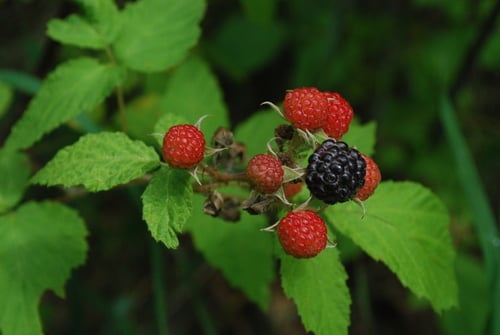
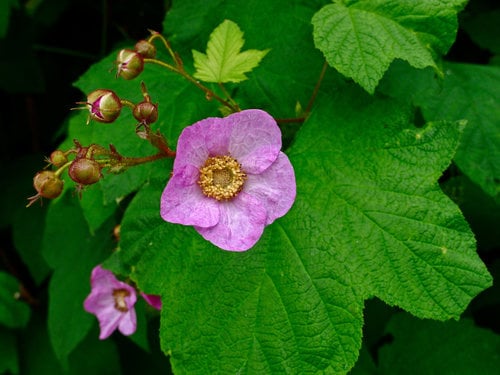
Rubus hayata-koidzumii
Naruh.
Yü-shan raspberry
iNaturalist· cc-by-nc
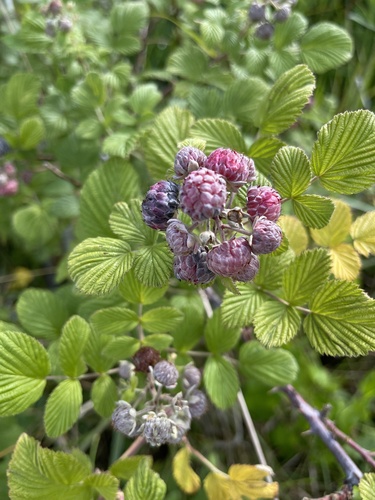
(c) David Robichaud, some rights reserved (CC BY-NC)
iNaturalist· cc-by-nc
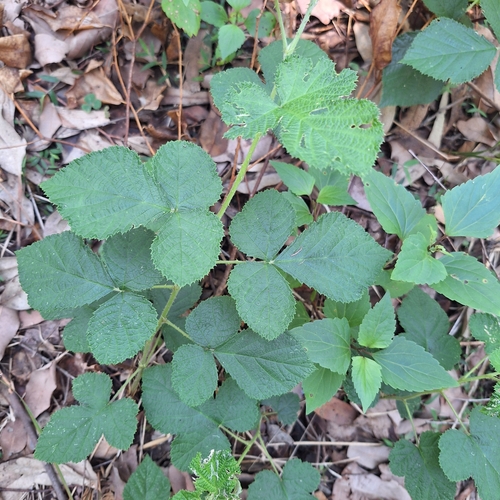
(c) Yaling Lin, some rights reserved (CC BY-NC)
iNaturalist· cc-by-nc
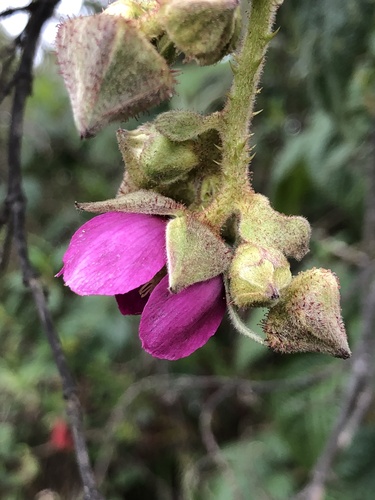
(c) cmacca, some rights reserved (CC BY-NC)
Description
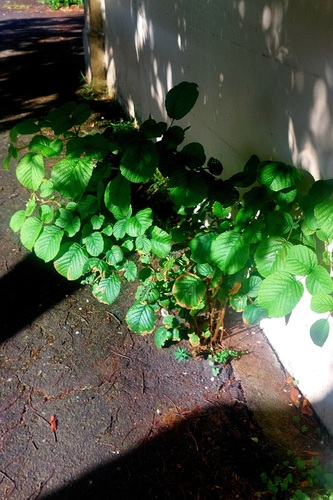
A creeping herb. It forms a ground cover. The leaves are simple and opposite. They are dark green and heart shaped with deep lobes along the edge. The flowers are white and have 5 petals. The fruit are yellow.
Edible Uses
The fruit are eaten.
Distribution
It is a tropical plant. It grows at high altitudes.
Where It Grows
Asia, Taiwan,
Production
It is fast growing.
Notes
There are about 250 Rubus species.
Dangerous Lookalikes
This plant can be confused with the following toxic species. Always verify identification carefully before consuming any wild plant.
Red Baneberry
Actaea rubra
Walter Siegmund (talk)
Yü-shan raspberry
Rubus hayata-koidzumii
(c) David Robichaud, some rights reserved (CC BY-NC)
Red Baneberry: Short herbaceous plant (no thorns), berries on thick red stems, each berry has a single seed, compound sharply-toothed leaves.
Yü-shan raspberry: Thorny woody canes (brambles), aggregate berry made of many drupelets, berries pull easily from receptacle.
Synonyms
Also Known As
Hime-fuyuichigo
References (3)
- J. Phytogeogr. Tax. 32:58. 1984
- USDA, ARS, National Genetic Resources Program. Germplasm Resources Information Network - (GRIN). [Online Database] National Germplasm Resources Laboratory, Beltsville, Maryland. Available: www.ars-grin.gov/cgi-bin/npgs/html/econ.pl (10 April 2000)
- Wiersema, J. H. & Leon, B., 2013, World Economic Plants. A Standard Reference CRC Press. 2nd Ed. p 598