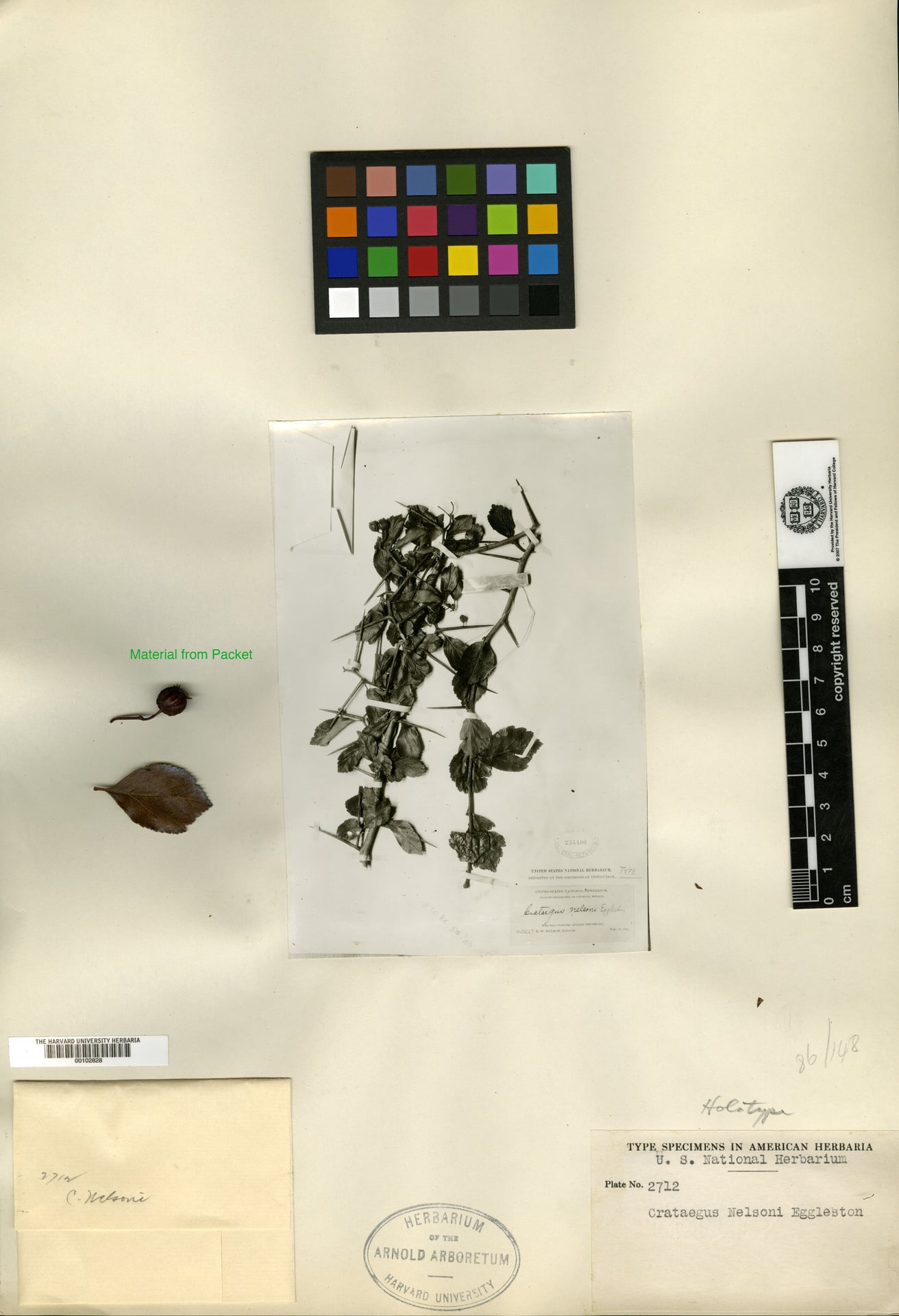
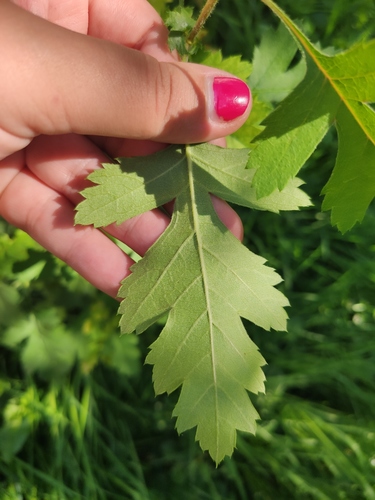
Prunus ilicifolia subsp. lyonii
(Eastw.) Sarg.
Catalina cherry
iNaturalist· cc-by-sa
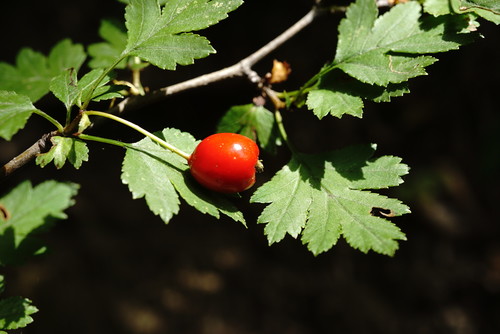
(c) Joe Decruyenaere, some rights reserved (CC BY-SA)
iNaturalist· cc-by
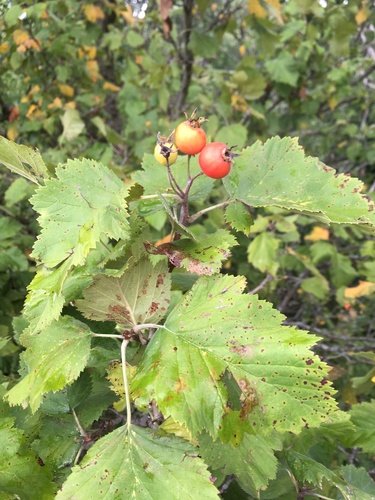
(c) rappman, some rights reserved (CC BY), uploaded by rappman
iNaturalist· cc-by
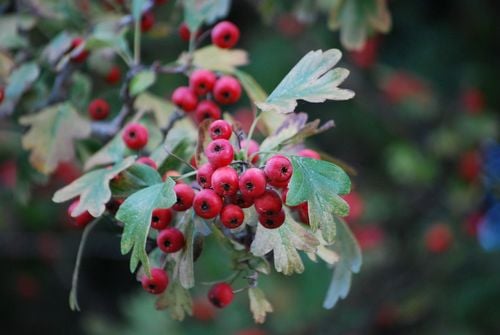
(c) Bri Weldon, some rights reserved (CC BY)
Summary
Source: WikipediaPrunus ilicifolia (Common names: hollyleaf cherry, evergreen cherry; islay - Salinan Native American) is native to the chaparral areas of coastal California (from Mendocino County to San Diego County), Baja California, and Baja California Sur. as well as the desert chaparral areas of the Mojave Desert. Prunus ilicifolia is an evergreen shrub to tree, producing edible cherries, with shiny and spiny toothed leaves similar in appearance to those of holly. This resemblance is the source of both the common name "holly-leaved cherry" and the scientific epithet "ilicifolia" (Ilex-leaved). It grows 2.4 to 9.1 metres (8 to 30 feet) tall, with thick, alternate leaves 2.5 to 5.1 centimetres (1 to 2 inches) in length. It has small white flowers growing in clusters, similar in appearance to most members of the rose family, Rosaceae, flowering from March to May. The flowers are terminal on small stalks, with the youngest at the cluster center. The purple to black fruit is sweet, with a very thin pulp around a large single stone (drupe). The plant is prized for cultivation, showy and easily grown from seed, and has been cultivated for centuries as a food source, and tolerates twice yearly pruning when often used as a hedge. The plant likes full sun, loose open soil (porous), and tolerates drought conditions well, but needs regular watering when young. Despite its name, it is not a true cherry (P. subg. Cerasus) species. It is traditionally included in P. subg. Laurocerasus, but molecular research indicates it is nested with species of P. subg. Padus. Ilicifolia or "ilex foliage," means "holly-like leaves" in Latin
Description
A temperate tree in the Rosaceae family bearing red to black fruits approximately 3 cm across.
This description is brief — help expand it
Edible Uses
The fruit and seeds are eaten.
Traditional Uses
The fruit are eaten.
This uses section is brief — help expand it
Known Hazards
The pulp of the cherry is edible. However, the seeds of the hollyleaf cherry are considered to be toxic, and the plant must undergo certain leaching processes to make it safe for consumption. Native Americans fermented the fruit into an intoxicating drink. Some also cracked the dried cherries and made meal from the seeds after grinding and leaching them. It has also been made into jam. The method of preparation for the cherry was to first extract and crush the kernel in a mortar, and the resulting powder would then be leached in order to eliminate remaining bad chemicals. The final step was to boil the leached powder into an atole. Once this process was completed, Native Californians would then make soup base, tortillas, or tamale-like foods using the resulting ground meal. Other times, the kernel would be kept whole, leached to remove its hydrocyanic acid content, roasted for a couple hours, and then used to make cakes or balls. Aside from food, the hollyleaf cherry was also used for medicinal purposes by some Native Californian tribes, including the Diegueño and the Cahuilla. Specifically, infusions made from the bark and roots of hollyleaf cherry plants would be used as treatment for common colds and coughs.
Distribution
Temperate. Melbourne Botanical gardens.
Where It Grows
Australia, Mexico, North America, USA,
Notes
There are about 200 Prunus species.
Synonyms
Also Known As
Catalina, Cereza
References (7)
- Bodkin, F., 1991, Encyclopedia Botanica. Cornstalk publishing, p 841
- Facciola, S., 1998, Cornucopia 2: a Source Book of Edible Plants. Kampong Publications, p 199 (As Laurocerasus lyonii)
- Lord, E.E., & Willis, J.H., 1999, Shrubs and Trees for Australian gardens. Lothian. p 67
- Manual of the trees of North America, ed. 2:582. 1922
- Plants for a Future, The Field, Penpol, Lostwithiel, Cornwall, PL22 0NG, UK. http://www.scs.leeds.ac.uk/pfaf/
Show all 7 references Hide references
- Segura, S., et al, 2018, The edible fruit species in Mexico. Genet Resour Crop Evol (2018) 65:1767–1793 (As Prunus lyonii)
- www.desert-tropicals.com