Angelica sylvestris
L.
Tree Angelica, Wild Angelica
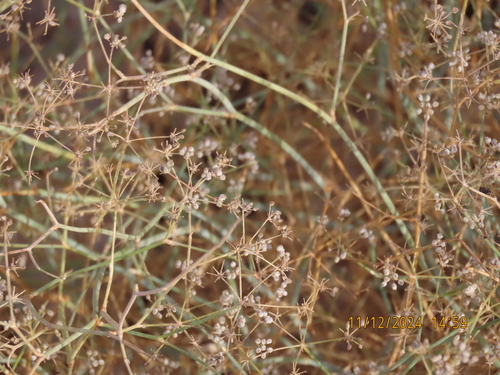
iNaturalist· cc-by-nc
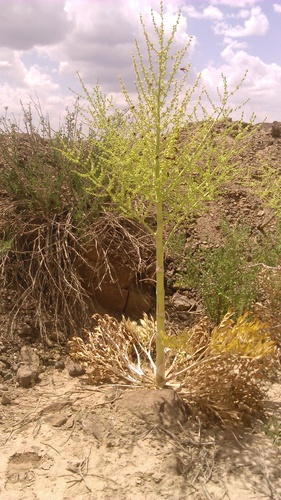
(c) judithlee, some rights reserved (CC BY-NC), uploaded by judithlee
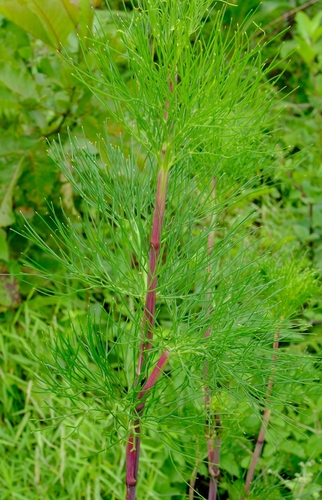
iNaturalist· cc-by-nc
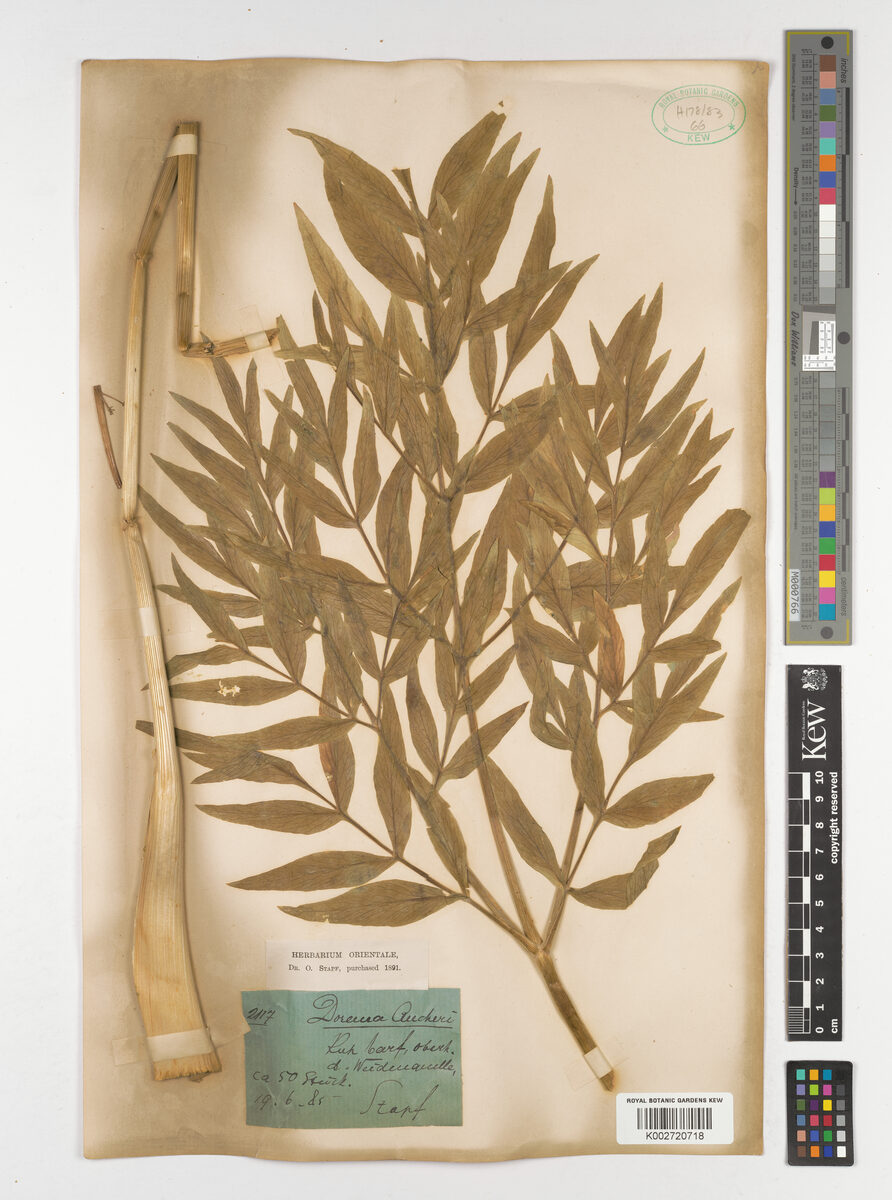
(c) A Emmerson, some rights reserved (CC BY-NC), uploaded by A Emmerson
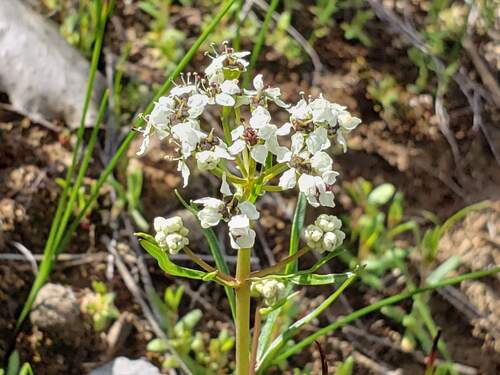
iNaturalist· cc-by-nc
(c) josefwirth, some rights reserved (CC BY-NC), uploaded by josefwirth
Summary
Source: WikipediaAngelica sylvestris or wild angelica is a species of flowering plant, native to Europe and central Asia. An annual or short-lived perennial growing to a maximum of 2.5 m (8.2 ft), it has erect purplish stems and rounded umbels of minuscule white or pale pink flowers in late summer.
Description
A small plant. It grows for 2 years or can keep growing for a few years. It grows 2 m tall and spreads 1 m wide. The underground stem or rhizome is thick. The stems are erect and hollow and branch at the top. They are purple. The leaves are green and divided 3 times and are triangle shaped. They are 60 cm long. There are teeth along the edge. The flowers are white in compound groups at the top of the plant. The fruit are oval and flattened. There are wings along the edge.
Edible Uses
Edible Parts: Leaves Root Seed Shoots Edible Uses: Condiment Leaves, young shoots and stems - used as an aromatic addition to salads, or cooked and used as a vegetable. The taste is somewhat bitter. The chopped leaves are a good addition to cooked acid fruits, especially rhubarb. The stem and leafstalks are used in candies and sweetmeats. Seed - used as an aromatic flavouring in confections and pastries. Root - cooked.
Traditional Uses
The young stems and leaves are boiled and eaten as a vegetable. The stalks are peeled and used in soups. The chopped leaves are added to rhubarb and other stewed fruit dishes. The roots are used as a spice of flavouring. The seeds are used as a spice.
Medicinal Uses
Antispasmodic Carminative Diaphoretic Diuretic Expectorant Parasiticide Stimulant Stomachic Tonic The root and the seeds are antispasmodic, aromatic, carminative, diaphoretic, diuretic, emmenagogue, expectorant, stimulant, stomachic, and tonic. This plant is less rich in active principles than A. archangelica and so is much less used medicinally than that species, but a decoction is sometimes used in the treatment of bronchial catarrh, coughs and dyspepsia. Large doses have the effect of depressing the central nervous system.
Known Hazards
All members of this genus contain furocoumarins, which increase skin sensitivity to sunlight and may cause dermatitis.
Distribution
It is a temperate plant. It does best in moist rich soil. It needs a protected slightly shady position. It cannot tolerate drought. It can tolerate frost.
Where It Grows
Albania, Asia, Australia, Britain, Caucasus, China, Estonia, Europe, Faroe Islands, France, Germany, Guadeloupe, Iceland, Italy, Luxembourg, Mediterranean, Netherlands, Russia, Siberia, Slovenia, Switzerland, Tasmania, Turkey, Türkiye, West Indies,
Cultivation
Requires a deep moist fertile soil in dappled shade or full sun. Succeeds in deep shade. Plants are reliably perennial if they are prevented from setting seed.
Propagation
Seed - best sown in a cold frame as soon as it is ripe since the seed only has a short viability. Seed can also be sown in the spring, though germination rates will be lower. It requires light for germination. When large enough to handle, prick the seedlings out into individual pots and grow them on in a cold frame for their first winter, planting them out into their permanent positions in the spring. The seed can also be sow in situ as soon as it is ripe.
Other Uses
Dye Parasiticide The pulverized fruits are used to kill head parasites. A good yellow dye is obtained from the plant (the report does not specify which part of the plant). Special Uses Food Forest
Notes
There are 50 Angelica species. They are temperate plants.
Nutrition
| Part | Moisture | kJ | kcal | Protein | Vit A | Vit C | Iron | Zinc |
|---|---|---|---|---|---|---|---|---|
| Leaves | 88 | 199 | 49 | 1.7 | — | — | — | — |
| Seed | — | — | — | — | — | — | — | — |
| Root | — | — | — | — | — | — | — | — |
Synonyms
Also Known As
Ground ash, Heinputk, Kekire, Navadni gozdni koren, Putski, Soohgiputk, Woodland angelica
References (22)
- Abbet, C., et al, 2014, Ethnobotanical survey on wild alpine food plants in Lower and Central Valais (Switzerland). Journal of Ethnopharmacology 151 (2014) 624–634
- Bircher, A. G. & Bircher, W. H., 2000, Encyclopedia of Fruit Trees and Edible Flowering Plants in Egypt and the Subtropics. AUC Press. p 28
- Bodkin, F., 1991, Encyclopedia Botanica. Cornstalk publishing, p 83
- Brickell, C. (Ed.), 1999, The Royal Horticultural Society A-Z Encyclopedia of Garden Plants. Convent Garden Books. p 118
- Cerne, M., 1992, Wild Plants from Slovenia used as Vegetables. Acta Horticulturae 318
Show all 22 references Hide references
- Dogan, A., et al, 2014, A review of edible plants on the Turkish Apiaceae species. J. Fac. Pharm. Istanbul, 44(2) pp 251-262
- Ertug, F, Yenen Bitkiler. Resimli Türkiye Florası -I- Flora of Turkey - Ethnobotany supplement
- Facciola, S., 1998, Cornucopia 2: a Source Book of Edible Plants. Kampong Publications, p 15
- Guil-Guerrero, J. L., et al, 2001, Edible Wild Plants. in Recent Progress in Medicinal Plants Vol. 8 Sci. Tech publishing, Texas
- Hedrick, U.P., 1919, (Ed.), Sturtevant's edible plants of the world. p 55
- Hibbert, M., 2002, The Aussie Plant Finder 2002, Florilegium. p 28
- INFOODSUpdatedFGU-list.xls
- Irving, M., 2009, The Forager Handbook, A Guide to the Edible Plants of Britain. Ebury Press p 110
- Kalle, R. & Soukand, R., 2012, Historical ethnobotanical review of wild edible plants of Estonia (1770s-1960s) Acta Societatis Botanicorum Poloniae 81(4):271-281
- Luczaj, L. et al, 2012, Wild food plant use in 21st century Europe: the disappearance of old traditions and the search for new cuisines involving wild edibles. Acta Soc Bot Pol 81(4):359–370
- Mabey, R., 1973, Food for Free. A Guide to the edible wild plants of Britain, Collins. p 129
- Plants for a Future database, The Field, Penpol, Lostwithiel, Cornwall, PL22 0NG, UK. http://www.scs.leeds.ac.uk/pfaf/
- Seidemann J., 2005, World Spice Plants. Economic Usage, Botany, Taxonomy. Springer. p 43
- Sp. pl. 1:251. 1753
- Svanberg, I., et al, 2012, Edible wild plant use in the Faroe Islands and Iceland. Acta Societatis Botanicorum Poloniae 81(4): 233-238
- van Wyk, B., 2005, Food Plants of the World. An illustrated guide. Timber press. p 60
- Whitney, C. W., et al, 2012, A Survey of Wild Collection and Cultivation of Indigenous Species in Iceland. Human Ecology 40:781-787