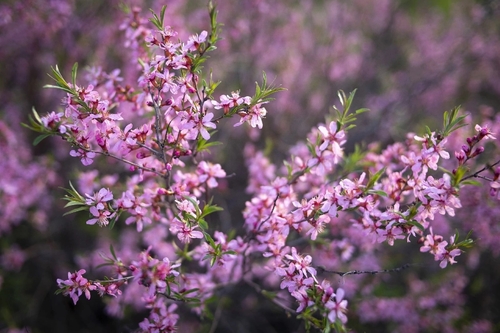
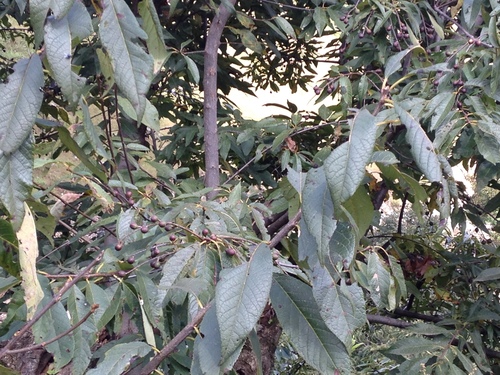
Prunus dulcis var. amygdalus
Batsch
Almond
iNaturalist· cc-by
(c) Ryan McMinds, some rights reserved (CC BY)
iNaturalist· cc-by
(c) Ryan McMinds, some rights reserved (CC BY)
iNaturalist· cc-by-nc
(c) RitmeNatura, some rights reserved (CC BY-NC)
Description
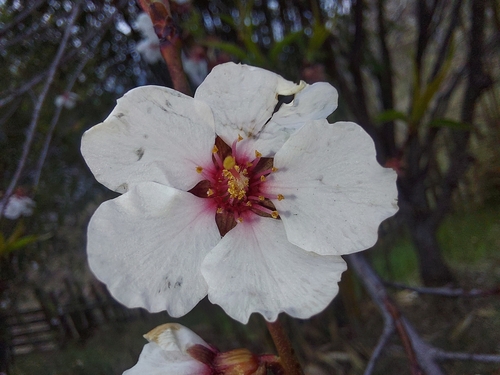
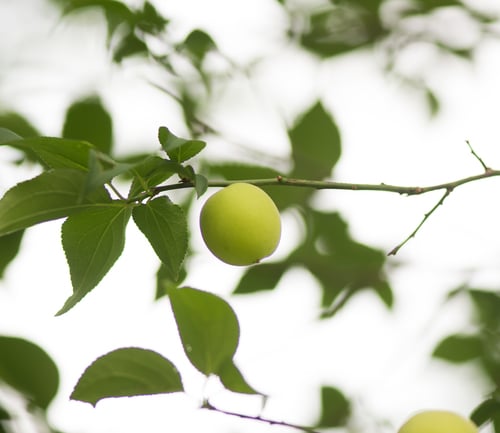
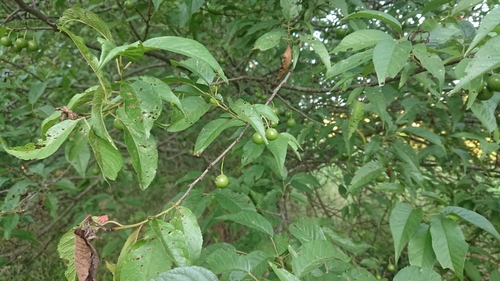
A small tree. It grows 5-7 m tall. Leaves are narrower than those of peach but long and toothed around the edge. Flowers can be 5 cm across and are slightly pink. Leaves are folded in the bud. The fruit is green and leathery. The edible kernel is in a hard shell covered with a downy covering.
Edible Uses
While the almond is often eaten on its own, raw or toasted, it is also a component of various dishes. Almonds are available in many forms, such as whole, slivered, and ground into flour. Almond pieces around 2–3 millimetres (1⁄16–1⁄8 in) in size, called "nibs", are used for special purposes such as decoration. Almonds are a common addition to breakfast muesli or oatmeal. Colomba di Pasqua is the Easter counterpart of the two well-known Italian Christmas desserts panettone and pandoro. In French cuisine, alternating layers of almond and hazelnut meringue are used to make the dessert dacquoise. Pithivier is one of many almond cream-filled pastries. In Germany, Easter bread called Deutsches Osterbrot is baked with raisins and almonds. In Greece almond flour is used to make amygdalopita, a glyka tapsiou dessert cake baking in a tray. Almonds are used for kourabiedes, a Greek version of the traditional quarabiya almond biscuits. A soft drink known as soumada is made from almonds in various regions. In Saudi Arabia, almonds are a typical embellishment for the rice dish kabsa. In Iran, green almonds are dipped in sea salt and eaten as snacks on street markets; they are called chaqale bâdam. Candied almonds called noghl are served alongside tea and coffee. Sweet almonds are used to prepare special food for babies, named harire badam. Almonds are added to some foods, cookies, and desserts, or are used to decorate foods. People in Iran consume roasted nuts for special events, for example, during New Year (Nowruz) parties. In Italy, colomba di Pasqua is a traditional Easter cake made with almonds. Bitter almonds are the base for amaretti cookies, a common dessert. Almonds are also a common choice as the nuts to include in torrone. In Morocco, almonds in the form of sweet almond paste are the main ingredient in pastry fillings and several other desserts. Fried blanched whole almonds are also used to decorate sweet tajines such as lamb with prunes. Southwestern Berber regions of Essaouira and Souss are also known for amlou, a spread made of almond paste, argan oil, and honey. Almond paste is also mixed with toasted flour and among others, honey, olive oil or butter, anise, fennel, sesame seeds, and cinnamon to make sellou (also called zamita in Meknes or slilou in Marrakesh), a sweet snack known for its long shelf life and high nutritive value. In Indian cuisine, almonds are the base ingredients of pasanda-style and Mughlai curries. Badam halva is a sweet made from almonds with added colouring. Almond flakes are added to many sweets (such as sohan barfi), and are usually visible sticking to the outer surface. Almonds form the base of various drinks which are supposed to have cooling properties. Almond sherbet or sherbet-e-badaam, is a common summer drink. Almonds are also sold as a snack with added salt. In Israel almonds are used as a topping for tahini cookies or eaten as a snack. In Spain Marcona almonds are usually toasted in oil and lightly salted. They are used by Spanish confectioners to prepare a sweet called turrón. In Arabian cuisine, almonds are commonly used as garnishing for Mansaf. In British cuisine, almonds are used for dessert items such as Bakewell tart and Battenberg cake.
Traditional Uses
The kernels of the nuts are eaten.
This uses section is brief — help expand it
Known Hazards
Bitter almonds contain some 40 times the trace levels of cyanide found in sweet almonds. Extract of bitter almond was once used medicinally, but even in small doses, its effects are severe or lethal, especially in children; the cyanide must be removed before consumption. The acute oral lethal dose of cyanide for adult humans is reported to be 0.5–3.5 mg/kg (0.2–1.6 mg/lb) of body weight (approximately 50 bitter almonds), so that for children consuming 5–10 bitter almonds may be fatal. Symptoms of eating such almonds include vertigo and other typical cyanide poisoning effects. Almonds may cause allergy or intolerance. Cross-reactivity is common with peach allergens (lipid transfer proteins) and tree nut allergens. Symptoms range from local signs and symptoms (e.g., oral allergy syndrome, contact urticaria) to systemic signs and symptoms including anaphylaxis (e.g., urticaria, angioedema, gastrointestinal and respiratory symptoms). Almonds are susceptible to aflatoxin-producing moulds. Aflatoxins are potent carcinogenic chemicals produced by moulds such as Aspergillus flavus and Aspergillus parasiticus. The mould contamination may occur from soil, previously infested almonds, and almond pests such as navel-orange worm. High levels of mould growth typically appear as grey to black filament-like growth. It is unsafe to eat mould-infected tree nuts. Some countries have strict limits on allowable levels of aflatoxin contamination of almonds and require adequate testing before the nuts can be marketed to their citizens. The European Union, for example, introduced a requirement since 2007 that all almond shipments to the EU be tested for aflatoxin. If aflatoxin does not meet the strict safety regulations, either the entire consignment must be reprocessed to eliminate the aflatoxin or it must be destroyed.
Distribution
It needs reasonable soil drainage. It is suited to areas with a long, hot dry summer. In India it grows in cool areas in Kashmir. The area needs to be free of frosts and hail in the spring. In India they grow between 700-2,300 m altitude. Some varieties have lower chilling requirements.
Where It Grows
Afghanistan, Africa, Asia, Australia, China, Europe, Greece, India, Iran, Kyrgyzstan, Mediterranean, Middle East, Pacific, Pakistan, Palestine, Papua New Guinea, PNG, North Africa, Philippines, SE Asia, Turkey, Türkiye,
Cultivation
Seeds grow more quickly if chilled in a fridge for 2 weeks then planted in warm damp sand (26°C). Trees often need to be pollinated by another kind of almond. A spacing of 6-7 m is used and a pollinator variety used every 3 rows. Bees assist in pollination. Usually trees are trained to have 3-4 branches around a central leader. Fruit are produced on 5 year old spurs and these spurs can remain fruitful for 5-6 years.
Production
Trees commence fruiting after 3-4 years. Trees can live for 50 years on their own rootstock. Almonds are ready for picking when the fruit change from green to yellow. Yields of up to 600-750 kg of nuts per hectare are achieved.
Other Information
It is a cultivated plant. Introduced to Papua New Guinea but no other information.
Notes
There are about 200 Prunus species. Prunus dulcis is the correct name for sweet almond.
Nutrition
| Part | Moisture | kJ | kcal | Protein | Vit A | Vit C | Iron | Zinc |
|---|---|---|---|---|---|---|---|---|
| Seed | 4.7 | 2336 | 559 | 16.9 | 0 | — | 4.2 | 3.1 |
Synonyms
Also Known As
Badam, Badam vittulu, Badami, Vadamkottai, Vatam-kotta
References (19)
- Ali-Shtayeh, M. S., et al, 2008, Traditional knowledge of wild edible plants used in Palestine (Northern West Bank): A comparative study. J Ethnobiol Ethnomed. 4: 13 (As Amygdalis communis)
- Ambasta, S.P. (Ed.), 2000, The Useful Plants of India. CSIR India. p 493
- Bodkin, F., 1991, Encyclopedia Botanica. Cornstalk publishing, p 840
- French, B.R., 1986, Food Plants of Papua New Guinea, A Compendium. Asia Pacific Science Foundation p 195
- Glowinski, L., 1999, The Complete Book of Fruit Growing in Australia. Lothian. p 87
Show all 19 references Hide references
- Gouldstone, S., 1983, Growing your own Food-bearing Plants in Australia. Macmillan p 134
- Hinnawi, N. S. A., 2010, An ethnobotanical study of wild edible plants in the Northern West Bank "Palestine". An-Najah National University. p 97 (As Amygdalus communis)
- Jardin, C., 1970, List of Foods Used In Africa, FAO Nutrition Information Document Series No 2.p 36
- Krishen P., 2006, Trees of Delhi, A Field Guide. DK Books. p 66
- Lazarides, M. & Hince, B., 1993, Handbook of Economic Plants of Australia, CSIRO. p 199
- Lord, E.E., & Willis, J.H., 1999, Shrubs and Trees for Australian gardens. Lothian. p 66
- Morley, B. & Everard, B., 1970, Wild Flowers of the World. Ebury press. Plate 45
- Mulherin, J., 1994, Spices and natural flavourings. Tiger Books, London. p 108
- Senkardes, I & Tuzlaci, E., 2016, Wild Edible Plants of Southern Part of Nevsehir inTurkey. Marmara Pharmaceutical Journal 20:34-43 (As Amygdalus communis)
- Sfikas, G., 1984, Trees and shrubs of Greece. Efstathiadis Group. Athens. p 72
- Sharma, B.B., 2005, Growing fruits and vegetables. Publications Division. Ministry of Information and broadcasting. India. p 1 (As Amygdalus communis)
- Watkins, R., 1979, Cherry, plum, peach, apricot and almond, in Simmonds, N.W., (ed), Crop Plant Evolution. Longmans. London. p 242
- World Checklist of Useful Plant Species 2020. Royal Botanic Gardens, Kew (As Prunus amygdalus)
- Zeven, A. C. & de West, J. M. J., 1982, Dictionary of cultivated plants and their regions of diversity. Wageningen. p 84 (As Amygdalus communis)