Angelica sinensis
(Oliv.) Diels
Chinese angelica
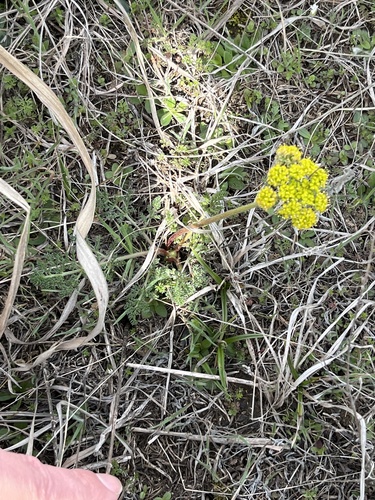
iNaturalist· cc-by-nc
(c) Ming_Ni, some rights reserved (CC BY-NC), uploaded by Ming_Ni
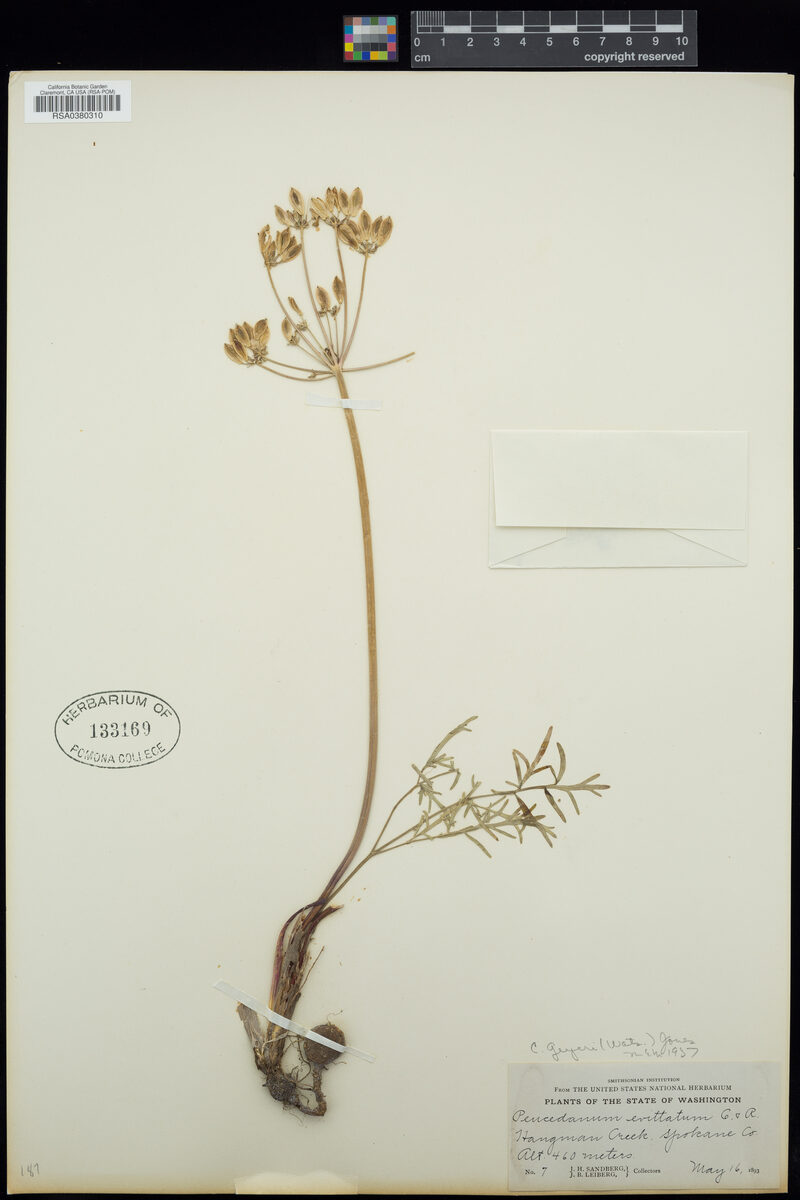
wikimedia· cc0
Wikimedia Commons - NIH
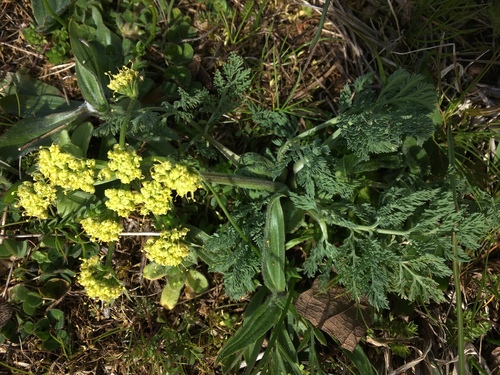
wikimedia· cc-by-sa
Wikimedia Commons - Dr Aug. Henry, 1889, China Hupeh
Summary
Source: WikipediaAngelica sinensis, commonly known as dong quai (simplified Chinese: 当归; traditional Chinese: 當歸; pinyin: dāngguī; Jyutping: dong1 gwai1; Pe̍h-ōe-jī: tong-kui) or female ginseng, is a herb belonging to the family Apiaceae, indigenous to China. A. sinensis grows in cool high altitude mountains in East Asia. The yellowish brown root of the plant is harvested in the fall and used in traditional Chinese medicine. There was previously no scientific evidence that A. sinensis is effective for any medicinal purpose. More recently, there have been further studies, with multiple showing that ASP (Angelica sinensis polysaccharides) has important pharmacological effects, such as antitumor, anemia-improving, anti-inflammatory, antioxidative, immunomodulatory, hepatoprotective, antifibrotic, hypoglycemic, antiradiation, and antiviral effects, the mechanisms of which appear to involve the regulation of inflammation, oxidative stress, and profibrotic signaling pathways.
Description
A herb that keeps growing from year to year. It grows 75 cm to 1.25 m tall. It spreads 40-90 cm wide. It has a short underground stem or rhizome. The stems are upright. The leaves are divided into leaflets along the stalk. They are grey-green but can be flushed with purple. The leaves are 20-30 cm long. The flowers are greenish and in a flat head. The leaves are narrowly oval and have notches along them.
Edible Uses
None known
Traditional Uses
The roots are used in tonic soups, wines and rice porridges. They are also used with meat and poultry dishes. Caution: It should not be given to pregnant women.
Medicinal Uses
Alterative Analgesic Anticholesterolemic Antiinflammatory Antispasmodic Cholera Deobstruent Emollient Hepatic Laxative Malaria Sedative Vasodilator Women's complaints Dang Gui is a well-known Chinese herb that has been used in the treatment of female ailments for thousands of years. Its reputation is perhaps second only to ginseng (Panax ginseng) and it is particularly noted for its 'blood tonic' effects on women. The root has a sweet pungent aroma that is very distinctive and it is often used in cooking, which is the best way to take it as a blood tonic. One report says that the root contains vitamin B12 and can be used in the treatment of pernicious anaemia. The root is alterative, analgesic, anticholesterolemic, anti-inflammatory, antispasmodic, deobstruent, emmenagogue, emollient, hepatic, laxative, sedative and peripheral vasodilator. It is commonly used in the treatment of a wide range of women's complaints where it regulates the menstrual cycle and relieves period pain and also to ensure a healthy pregnancy and easy delivery. However conflicting information suggests it should not be used during pregnancy and should not be used if menstrual flow is heavy or during menstration . It is an ideal tonic for women with heavy menstruation who risk becoming anaemic. The water-soluble and non-volatile elements of the root increase the contraction of the uterus whilst the volatile elements can relax the muscle of the uterus. Its use prevents the decrease of liver glycogen and protects the liver. Used for menopausal symptoms (hot flushes) . It has an antibacterial action, inhibiting the growth of various bacteria including Bacillus dysenteriae, Bacillus typhi, B. comma, B. cholerae and haemolytic streptococci. The root is an ingredient of 'Four Things Soup', the most widely used woman's tonic in China. The other species used are Rehmannia glutinosa, Ligusticum wallichii and Paeonia lactiflora. The root is harvested in the autumn or winter and dried for later use. It has been used to treat pulmonary hypertension in combination with the allopathic medication nifedipine . Other uses include: constipation (a laxative), trauma injuries, ulcers, rheumatism and malaria .
Known Hazards
Although A. sinensis has been used safely in doses up to 150 mg daily, there is evidence that it may affect the muscles of the uterus.
Distribution
It is a temperate plant. It is hardy to frost. It grows between 2,500-3,000 m above sea level. In Sichuan and Yunnan.
Where It Grows
Africa, Asia, Australia, China, India, Indochina, Japan, Korea, Malaysia, SE Asia,
Cultivation
Plants are grown from seed.
Propagation
Seed - best sown in a cold frame as soon as it is ripe since the seed only has a short viability. Seed can also be sown in the spring, though germination rates will be lower. It requires light for germination. When large enough to handle, prick the seedlings out into individual pots and grow them on in a cold frame for their first winter, planting them out into their permanent positions in the spring. The seed can also be sow in situ as soon as it is ripe.
Other Uses
This plant is said to contain vitamin B12. Special Uses
Notes
There are 50 Angelica species. They are temperate plants. It is used in medicine.
Synonyms
Also Known As
Dang gui, Dong quai
References (9)
- Brown, D., 2002, The Royal Horticultural Society encyclopedia of Herbs and their uses. DK Books. p 122
- Facciola, S., 1998, Cornucopia 2: a Source Book of Edible Plants. Kampong Publications, p 15 (As Angelica sinensis)
- Hooker's Icon. Pl. 20: t. 1999. 1898 (As Oliv.)
- Hu, Shiu-ying, 2005, Food Plants of China. The Chinese University Press. p 591
- Lim, T. K., 2015, Edible Medicinal and Non Medicinal Plants. Volume 9, Modified Stems, Roots, Bulbs. Springer p 9
Show all 9 references Hide references
- Plants for a Future database, The Field, Penpol, Lostwithiel, Cornwall, PL22 0NG, UK. http://www.scs.leeds.ac.uk/pfaf/
- Seidemann J., 2005, World Spice Plants. Economic Usage, Botany, Taxonomy. Springer. p 43
- van Wyk, B., 2005, Food Plants of the World. An illustrated guide. Timber press. p 60
- Wang, J., et al, 2020, An ethnobotanical survey of wild edible plants used by the Yi people of Liangshan Prefecture, Sichuan Province, China. Journal of Ethnobiology and Ethnomedicine 16:10