Ligusticum scoticum
L.
Scottish Lovage, Scottish licorice-root, Hulten's licorice-root
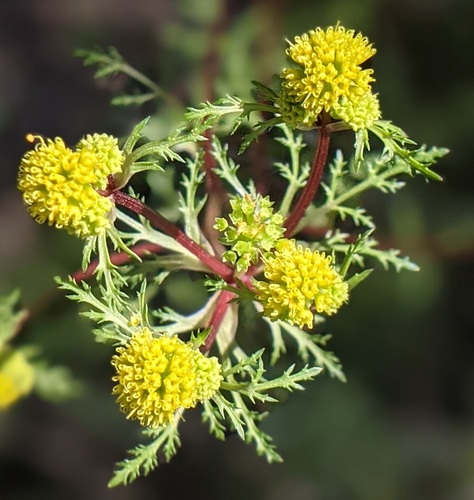
wikimedia· cc-by-sa
Wolfgang Sauber (via Wikimedia Commons)
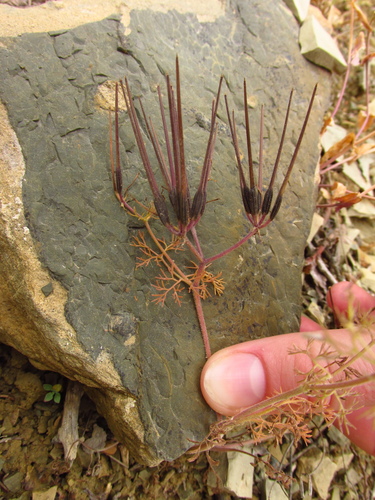
wikimedia· cc-by-sa
Stemonitis (via Wikimedia Commons)
Description
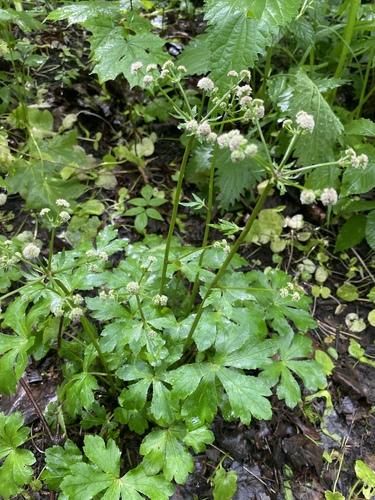
Ligusticum scoticum is a PERENNIAL growing to 0.6 m (2ft). See above for USDA hardiness. It is hardy to UK zone 4 and is not frost tender. It is in flower from July to August, and the seeds ripen from August to September. The species is hermaphrodite (has both male and female organs) and is pollinated by Insects. The plant is self-fertile. Suitable for: light (sandy), medium (loamy) and heavy (clay) soils and prefers well-drained soil. Suitable pH: mildly acid, neutral and basic (mildly alkaline) soils. It cannot grow in the shade. It prefers dry or moist soil. The plant can tolerate maritime exposure.
Edible Uses
Condiment. Leaves, flowers and young shoots - raw or cooked. Strong and not very pleasant. Superb in salads. The leaves are usually blanched in order to make the flavour milder, though this also reduces the nutritional value. A celery-like flavour, it is used as a seasoning in salads, soups etc. Another report says that the flavour is more like parsley. Stem - used as a flavouring in soups, stews etc. A celery-like flavour. The green stem is peeled and eaten. Root - raw or cooked. A sweet flavour. Seed - ground into a powder and used as a flavouring in soups and stews. A sharp, hot taste it is used in the same ways as pepper. The young shoots and roots are occasionally candied like angelica.
Medicinal Uses
Aromatic Carminative Deodorant Stimulant. The root is aromatic and carminative. It is used in the treatment of hysterical and uterine disorders. The seeds are sweetly aromatic and have been used as a carminative, deodorant and stimulant. They are also sometimes used for flavouring other herbal remedies.
Distribution
Northwestern Europe, including Britain, from Denmark to Norway.
Where It Grows
TEMPERATE ASIA: Japan, Kamcatskij kraj, Korea, Magadanskaja oblast,Russian Federation. NORTHERN AMERICA: Greenland, United States, Alaska, Connecticut, Maine, Massachusetts, New Hampshire, Rhode Island, Canada, Québec, Nova Scotia, Ontario, Prince Edward Island, New Brunswick, Newfoundland and Labrador, British Columbia (west), EUROPE: Denmark, United Kingdom (U.K.), Iceland, Norway, Sweden, Russian Federation-European part, European part,
Cultivation
Succeeds in any well-drained soil in a sunny position. Dislikes shade. Succeeds in dry soils. Plants are hardy to at least -15°c. Scottish lovage has occasionally been cultivated as a pot herb, though it has been largely supplanted by celery. All parts of the plant are aromatic when bruised, the aroma being likened to a mixture of parsley, angelica and pear skin.
Propagation
Seed - the seed only has a short period of viability and so is best sown as soon as it is ripe in a cold frame in the autumn. Stored seed should be sown as early in the year as possible in a greenhouse or cold frame. Prick out the seedlings into individual pots when they are large enough to handle and plant them out into their permanent positions in the summer if they have grown large enough. Otherwise, keep them in a cold frame for the first winter and plant them out in early summer. Division of the rootstock in early spring. Make sure that each section of root has at least one growth bud. Very easy, larger clumps can be replanted direct into their permanent positions, though it is best to pot up smaller clumps and grow them on in a cold frame until they are rooting well. Plant them out in the spring.
Other Uses
Deodorant. Scented. Deodorant.