Premna integrifolia
L.
wikimedia· cc-by-sa
Wikimedia Commons - Tauʻolunga
wikimedia· cc-by-sa
Wikimedia Commons - Vengolis
wikimedia· cc-by-sa
Wikimedia Commons - Vengolis
Description
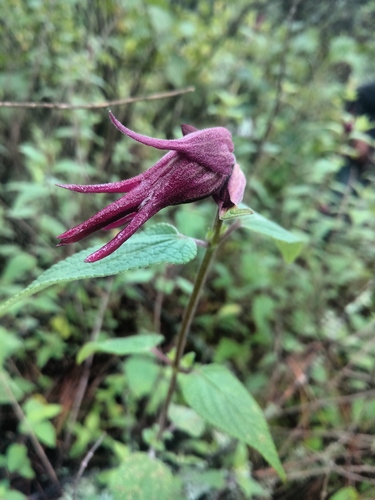
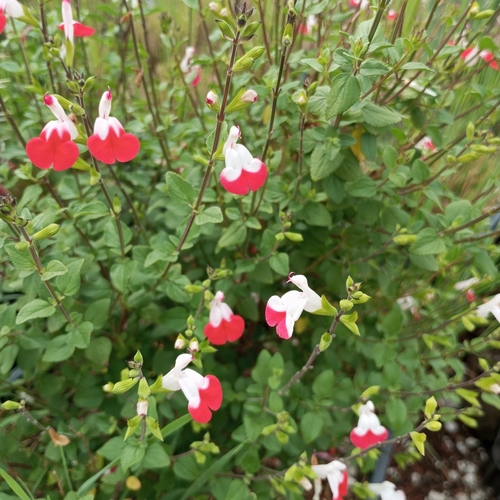
A small tree. It grows to 4-8 m tall. It does not have hairs. The twigs and leaves are light green and shiny. The leaves are produced opposite each other and are oval and taper to a point. They are entire and 9-19 cm long by 6-12 cm wide. The leaf stalk is 2-7 cm long. The flowers are white and in clusters with flowers at the end of each stalk. These arrangements are 10-20 cm across. The fruit are berries 6-9 mm across. They are blue to black.
Edible Uses
The leaves are cooked with fish as a flavoring.
Traditional Uses
The leaves are cooked with fish to flavour them.
This uses section is brief — help expand it
Medicinal Uses
The leaves are used in traditional cuisine with fish.
Distribution
A tropical plant. Plants often grow near the beach.
Where It Grows
Asia, India, Indochina, Indonesia, Malaysia, Mauritius, Myanmar, Pacific, Papua New Guinea, PNG, Polynesia, SE Asia, Thailand, Vietnam,
Notes
Also put in the family Verbenaceae.
Synonyms
Also Known As
Bebuas, Bebuat, Chah leud, Ki pahang, Ki seungit, Kywe-thwe, La cach, Singkil alas, Singkil, Taing-tangyi
References (10)
- Altschul, S.V.R., 1973, Drugs and Foods from Little-known Plants. Notes in Harvard University Herbaria. Harvard Univ. Press. Massachusetts. no. 3655
- Ambasta, S.P. (Ed.), 2000, The Useful Plants of India. CSIR India. p 489
- Burkill, I.H., 1966, A Dictionary of the Economic Products of the Malay Peninsula. Ministry of Agriculture and Cooperatives, Kuala Lumpur, Malaysia. Vol 2 (I-Z) p 1838
- Hedrick, U.P., 1919, (Ed.), Sturtevant's edible plants of the world. p 515
- Mant. pl. 2:252. 1771
Show all 10 references Hide references
- Martin, F.W. & Ruberte, R.M., 1979, Edible Leaves of the Tropics. Antillian College Press, Mayaguez, Puerto Rico. p 224
- McMakin, P.D., 2000, Flowering Plants of Thailand. A Field Guide. White Lotus. p 81
- Ogle, B. M., et al, 2003, Food, Feed or Medicine: The Multiple Functions of Edible Wild Plants in Vietnam. Economic Botany 57(1): 103-117
- Peekel, P.G., 1984, (Translation E.E.Henty), Flora of the Bismarck Archipelago for Naturalists, Division of Botany, Lae, PNG. p 479, 478
- WATT,