Pouteria maclayana
(Muell.) Baehni
Nyatoh maclayana tree
wikimedia· cc-by-sa
Wikimedia Commons (via Wikimedia Commons)
Description
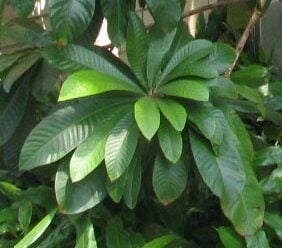
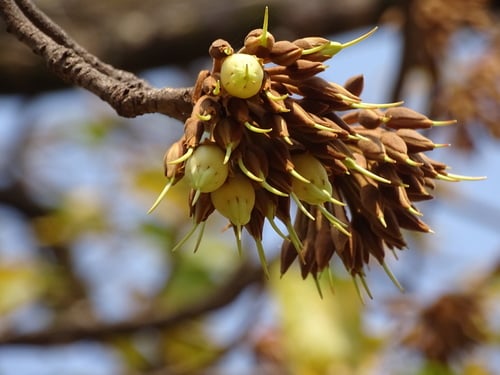
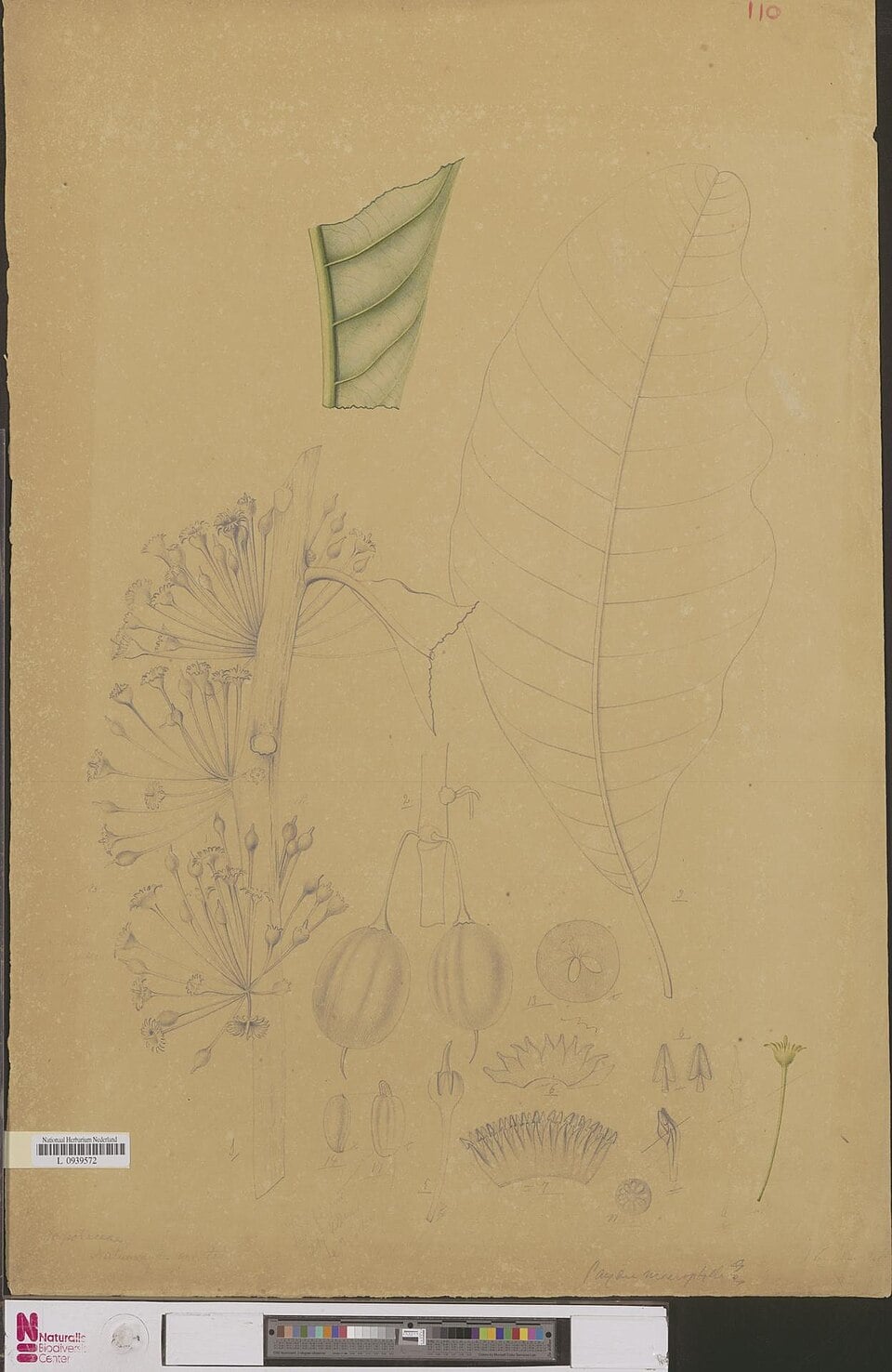
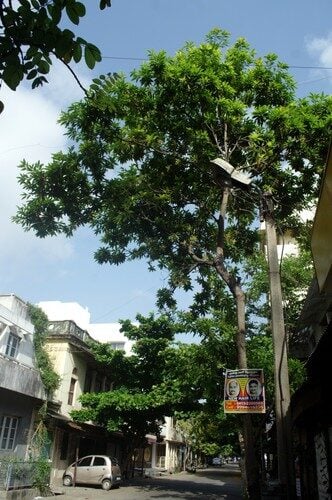
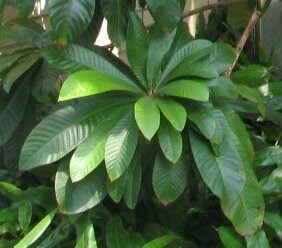
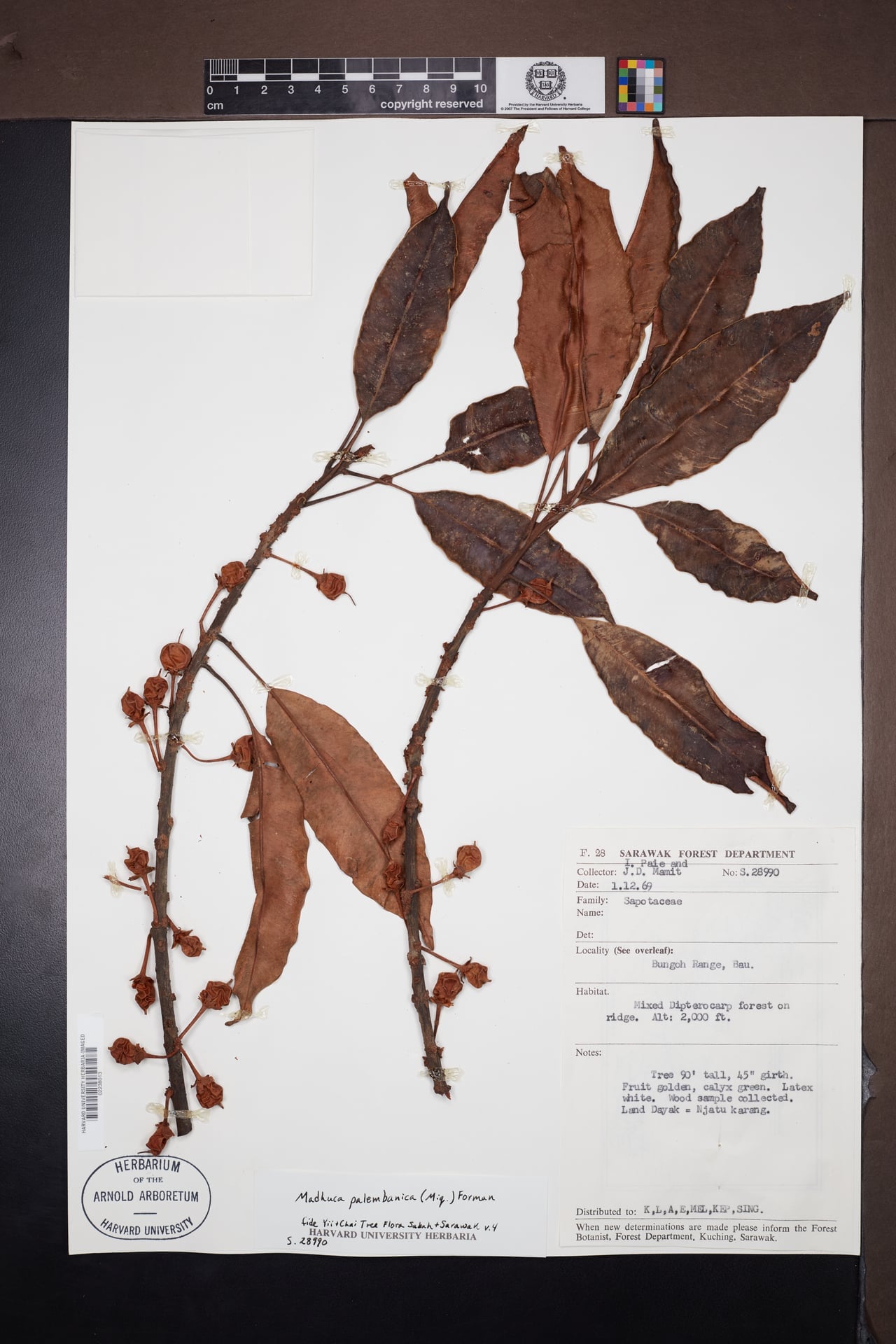
A small to medium sized tree. It commonly has buttresses. It can grow up to 27 m tall and with a 2 m girth. The branches are green with brown areas. The leaves are at the ends of the small branches. They are long and rounded. They are 23 cm long by 9 cm wide. They have a wavy and scalloped edge. The base of the leaf tapers to the leaf stalk. The leaves are dark green and shiny on top and dull underneath. The veins are whitish and prominent on both sides of the leaf. There are 7-8 pairs of side veins. The leaf stalk is about 2.5 cm long. The flowers occur in clusters of 6 in the axils of leaves. The flowers are small and creamy white. The fruit are like flattened spheres about 7.5-10 cm across. They are light olive-green. The flesh is orange and fibrous with 2-3 large seeds. The pulp has a sickly sweet smell. The seed are 6 cm long by 2.5 cm wide. The seed is partly covered by a hard shell.
Edible Uses
Fruit - cooked. The orange, fibrous flesh has a sickly sweet smell. The light olive-green fruits are like flattened spheres about 75 - 100mm across containing 2 - 3 large seeds 60mm long and 25mm wide.
Traditional Uses
The fruit have an edible yellow flesh. They can be eaten raw or cooked.
This uses section is brief — help expand it
Distribution
A tropical plant. It mainly grows on the coast. It grows up to 500 m altitude. It grows on atolls.
Where It Grows
Asia, Indonesia, Pacific, Papua New Guinea, PNG, SE Asia, Solomon Islands,
Cultivation
Plants can be grown from seeds.
Notes
There are about 150-320 Pouteria species. They grow in the tropics.