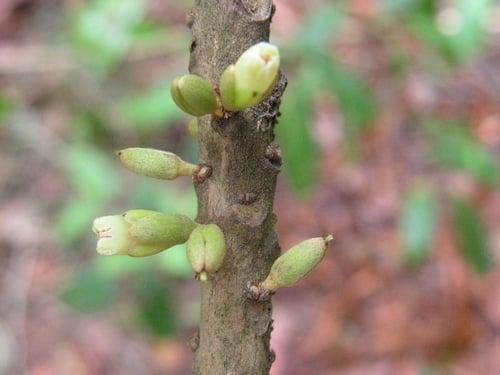
Pouteria campechiana
(H. B. Kunth) Baehni
Egg fruit tree, Canistel
iNaturalist· cc-by-nc
(c) Jean Laffitte C., some rights reserved (CC BY-NC)
iNaturalist· cc-by-nc
(c) Jean Laffitte C., some rights reserved (CC BY-NC)
iNaturalist· cc-by-nc
(c) Jean Laffitte C., some rights reserved (CC BY-NC)
Summary
Source: WikipediaPouteria campechiana (commonly known as the cupcake fruit, eggfruit, zapote amarillo, yellow sapote or canistel) is an evergreen tree native to, and cultivated in, southern Mexico, Belize, Guatemala, and El Salvador. It is cultivated in other countries, such as India, Costa Rica, Brazil, the United States, the Dominican Republic, Australia, Cambodia, Vietnam, Taiwan, Indonesia, Sri Lanka, Nigeria, Cameroon and the Philippines. The edible part of the tree is its fruit, which is colloquially known as an egg fruit. The canistel grows up to 10 m (33 ft) high, and produces orange-yellow fruit up to 7 cm (3 in) long, which are edible raw. Canistel flesh is sweet, with a texture often compared to that of a hard-boiled egg yolk, hence its colloquial name "eggfruit". It is closely related to the lúcuma, mamey sapote, and abiu.
Description
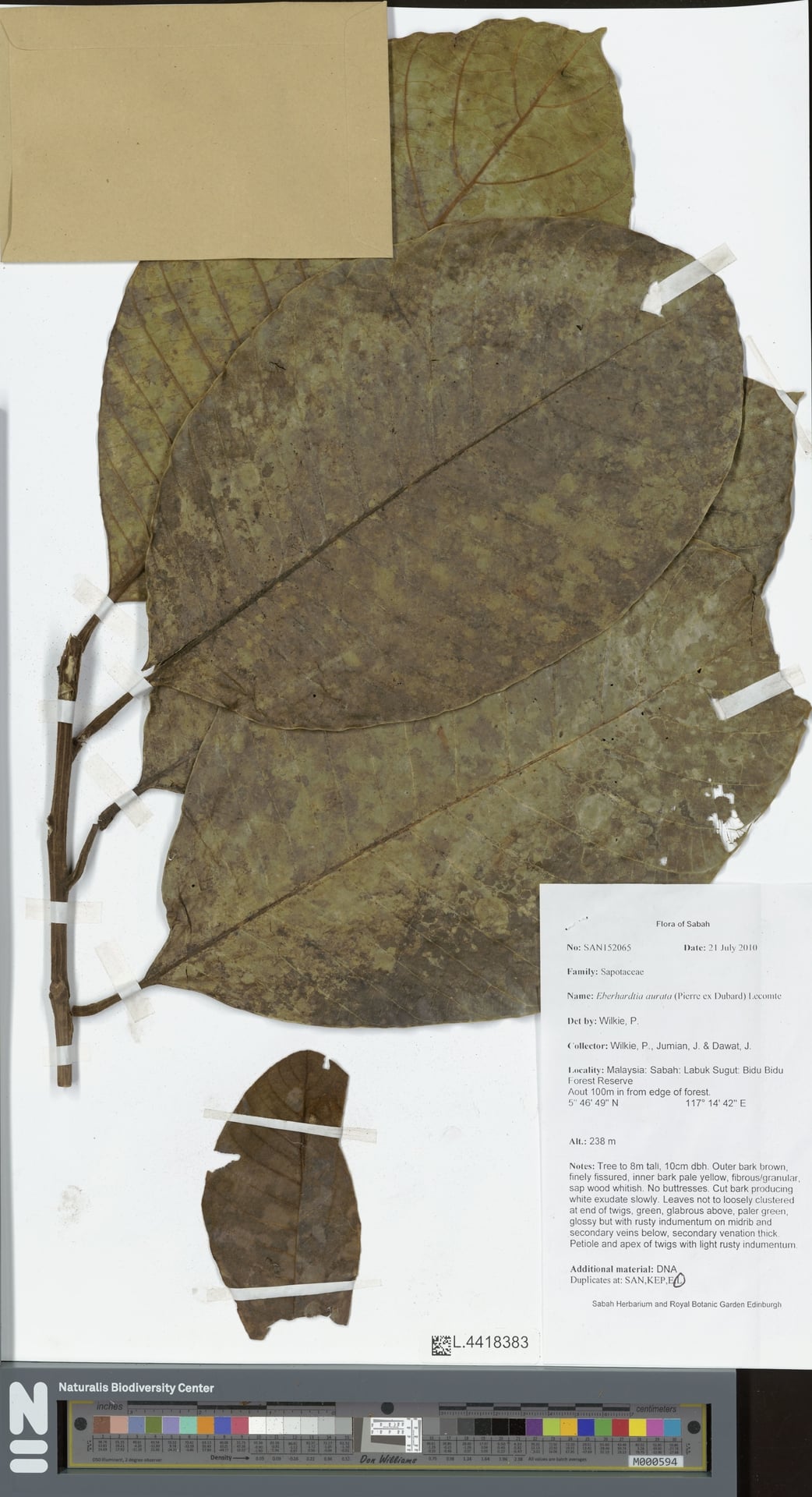
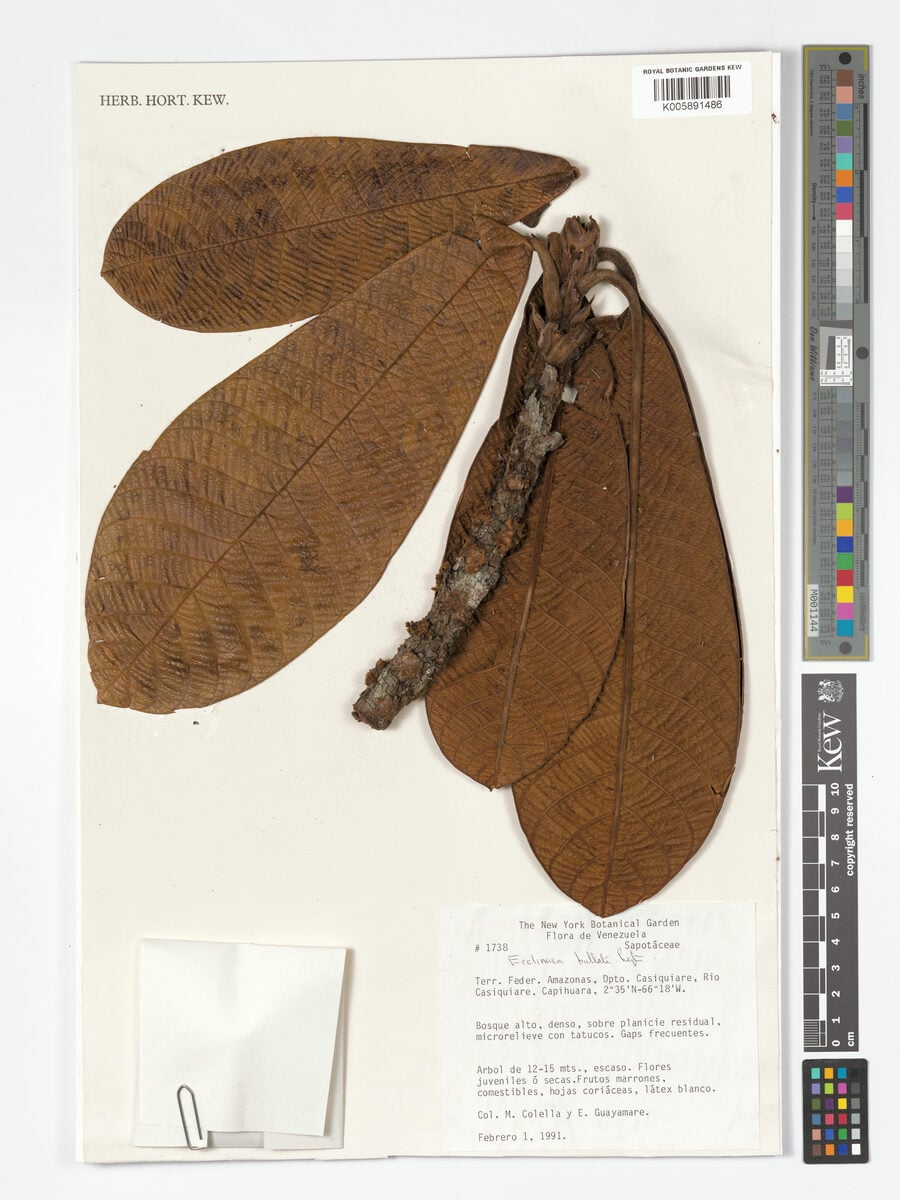
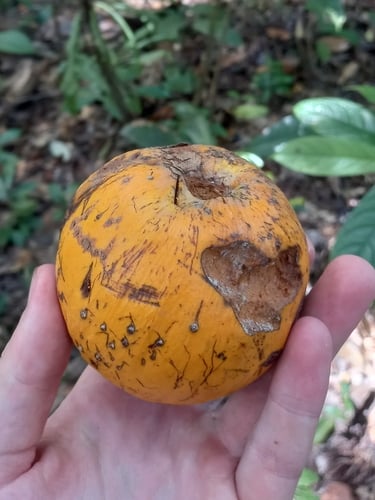
A tree up to 8 m high. It can be 30 m high. It is evergreen and has an open crown. The branches are mostly horizontal. The leaves are oval but taper towards both ends. They can be 6-25 cm long by 2.5-8 cm wide. They are shiny and bright green. The leaves are clustered near the ends of the twigs. The leaf stalks can be 5-25 cm long. The small flowers grow in clusters of 2 to 5 on young wood. The flowers have a scent. The fruit is round, slightly pointed at the end, orange yellow and up to 10 cm long. The skin is thin, tough and waxy. The flesh is orange and has a musky smell. The seeds are about 2-3 cm long, dark brown and shiny. There are often 1-3 seeds per fruit.
Edible Uses
The fruit is excellent eaten raw and can also be used in cakes, pies, ice creams, and puddings. Its yellow to orange pulp is soft and mealy with a very rich, sweet flavour reminiscent of baked sweet potato. The fruit, which somewhat resembles the yolk of a hard-boiled egg, is not widely appreciated by those who prefer crispy, juicy fruits. It is highly variable in form and size, ranging from nearly round to oval or spindle-shaped, and from 7–12cm long by 5–7.5cm wide. A shrubby variety (var. palmeri) produces much smaller fruits of only 2.5cm long.
Traditional Uses
The fruit is eaten fresh or made into icecream. The skin and seeds are removed. It is not good cooked but is used instead of pumpkin in pie. It is used in cakes, pies, custards and puddings. It is used in fruit cups, ice cream and milk shakes. It is often eaten with lemon juice. It can also be eaten with pepper and salt.
Medicinal Uses
A decoction of the astringent bark is taken as a febrifuge and applied to skin eruptions. A preparation from the seeds has been used as a remedy for ulcers.
Distribution
It is native to C and S America. It is a tropical and subtropical plant. It suits the coast in the tropics and is damaged by frost. It can grow up to 1400 m in the tropics. It will grow on fairly poor soils. It does better on fertile well drained soils. It can tolerate reasonably dry periods. In Brisbane Botanical Gardens. In XTBG Yunnan. It suits hardiness zones 10-11.
Where It Grows
Africa, Amazon, Asia, Australia, Bahamas, Bangladesh, Belize, Brazil*, Cambodia, Cameroon, Caribbean, Central Africa, Central America*, China, Colombia, Costa Rica, Cuba, East Africa, El Salvador, FSM, Guatemala, Hawaii, Honduras, Indochina, Indonesia, Jamaica, Japan, Kenya, Leeward Is., Malaysia, Maldives, Mexico*, Micronesia, Nicaragua, North America, Pacific, Panama, Papua New Guinea, PNG, Philippines, Pohnpei, Puerto Rico, SE Asia, Seychelles, South America, Sri Lanka, St Lucia, Suriname, Tanzania, Uganda, USA, Venezuela, West Indies, Windward Is.,
Cultivation
Trees are normally grown from seed. Seed need to be planted fresh. Seeds germinate in 2-3 weeks. Seedlings can be planted out after one year. A spacing of 4 m is suitable. It benefits from mulching due to the shallow root system. Plants can also be grafted and grown by air-layering. A spacing of 7-8 m is suitable. Trees should be lightly pruned to give 4-5 well spaced branches.
Propagation
Remove the seed from its husk before sowing. Seeds lose viability quickly and should be germinated within a few days of removal from the fruit. If decorticated, seeds germinate within 2 weeks; otherwise germination may be delayed by 3–5 months. Seedlings grow rapidly and may begin to bear fruit in 3–6 years. Vegetative propagation is preferred to hasten bearing and reproduce the best selections. Side-veneer grafting, cleft grafting, patch budding, and air-layering are usually successful. Cuttings take a long time to root.
Other Uses
The tree produces abundant latex that has been used to adulterate chicle. The timber is fine-grained, compact, strong, and moderate to very heavy and hard, making it valued for planks and rafters in construction. The heartwood is greyish-brown to reddish-brown, blending into a lighter-coloured sapwood; darker-coloured wood is more resistant to decay.
Production
Seedlings and grafted trees grow quickly. It begins bearing at about 3-5 years old. Grafted trees produce a year or so earlier. Fruit are harvested when they develop their full yellow colour. Fruit should be clipped when mature and ripened at room temperature for 3 to 10 days. Putting a little salt on the end of the fruit stalk hastens ripening. Fruit ripen 5-6 months after flowering.
Other Information
It is a cultivated food plant. It is only being tried out in Papua New Guinea.
Notes
There are about 150-320 Pouteria species. They grow in the tropics.
Nutrition
| Part | Moisture | kJ | kcal | Protein | Vit A | Vit C | Iron | Zinc |
|---|---|---|---|---|---|---|---|---|
| Fruit | 60.6 | 580 | 139 | 1.68 | 320 | 58 | 0.92 | — |
Synonyms
Also Known As
Amarillo, Boracho, Caca de nene, Caca de nino, Cahixo, Caniste, Canizte, Costiczapotl, Cucumu, Eivrucht, Fruta huevo, Gema-de-ovo, Guaicume, Guicume, Huicon, Huicumo, Jaman phol, Kanis, Kaniste, Kanisutel, Kanixte, Khema, Limoncillo, Mamee ciruela, Mamey cerera, Mamey cerilla, Mzeituni, Nochi, Pohon sawo mentega, Rata lawulu, Sapota-amarelo, Sapote amarillo, Sapote borracho, Siguapa, Ti-essa, Tiesa, Tiyesa, Toesa, Yellow sapote, Zapote amarillo, Zapote mante, Zapotillo, Zubul
References (62)
- Aiguo, C. & Zhiling, D., 2001, Managing Agricultural Resources for Biodiversity Conservation. Case Study Yunnan, Southwest China. Environment Liaison Center International. p 41 (As Lucuma nervosa)
- Arora, R. K., 2014, Diversity in Underutilized Plant Species - An Asia-Pacific Perspective. Bioversity International. p 82
- Ashton, M. S., et al 1997, A Field Guide to the Common Trees and Shrubs of Sri Lanka. WHT Publications Ltd. pdf p 359
- Barwick, M., 2004, Tropical and Subtropical Trees. A Worldwide Encyclopedic Guide. Thames and Hudson p 345
- Candollea 9:398. 1942
Show all 62 references Hide references
- Coronel, R.E., 1982, Fruit Collections in the Philippines. IBPGR Newsletter p 8
- Cruz, I. M., et al, 2015, Edible fruits and seeds in the State of Mexico. Revista Mexicana de Ciencias Agricolas. Vol. 6. Num. 2 pp 331-346
- Cundall, P., (ed.), 2004, Gardening Australia: flora: the gardener's bible. ABC Books. p 1078
- Darley, J. J., 1993, Know and Enjoy Tropical Fruit. P & S Publishers. p 112
- Facciola, S., 1998, Cornucopia 2: a Source Book of Edible Plants. Kampong Publications, p 228
- Food Composition Tables for use in East Asia FAO http://www.fao.org/infoods/directory No. 835
- Fouqué, A., 1972, Espèces fruitières d'Amérique tropicale. Institut français de recherches fruitierès outre-mer (ifac) (As Richardella nervosa)
- French, B.R., 1986, Food Plants of Papua New Guinea, A Compendium. Asia Pacific Science Foundation p 262
- Fu, Yongneng, et al, 2003, Relocating Plants from Swidden Fallows to Gardens in Southwestern China. Economic Botany, 57(3): 389-402 (As Lucuma nervosa)
- Gouldstone, S., 1983, Growing your own Food-bearing Plants in Australia. Macmillan p 82 (As Lucuma nervosa)
- Grandtner, M. M., 2008, World Dictionary of Trees. Wood and Forest Science Department. Laval University, Quebec, Qc Canada. (Internet database http://www.wdt.qc.ca)
- Hermandez Bermejo, J.E., and Leon, J. (Eds.), 1994, Neglected Crops. 1492 from a different perspective. FAO Plant Production and Protection Series No 26. FAO, Rome. p 17
- Hibbert, M., 2002, The Aussie Plant Finder 2002, Florilegium. p 239
- http://www.ntbg.org/plants/plant details.php
- Ibarra-Manriquez, G., et al, 1997, Useful Plants of the Los Tuxtlas Rain Forest (Veracruz, Mexico): Considerations of their Market Potential. Economic Botany, Vol. 51, No. 4, pp. 362-376
- Jardin, C., 1970, List of Foods Used In Africa, FAO Nutrition Information Document Series No 2.p 156
- John, L., & Stevenson, V., 1979, The Complete Book of Fruit. Angus & Robertson p 93. Also p 93, 292 (As Lucuma salicifolia)
- Kermath, B. M., et al, 2014, Food Plants in the Americas: A survey of the domesticated, cultivated and wild plants used for Human food in North, Central and South America and the Caribbean. On line draft. p 686
- Kiple, K.F. & Ornelas, K.C., (eds), 2000, The Cambridge World History of Food. CUP p 1744
- Llamas, K.A., 2003, Tropical Flowering Plants. Timber Press. p 344
- Lorenzi, H., Bacher, L., Lacerda, M. & Sartori, S., 2006, Brazilian Fruits & Cultivated Exotics. Sao Paulo, Instituto Plantarum de Estuados da Flora Ltda. p 620
- Macmillan, H.F. (Revised Barlow, H.S., et al) 1991, Tropical Planting and Gardening. Sixth edition. Malayan Nature Society. Kuala Lumpur. p 306
- Mapes, C. & Basurto, F., 2016, Biodiversity and Edible Plants of Mexico. Chapter 5 in R. Lira, et al. (eds.), Ethnobotany of Mexico, Ethnobiology, Springer. p 99
- Martin, F. W., et al, 1987, Perennial Edible Fruits of the Tropics. USDA Handbook 642 p 61
- Martin, M.A., 1971, Introduction L'Ethnobotanique du Cambodge. Centre National de la Recherche Scientifique. Paris. (As Richardella campechiana)
- Melander, M., 2007, Endangered plants on the market in Havana City, Cuba. Uppsala University, Sweden p 19
- Menninger, E.A., 1977, Edible Nuts of the World. Horticultural Books. Florida p 33
- Miguel, E., et al, 1989, A checklist of the cultivated plants of Cuba. Kulturpflanze 37. 1989, 211-357
- Milow, P., et al, 2013, Malaysian species of plants with edible fruits or seeds and their evaluation. International Journal of Fruit Science. 14:1, 1-27
- Morton, Julia F., 1987, Fruits of Warm Climates. Creative Resources Systems, Inc. . p. 402
- Niwano, Y. et al., 2009, Extensive Screening for Plant Foodstuffs in Okinawa, Japan with Anti-Obese Activity on Adipocytes, in vitro. Plant Foods in Human Nutrition 64:6-10 (As Lucuma nervosa)
- Pascual-Mendoza, S. et al, 2021, Traditional knowledge of edible plants in an indigenous community in the Sierra Norte of Oaxaca, Mexico. Plant Biosystems - An International Journal Dealing with all Aspects of Plant Biology
- Pasha, M. K. & Uddin, S. B., 2019, Minor Edible Fruits of Bangladesh. Bangladesh J. Plant Taxon. 26(2): 299–313
- Pennington, T.D., 1990, Sapotaceae in Flora Neotropica Monograph 52. New York Botanical Gardens. p 382
- Phon, P., 2000, Plants used in Cambodia. © Pauline Dy Phon, Phnom Penh, Cambodia. p 511
- Piedra-Malagón, E. M., et al, 2022, Edible native plants of the Gulf of Mexico Province. Biodiversity Data Journal 10: e80565 p 29
- Popenoe,
- PROSEA (Plant Resources of South East Asia) handbook, Volume 2, 1991, Edible fruits and nut. p 258
- Purseglove, J.W., 1968, Tropical Crops Dicotyledons, Longmans. p 646
- Recher, P, 2001, Fruit Spirit Botanical Gardens Plant Index. www.nrg.com.au/~recher/ seedlist.html p 3
- Roa, J. A. G. & Boada, D. S. G., 2018, Fundación para el Fortalecimiento de la Fruticultura y Plantas Alimenticias no Convencionales en Colombia.
- Segura, S., et al, 2018, The edible fruit species in Mexico. Genet Resour Crop Evol (2018) 65:1767–1793
- Sharma, B.B., 2005, Growing fruits and vegetables. Publications Division. Ministry of Information and broadcasting. India. p 58
- Smith, N., Mori, S.A., et al, 2004, Flowering Plants of the Neotropics. Princeton. p 344
- Soerianegara, I. & Lemmens, R. H. M. L., (Eds.) 1993, Timber trees: Major commercial timbers. Plant Resources of South-East Asia. Wageningen. No. 5(1). p 363
- Staples, G.W. and Herbst, D.R., 2005, A tropical Garden Flora. Bishop Museum Press, Honolulu, Hawaii. p 521 (Drawing)
- Tankard, G., 1990, Tropical fruit. An Australian Guide to Growing and using exotic fruit. Viking p 32
- USDA, ARS, National Genetic Resources Program. Germplasm Resources Information Network - (GRIN). [Online Database] National Germplasm Resources Laboratory, Beltsville, Maryland. Available: www.ars-grin.gov/cgi-bin/npgs/html/econ.pl (10 April 2000)
- van Wyk, B., 2005, Food Plants of the World. An illustrated guide. Timber press. p 304
- Vivien, J., & Faure, J.J., 1996, Fruitiers Sauvages d'Afrique. Especes du Cameroun. CTA p 328 (As Richardella nervosa)
- F. W. H. A. von Humboldt et al., Nov. gen. sp. 3:189[folio]; 3:241[quarto]. 1819 (As Lucuma salicifolia)
- Walter, A. & Sam C., 2002, Fruits of Oceania. ACIAR Monograph No. 85. Canberra. p 281
- Wickens, G.E., 1995, Edible Nuts. FAO Non-wood forest products. FAO, Rome. p152
- Wiersema, J. H. & Leon, B., 2013, World Economic Plants. A Standard Reference CRC Press. 2nd Ed. p 554
- World Checklist of Useful Plant Species 2020. Royal Botanic Gardens, Kew
- www.worldagroforestrycentre.org/treedb/
- Zawiah, N. & Othaman, H., 2012, 99 Spesies Buah di FRIM. Institut Penyelidikan Perhutanan Malaysia. p 200