Potamogeton distinctus
Benn.
Roundleaf pondweed
iNaturalist· cc-by-nc
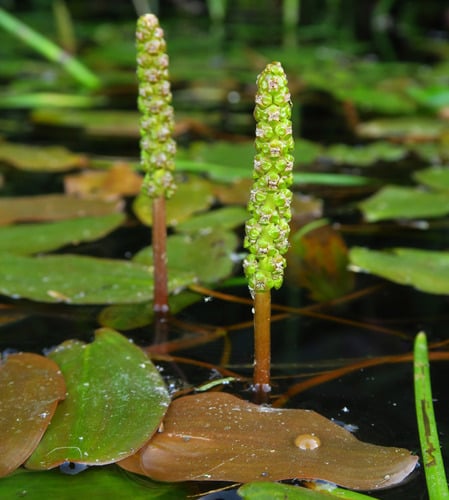
(c) onidiras-iNaturalist, some rights reserved (CC BY-NC), uploaded by onidiras-iNaturalist
iNaturalist· cc-by-nc
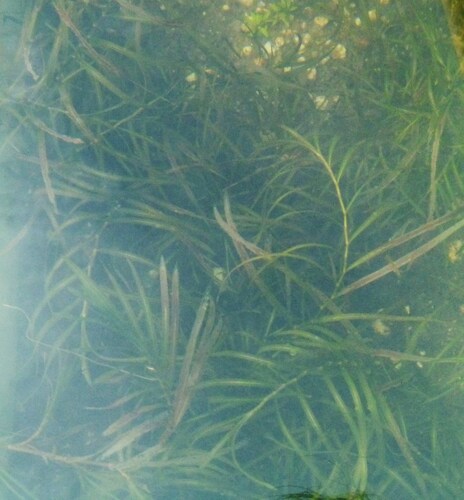
(c) milesnojiri, some rights reserved (CC BY-NC)
iNaturalist· cc-by
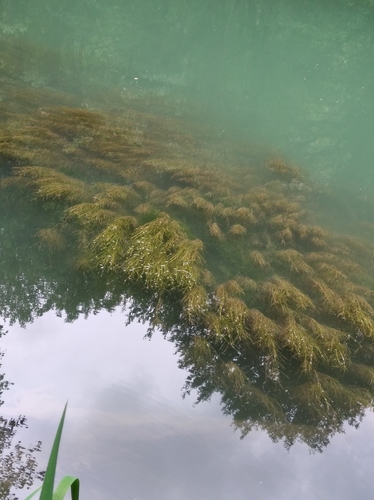
(c) zxchang, some rights reserved (CC BY)
Summary
Source: WikipediaPotamogeton distinctus, the pondweed, is an aquatic plant species in the genus Potamogeton. It is found in slow moving fresh water. It is widely distributed in the east of temperate Asia (the Russian Far East, China and Eastern Asia), tropical Asia (the Indian subcontinent, Indo-China and Malesia) and also grows in the Southwestern Pacific.
Description
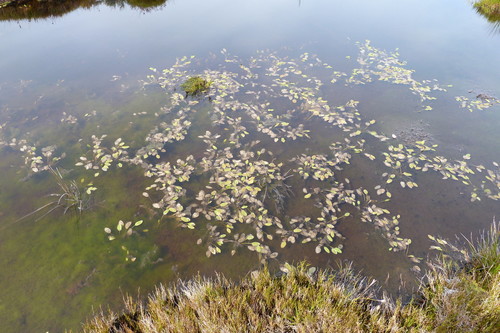
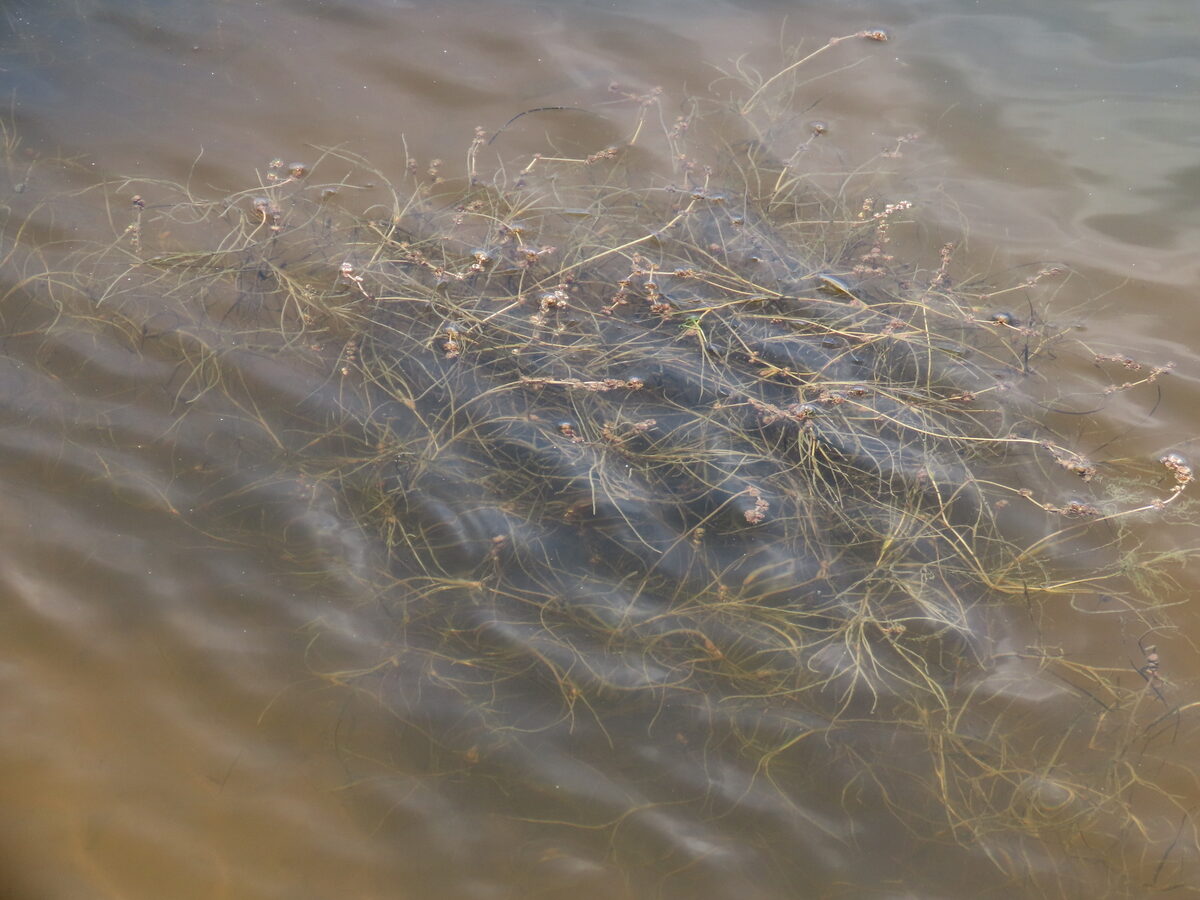
A pond-weed that grows under water. It has rhizomes 20 cm deep in the soil. The leaves are mostly floating. They are narrowly oval and 10 cm long by 4 cm wide. They are on leaf stalks about 10 cm long. Flowers are on stalks 7 cm long. They are in a cylinder shaped spike 7 cm long and 1 cm thick. This bends down into the water when fruiting. The fruit have 1-4 lobes. They are 3-4 mm long.
Edible Uses
Leaves and stems are edible when cooked.
Traditional Uses
The leaves and stems are cooked and eaten.
This uses section is brief — help expand it
Medicinal Uses
None known.
Distribution
It is a tropical and subtropical plant. It grows in ponds and paddy fields. It can grow in moist soil. It needs a sunny position. In Sichuan and Yunnan.
Where It Grows
Asia, Bhutan, China, East Timor, Himalayas, Indochina, Indonesia, Japan, Korea, Malaysia, Nepal, Pacific,Philippines, Russia, SE Asia, Taiwan, Thailand, Tibet, Timor-Leste, Vietnam,
Cultivation
Plants can be grown by root division. The rhizomes in the mud can act as storage systems and re-grown when rains come. Plants can be grown from seed. Seed can be dormant 120 days after they fall.
Propagation
No specific information is available for this species, but the recommended approach is to sow seed in a pot standing in its own depth of water in a greenhouse as soon as ripe, since stored seed is likely to lose viability quickly. Prick out seedlings when large enough to handle and gradually increase the water depth around the pot until plants are covered by a few centimetres. Grow on in a sunny greenhouse position through the first winter, continuing to increase water depth as plants develop. Plant out into permanent positions in early summer. Alternatively, divide plants in spring or take cuttings of erect shoots during the growing season.
Other Uses
None known.
Notes
There are about 100 Potamogeton species. It is considered a weed.
Synonyms
Also Known As
Bog pondweed, Hirumushiro, Pani jhar, Shochum, Shoum
References (3)
- Cowie, I, 2006, A Survey of Flora and vegetation of the proposed Jaco-Tutuala-Lore National Park. Timor-Lests (East Timor) www.territorystories.nt/gov.au p 52
- Romanowski, N., 2007, Edible Water Gardens. Hyland House. p 113
- Plants for a Future database, The Field, Penpol, Lostwithiel, Cornwall, PL22 0NG, UK. http://www.scs.leeds.ac.uk/pfaf/