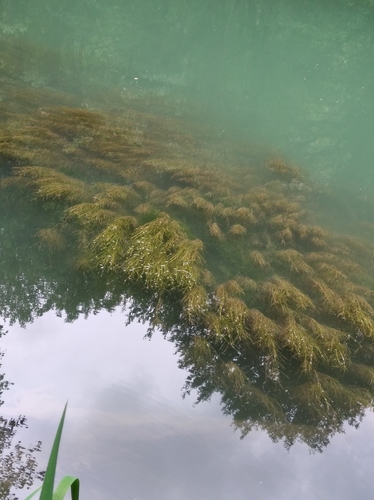
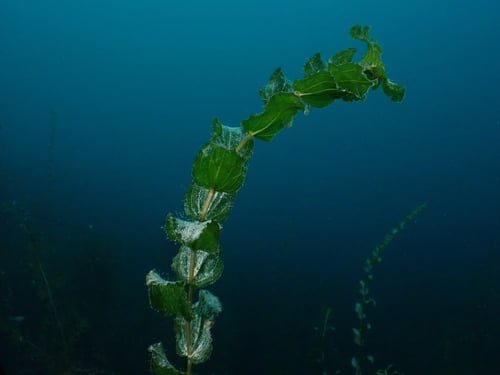
Stuckenia pectinata - (L.) Börner
(L.) Börner
Sago Pondweed
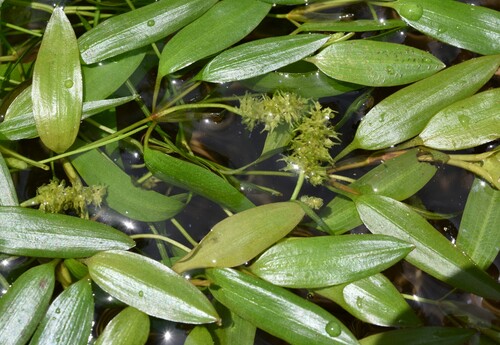
gbif· cc-by-nc
Fiona Hellmann
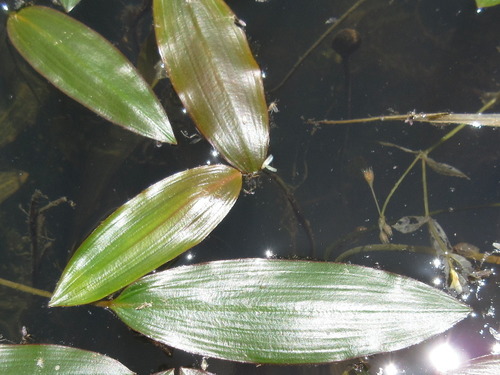
gbif· cc-by-nc
Fiona Hellmann
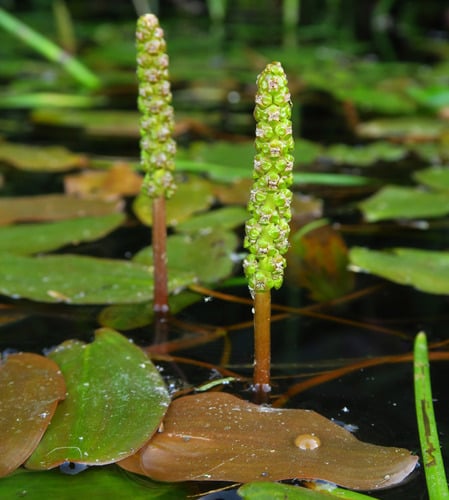
gbif· cc-by-nc
Ирина Бортникова
Description
Stuckenia pectinata is a PERENNIAL growing to 1 m (3ft 3in) by 0.3 m (1ft) at a fast rate. See above for USDA hardiness. It is hardy to UK zone 5 and is not frost tender. The flowers are pollinated by Water. Suitable for: light (sandy), medium (loamy) and heavy (clay) soils. Suitable pH: neutral and basic (mildly alkaline) soils and can grow in very alkaline and saline soils. It cannot grow in the shade. It prefers wet soil and can grow in water.
Edible Uses
Leaves and stems. No more details are given. Root - raw. It tastes like nuts. The outer rind should be removed. The roots of sago pondweed are edible, though this species, along with other pondweeds, is rarely abundant in the arid Southwest due to a lack of suitable aquatic habitats. Where it occurs in lakes, ponds, and slow-moving waterways, the starchy roots can be harvested and eaten after proper cleaning and cooking. Nutritional & Foraging Notes: While pondweeds have a history of being consumed in some regions, in the Southwest US, they were generally too scarce to be reliable food sources. Roots are typically starchy, providing a modest source of carbohydrates. Harvesting would require wading into aquatic habitats and carefully uprooting the plants.
Medicinal Uses
A decoction of the plant is used in the treatment of a feverish liver.
Distribution
An almost cosmopolitan plant, found in most areas of the world including Britain.
Where It Grows
Native to: Afghanistan, Alabama, Alaska, Albania, Alberta, Aleutian Is., Algeria, Altay, Amur, Angola, Arizona, Arkansas, Assam, Austria, Baleares, Baltic States, Bangladesh, Belarus, Belgium, Belize, Bolivia, Botswana, British Columbia, Bulgaria, Burundi, Buryatiya, California, Cape Provinces, Caprivi Strip, Central American Pac, Central European Rus, Chile Central, China North-Central, China South-Central, China Southeast, Chita, Colombia, Colorado, Connecticut, Corse, Cuba, Cyprus, Czechoslovakia, Denmark, East European Russia, Ecuador, Egypt, El Salvador, Eritrea, Ethiopia, Finland, Florida, France, Free State, Galápagos, Germany, Great Britain, Greece, Guatemala, Gulf States, Hainan, Haiti, Hungary, Idaho, Illinois, India, Indiana, Inner Mongolia, Iowa, Iran, Iraq, Ireland, Irkutsk, Italy, Japan, Kamchatka, Kansas, Kazakhstan, Kentucky, Kenya, Kirgizstan, Korea, Krasnoyarsk, Kriti, Krym, Kuril Is., Kwa. Zulu-Natal, Lebanon-Syria, Lesser Sunda Is., Libya, Louisiana, Madagascar, Magadan, Maine, Malawi, Manchuria, Manitoba, Maryland, Massachusetts, Mauritania, Mauritius, Mexico Central, Mexico Gulf, Mexico Northeast, Mexico Northwest, Mexico Southeast, Mexico Southwest, Michigan, Minnesota, Missouri, Mongolia, Montana, Morocco, Mozambique, Myanmar, Namibia, Nansei-shoto, Nebraska, Nepal, Netherlands, Nevada, New Brunswick, New Caledonia, New Hampshire, New Jersey, New Mexico, New York, New Zealand North, New Zealand South, Newfoundland, North Carolina, North Caucasus, North Dakota, North European Russi, Northern Provinces, Northwest European R, Northwest Territorie, Norway, Nova Scotia, Ohio, Oklahoma, Oman, Ontario, Oregon, Pakistan, Palestine, Panamá, Pennsylvania, Peru, Philippines, Poland, Portugal, Primorye, Prince Edward I., Qinghai, Québec, Rhode I., Romania, Rwanda, Réunion, Sakhalin, Sardegna, Saskatchewan, Saudi Arabia, Sicilia, Sinai, Socotra, Solomon Is., South Dakota, South European Russi, Spain, Sri Lanka, Sudan, Sulawesi, Sumatera, Sweden, Switzerland, Tadzhikistan, Taiwan, Tanzania, Tennessee, Texas, Tibet, Transcaucasus, Tunisia, Turkey, Turkey-in-Europe, Turkmenistan, Tuva, Uganda, Ukraine, Utah, Uzbekistan, Vanuatu, Venezuela, Vermont, Virginia, Washington, West Himalaya, West Siberia, West Virginia, Wisconsin, Wyoming, Xinjiang, Yakutskiya, Yemen, Yugoslavia, Yukon, Zambia, Zaïre, Zimbabwe. Introduced into: Hawaii.
Cultivation
Stuckenia pectinata is a cosmopolitan plant found in most regions, though not in Australia. The plant can grow in nearly all bottom substrates and tolerate high salinity, pH, and alkaline water. It is best given a loam based medium in full sun. Plants can tolerate up to 3 months in a year when the water is absent. A polymorphic species. A fast-growing plant needs constant checking to ensure it does not overrun the pond. It provides a good food source for ducks and other water fowl. Plants do not flower every year. Hybridizes freely with other members of this genus; the resulting progeny is usually sterile. USDA Hardiness Zone: 4–10. Weed Potential: Moderate. In some regions outside the Southwest, sago pondweed can become invasive in ponds and waterways, where it spreads rapidly and forms dense mats.
Propagation
Seed - we have no information for this species but suggest sowing the seed in a pot standing in its depth of water in a greenhouse as soon as the seed is ripe if possible. Stored seed is likely to have a short viability. Prick out the seedlings when they are large enough to handle and increase the water depth around the pot until the plants are covered by a few centimetres of water. Grow the plants in a sunny position in the greenhouse for their first winter, increasing the water depth as the plants grow larger. Plant them out into their permanent positions in early summer. Division in spring. Cuttings of erect shoots in the growing season.
Other Uses
A submerged aquatic plant that can be used as an oxygenator of ponds. The plant may suppress phytoplankton blooms in ponds and lakes by taking phosphorus from the water. The plant may also monitor heavy metal pollution in rivers. The wave-dampening action of the plant can be used for erosion control of shores and dams.
Synonyms
Also Known As
Fennel-Leaved Pondweed. Sago Pondweed (Stuckenia pectinata (L.) Börner = Potamogeton pectinatus L.)