Portulaca quadrifida
L.
Small-leaved purslane
iNaturalist· cc0
no rights reserved, uploaded by 葉子
iNaturalist· cc0
no rights reserved, uploaded by 葉子
iNaturalist· cc-by-nc
(c) Alcides L. Morales-Pérez, some rights reserved (CC BY-NC)
Summary
Source: WikipediaPortulaca quadrifida, known as pusley, wild purslane, chicken weed (or chickenweed), single‑flowered purslane, small‑leaved purslane and 10 o'clock plant, is a species of flowering plant in the genus Portulaca, possibly native to Africa, but certainly widespread over the Old World Tropics, and introduced elsewhere. It is collected in the wild and eaten in salads or cooked, and is a favorite fodder for chickens and pigs.
Description
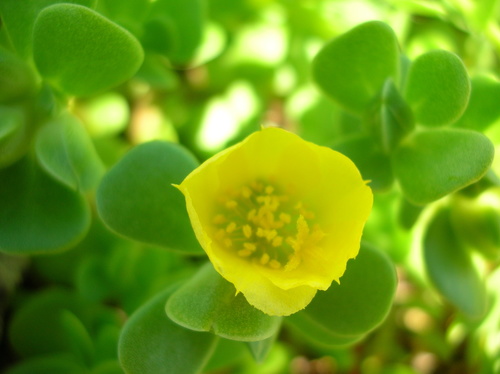
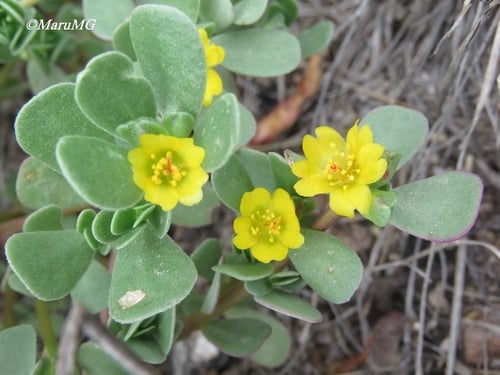
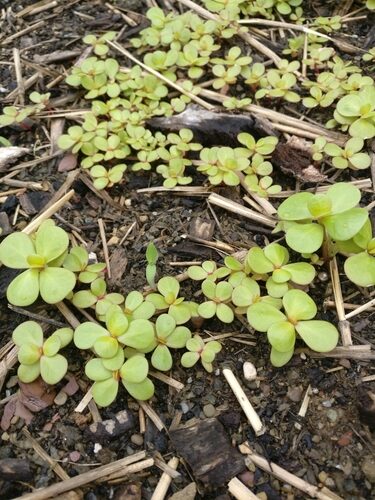
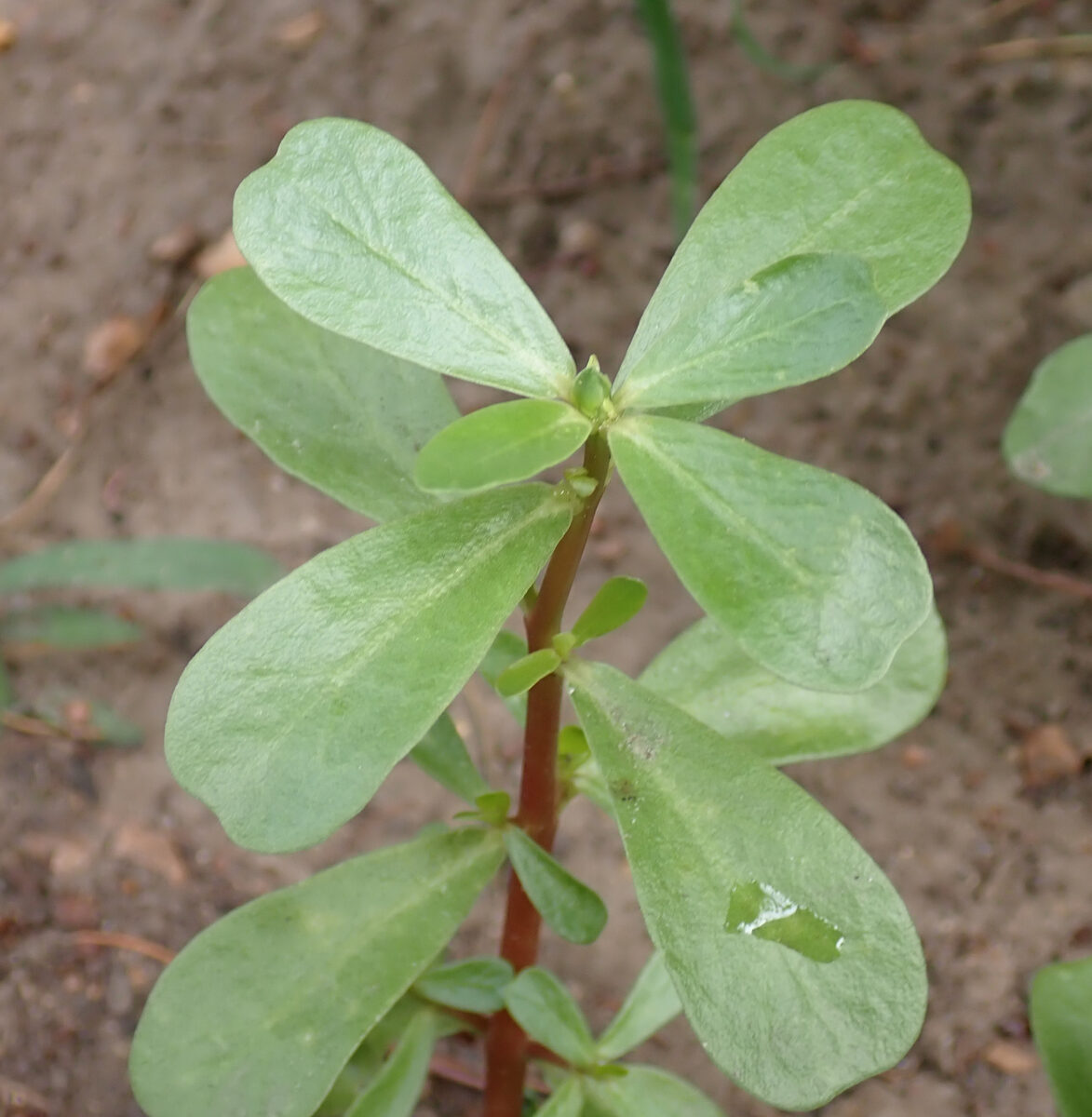
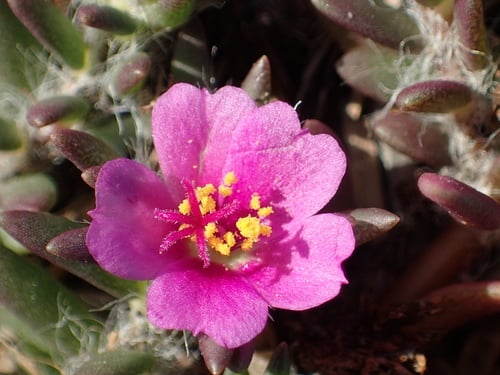
An annual creeping herb. It is weak and fleshy. The stems curl backwards. They form roots at the nodes. The leaves occur opposite each other. They are flat and oval and 4-8 mm long by 2-5 mm wide. The flowers occur singly at the tips of the branches. There are 4-5 white leaves around them. The flowers are yellow. The fruit capsule is yellow and has a lid. The capsule is 2.5 mm across and round. The seeds are very small.
Edible Uses
The leaves are boiled and used in preparing millet bread, and the whole plant is boiled as a vegetable or made into chutney. It is a minor vegetable but becomes important when other vegetables are scarce.
Traditional Uses
The leaves are boiled and used in preparing bread from millet. The whole plant is also boiled and used as a vegetable. It is also used for chutney. CAUTION: It is claimed this plant should not be eaten in large amounts. It probably accumulates nitrates and probably contains oxalates. Changing the cooking water could reduce these.
Medicinal Uses
Although used less widely, the plant has similar medicinal applications to Portulaca oleracea. The general uses are as a diuretic, to treat rheumatism and gynaecological diseases, as a sedative, analgesic and cardiotonic, to treat fever, disorders of the urinary tract, worm diseases, as a tonic and choleretic, to treat dysentery, and to apply externally to ulcers, eczema and dermatitis.
Known Hazards
Should not be eaten in large amounts as it probably accumulates nitrates and contains oxalates; changing the cooking water may reduce these compounds.
Distribution
A tropical plant. It grows on sand and in wayside drains and grassland. It grows in dry waste places. It grows between 50-1,750 m above sea level. It can grow in arid places. It is highly salt tolerant.
Where It Grows
Africa, American Samoa, Asia, Benin, Botswana, Burkina Faso, Cameroon, Central Africa, Central America*, China, Congo, Cuba*, Dominican Republic*, East Africa, Egypt, Eswatini, Ethiopia, Fiji, Ghana, Guinea, Guinée, Guinea-Bissau, Guyana, Haiti, Himalayas, India, Indochina, Indonesia, Kenya, Kiribati, Lesser Antilles*, Liberia, Malawi, Malaysia, Mali, Mexico*, Micronesia, Middle East, Mozambique, Myanmar, Namibia, Nepal, Nigeria, North Africa, North America, Northeastern India, Oman, Pacific, Pakistan, Palau, Papua New Guinea, PNG, Puerto Rico, Samoa, Sao Tome and Principe, Saudi Arabia, SE Asia, Senegal, Sierra Leone, Somalia, South Africa, South America, Southern Africa, South Sudan, Swaziland, Tanzania, Tonga, Uganda, United Arab Emirates, UAE, Vietnam, West Africa, West Indies*, Yap, Yemen, Zambia, Zimbabwe,
Cultivation
Plants can be grown from seeds. Fresh seeds need light to germinate. It can be grown from segments.
Propagation
Seed - fresh seeds need light for germination, but this requirement disappears in older seeds.
Other Uses
Large types are sometimes planted as a soil binder to prevent erosion in sandy soils.
Other Information
It is a minor vegetable but important when other vegetables are short.
Notes
2n = 18. There are about 200 Portulaca species. They are mostly in the tropics and subtropics.
Dangerous Lookalikes
This plant can be confused with the following toxic species. Always verify identification carefully before consuming any wild plant.
Spotted Spurge
Euphorbia maculata
Hardyplants at English Wikipedia
Small-leaved purslane
Portulaca quadrifida
no rights reserved, uploaded by 葉子
Spotted Spurge: Milky white latex sap when broken, thinner leaves often with dark spot, prostrate growth, tiny flowers.
Small-leaved purslane: Clear sap, thick succulent leaves, reddish smooth stems, yellow flowers.
Nutrition
| Part | Moisture | kJ | kcal | Protein | Vit A | Vit C | Iron | Zinc |
|---|---|---|---|---|---|---|---|---|
| Leaves | 85.8 | 159 | 38 | 1.7 | — | — | — | — |
Synonyms
Also Known As
Addo tatxa arxa, Amalenyane, Anuer, Anyuera, Ban tieng, Bhuichauli, Bwanda, Chinguru, Chinnaparpukkirai, Chota luniya, Chotalunia, Chounlayi, Chul ghul, Dhuras, Emahenjana, Emalenyane, Gholu, Goddu pavelli, Goddupavili kura, Golgola sag, Gooni soppu, Hali dajjuli, Halibachcheli, Jhiniluni, Kathechanvel, Khate chawal, Khatechan val, Kiwa, Kolfa, Kremi, Kunor, Kura, Laghulonika, Linyanjani, Lonak, Loniya, Loonk, Loranki, Lornak booti, Lunak, Luni, Lunki, Mahenjani, Maraeitta, Mecheritta, Memaniran puteh, Meredheta, Mereqita, Mergude, Mulaza, Muleza, Mya-byit, Mya-byit-gale, Myeyane, N'hocalaolo, Nacha goli, Neelakeera, Nuniya, Pak bia lek, Pakharai, Paruppukeerai, Passelie keeray, Pavili, Payala, Ranghol, Rejela, Rumput segan, Sam nho, Sanimarumbi, Seresere, Si ban ma chi xian, Sun pail kura, Suni ara, Tsoralle, Uppadkyi, Vothung mekvoke-er, Wakhorai, Wild purslane, Zangali warkhrhay
References (65)
- Addis, G., et al, 2013, Dietary values of wild and semi-wild edible plants in Southern Ethiopia. African Journal of Food, Agriculture, Nutrition and Development. 13(2) (Recalculated from dmb)
- Addis, G., Asfaw, Z & Woldu, Z., 2013, Ethnobotany of Wild and Semi-wild Edible Plants of Konso Ethnic Community, South Ethiopia. Ethnobotany Research and Applications. 11:121-141
- Addis, G., et al, 2013, The Role of Wild and Semi-wild Edible Plants in Household Food Sovereignty in Hamer and Konso Communities, South Ethiopia. Ethnobotany Research & Applications. 11:251-271
- Ahmad, K. & Pieroni, A., 2016, Folk knowledge of wild food plants among the tribal communities of Thakht-e-Sulaiman Hills, North-West Pakistan. Journal of Ethnobiology and Ethnomedicine, 12:17
- Ahmad, K., et al, 2018, Ethnobotanical investigation of wild vegetables used among local communities in northwest Pakistan. Acta Soc Bot Pol. 2019;88(1):3616.
Show all 65 references Hide references
- Al-Fatimi, M. A., Wild Edible Plants Traditionally Collected and Used in Southern Yemen. Research Square. University of Aden. p 22
- Altschul, S.V.R., 1973, Drugs and Foods from Little-known Plants. Notes in Harvard University Herbaria. Harvard Univ. Press. Massachusetts. no. 937
- Ambasta, S.P. (Ed.), 2000, The Useful Plants of India. CSIR India. p 486
- Arinathan, V., et al, 2007, Wild edibles used by Palliyars of the western Ghats, Tamil Nadu. Indian Journal of Traditional Knowledge. 6(1) pp 163-168
- Arora, R. K., 2014, Diversity in Underutilized Plant Species - An Asia-Pacific Perspective. Bioversity International. p 45
- Asfaw, Z., Conservation and use of traditional vegetables in Ethiopia. FAO
- Asfaw, Z. and Tadesse, M., 2001, Prospects for Sustainable Use and Development of Wild Food Plants in Ethiopia. Economic Botany, Vol. 55, No. 1, pp. 47-62
- Balemie, K., & Kebebew, F., 2006, Ethnobotanical study of wild edible plants in Derashe and Kucha Districts, South Ethiopia. Journal of Ethnobiology and Ethnomedicine. p 4
- Berihun, T. & Molla, E., 2017, Study on the Diversity and Use of Wild Edible Plants in Bullen District Northwest Ethiopia. Hindawi Journal of Botany. Article ID 8383468
- Borrell, O.W., 1989, An Annotated Checklist of the Flora of Kairiru Island, New Guinea. Marcellin College, Victoria Australia. p 211
- Burkill, I.H., 1966, A Dictionary of the Economic Products of the Malay Peninsula. Ministry of Agriculture and Cooperatives, Kuala Lumpur, Malaysia. Vol 2 (I-Z) p 1833
- Duguma, H. T., 2020, Wild Edible Plant Nutritional Contribution and Consumer Perception in Ethiopia. Hindawi International Journal of Food Science Volume 2020, Article ID 2958623, 16 pages
- Ethnobotanical Study of Tehsil Kabal, Swat District, KPK, Pakistan, Table 1
- FAO, 1988, Traditional Food Plants, FAO Food and Nutrition Paper 42. FAO Rome p 414
- Flora of Pakistan. www.eFloras.org
- Food Composition Tables for use in Africa FAO http://www.fao.org/infoods/directory No. 763
- Fowler, D. G., 2007, Zambian Plants: Their Vernacular Names and Uses. Kew. p 53
- Fox, F. W. & Young, M. E. N., 1982, Food from the Veld. Delta Books. p 309
- GAMMIE,
- Goode, P., 1989, Edible Plants of Uganda. FAO p 26
- Grivetti, L. E., 1980, Agricultural development: present and potential role of edible wild plants. Part 2: Sub-Saharan Africa, Report to the Department of State Agency for International Development. p 41
- Grubben, G. J. H. and Denton, O. A. (eds), 2004, Plant Resources of Tropical Africa 2. Vegetables. PROTA, Wageningen, Netherlands. p 429
- GUPTA & KANODIA,
- Hedrick, U.P., 1919, (Ed.), Sturtevant's edible plants of the world. p 513
- Jadhav, R., et al, 2015, Forest Foods of Northern Western Ghats: Mode of Consumption, Nutrition and Availability. Asian Agri-History Vol. 19, No. 4: 293-317
- Jadhav, V. D., Mahadkar, S. D. & Valvi. S. R., 2011, Documentation and ethnobotanical survey of wild edible plants from Kolhapur district. Recent Research in Science and Technology 3(12): 58-63
- Jardin, C., 1970, List of Foods Used In Africa, FAO Nutrition Information Document Series No 2. p 96
- Kar, A., & Borthakur, S. K., 2008, Wild vegetables of Karbi - Anglong district, Assam, Natural Product Radiance, Vol. 7(5), pp 448-460
- Karim, F. M. & Dakheel, A, J., 2006, Salt-tolerant plants of the United Arab Emirates. 2006. International Center for Biosaline Agriculture, Dubai, UAE. p 144
- Kidane, B., et al, 2014, Wild and semi-wild leafy vegetables used by the Maale and Ari ethnic communities in southern Ethiopia. Genetic Resour Crop Evol. Springer. p 8
- Kiran, K. C., et al, 2019, Diversity and Seasonal Availability of Potential Wild Edible Plants from Vidarbha Region of Maharashtra State, India. Int.J.Curr.Microbiol.App.Sci (2019) 8(2): 1434-1446
- Long, C., 2005, Swaziland's Flora - siSwati names and Uses http://www.sntc.org.sz/flora/
- Lu De-Quan, Portulacaceae, Flora of China.
- Macmillan, H.F. (Revised Barlow, H.S., et al), 1991, Tropical Planting and Gardening. Sixth edition. Malayan Nature Society. Kuala Lumpur. p 357
- Majeed, M., et al, 2021, Gathered Wild Food Plants among Diverse Religious Groups in Jhelum District, Punjab, Pakistan. Foods 2021, 10, 594.
- Marandi, R. R. & Britto, S. J., 2015, Medicinal Properties of Edible Weeds of Crop Fields and Wild plants Eaten by Oraon Tribals of Latehar District, Jharkhand. International Journal of Life Science and Pharma Research. Vo. 5. (2) April 2015
- Martin, F.W. & Ruberte, R.M., 1979, Edible Leaves of the Tropics. Antillian College Press, Mayaguez, Puerto Rico. p 215
- Miller, A. G., Morris, M. & Stuart-Smith, S., 1988, Plants of Dhofar. The Southern Region of Oman, Traditional, Economic and Medicinal Uses. Sultanate of Oman. p 236
- Mutie, F. M., et al, 2023, Important Medicinal and Food Taxa (Orders and Families) in Kenya, Based on Three Quantitative Approaches. Plants 2023, 12, 1145
- Ochse, J. J. et al, 1931, Vegetables of the Dutch East Indies. Asher reprint. p 618
- Peters, C. R., O'Brien, E. M., and Drummond, R.B., 1992, Edible Wild plants of Sub-saharan Africa. Kew. p 163
- Pham-Hoang Ho, 1999, An Illustrated Flora of Vietnam. Nha Xuat Ban Tre. p 734
- Plants of Haiti Smithsonian Institute http://botany.si.edu/antilles/West Indies
- Royal Botanic Gardens, Kew (1999). Survey of Economic Plants for Arid and Semi-Arid Lands (SEPASAL) database. Published on the Internet; http://www.rbgkew.org.uk/ceb/sepasal/internet [Accessed 6th June 2011]
- Ruffo, C. K., Birnie, A. & Tengnas, B., 2002, Edible Wild Plants of Tanzania. RELMA p 536
- Ruiters-Welcome, A. K., 2019, Food plants of southern Africa. Ph.D. thesis. Univ. of Johannesburg p 91
- SAXENA,
- Shah, G.L., 1984, Some economically important plant of Salsette Island near Bombay. J. Econ. Tax. Bot. Vol. 5 No. 4 pp 753-765
- SHORTT,
- Singh, H.B., Arora R.K.,1978, Wild edible Plants of India. Indian Council of Agricultural Research, New Delhi. p 34
- Smith, A.C., 1981, Flora Vitiensis Nova, Lawaii, Kuai, Hawaii, Volume 2 p 276
- Smith, F. I. and Eyzaquirre, P., 2007, African leafy vegetables: Their role in the World Health Organization's global Fruit and Vegetables Initiative. AJFAND, Vol. 7 No. 3
- Solomon, C., 2001, Encyclopedia of Asian Food. New Holland. p 301
- Swaziland's Flora Database http://www.sntc.org.sz/flora
- Terra, G.J.A., 1973, Tropical Vegetables. Communication 54e Royal Tropical Institute, Amsterdam, p 68
- Vartak, V.D. and Kulkarni, D.K., 1987, Monsoon wild leafy vegetables from hilly regions of Pune and neighbouring districts, Maharashtra state. J. Econ. Tax. Bot. Vol. 11 No. 2 pp 331-335
- Welcome, A. K. & Van Wyk, B.-E., 2019, An inventory and analysis of the food plants of southern Africa. South African Journal of Botany 122 (2019) 136–179
- World Checklist of Useful Plant Species 2020. Royal Botanic Gardens, Kew
- Yimer, A., et al, 2021, Ethnobotanical study of wild edible plants used by Meinit Ethnic Community at Bench-Maji Zone, Southwest Ethiopia. Research Square. p 6
- Yuncker, T.G., 1959, Plants of Tonga, Bernice P. Bishop Museum, Hawaii, Bulletin 220. p 112