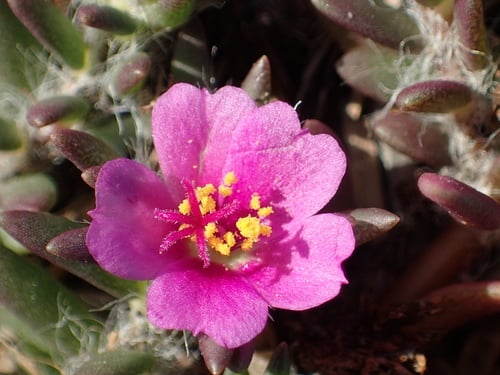
Portulaca quadrifolia
L.
gbif· cc-by-nc-sa
MBG
Description
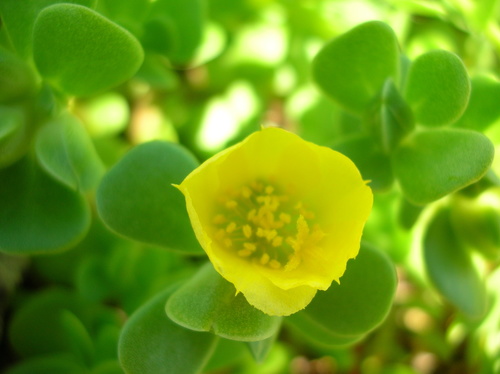
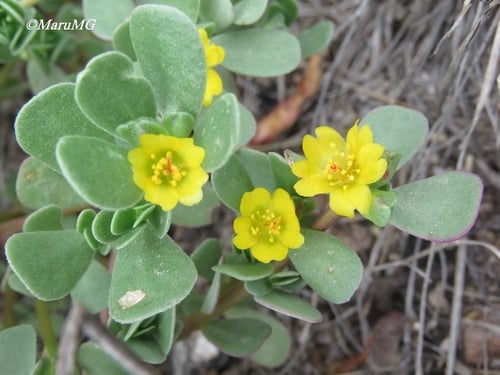
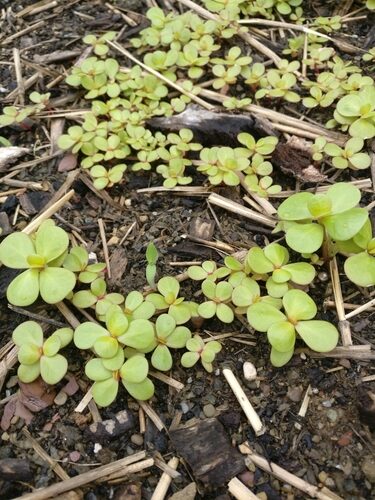
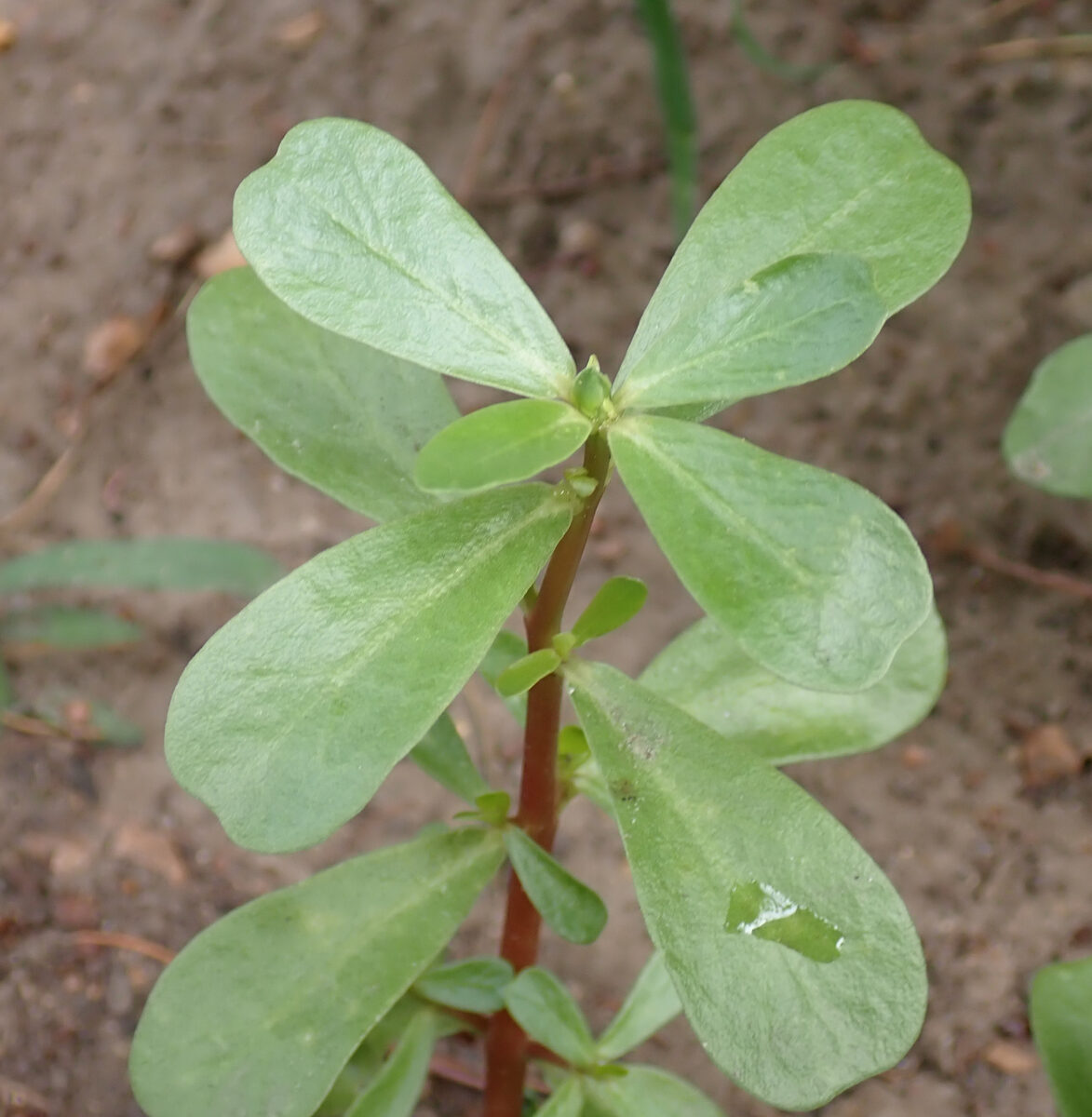
A succulent herb. It grows from seeds each year. It lies along the ground. The stems branch many times. The leaves do not have leaf stalks and are small and simple. They are thick, red and fleshy. It attaches to the ground by roots.
Edible Uses
The whole plant is boiled and eaten, or sometimes only the leaves are consumed. The seeds are used to make flour.
Traditional Uses
The whole plant is boiled and eaten. Sometimes only leaves are eaten. The seeds are used to make flour.
This uses section is brief — help expand it
Distribution
A tropical plant. In Ethiopia it grows in lowland areas is disturbed sites. It can tolerate drought.
Where It Grows
Africa, Asia, East Africa, Ethiopia, India, Kenya,
Cultivation
Plants can grow from seed or from plant sections. It can easily be grown by cuttings.
Notes
It can become a weed pest.
Dangerous Lookalikes
This plant can be confused with the following toxic species. Always verify identification carefully before consuming any wild plant.
Spotted Spurge
Euphorbia maculata
Hardyplants at English Wikipedia
Portulaca quadrifolia
Portulaca quadrifolia
MBG
Spotted Spurge: Milky white latex sap when broken, thinner leaves often with dark spot, prostrate growth, tiny flowers.
Portulaca quadrifolia: Clear sap, thick succulent leaves, reddish smooth stems, yellow flowers.
Nutrition
| Part | Moisture | kJ | kcal | Protein | Vit A | Vit C | Iron | Zinc |
|---|---|---|---|---|---|---|---|---|
| Leaves | 89 | 111 | 27 | 2.5 | — | — | — | — |
Also Known As
Bhui chavli, Churqale, Durqalle, Kenyinyia, Marayita, Mereita, Muqaza, Obwanda
References (6)
- Guil-Guerrero, J. L., et al, 2001, Edible Wild Plants. in Recent Progress in Medicinal Plants Vol. 8 Sci. Tech publishing, Texas
- Guinand, Y., & Lemessa, D., 2000, Wild-food Plants in Southern Ethiopia. University of Pennsylvania - African Studies Center. UN-EUE Addis Ababa.
- Johns, T., and Kokwaro, J.O., 1991, Food Plants of the Luo of Siayo District, Kenya. Economic Botany 45(1), pp 103-113
- Lulekal, E., et al, 2011, Wild edible plants in Ethiopia: a review on their potential to combat food insecurity. Afrika Focus - Vol. 24, No 2. pp 71-121
- Mutie, F. G., 2020, Conservation of Wild Food Plants and Their Potential for Combatting Food Insecurity in Kenya as Exemplified by the Drylands of Kitui County. Plants 2020, 9, 1017
Show all 6 references Hide references
- Reddy, B. M., 2012, Wild edible plants of Chandrapur district, Maharashtra, India. Indian Journal of Natural Products and Resources. 3(1) pp 110-117