Angelica dahurica
(Fisch.) Benth. & Hook.f. ex Franch. & Sav.
Bai Zhi
iNaturalist· cc-by-nc
(c) Lee, seong-won, some rights reserved (CC BY-NC), uploaded by Lee, seong-won
iNaturalist· cc-by-nc
(c) Lee, seong-won, some rights reserved (CC BY-NC), uploaded by Lee, seong-won
iNaturalist· cc-by-nc
(c) Lee, seong-won, some rights reserved (CC BY-NC), uploaded by Lee, seong-won
Summary
Source: WikipediaAngelica dahurica, commonly known as Dahurian angelica, is a widely grown species of angelica native to Siberia, Russia Far East, Mongolia, Northeastern China, Japan, Korea, and Taiwan. This species tend to grow near river banks, along streams and among rocky shrubs. The root of the plant is widely used for its medicinal properties and is known to contain furanocoumarins and angelicotoxin. Angelica dahurica is also commonly known as Chinese angelica, the garden angelica, root of the Holy Ghost, and wild angelica, as well as by its Chinese name, bai zhi (白芷).
Description
A herb. It keeps growing from year to year. It can grow 1-2.5 m tall. The root is cylinder shaped, brown, 3-5 cm thick and has a strong smell. The stem is purplish-green. It is 2-5 cm thick and has ribs. The lower leaves have long leafstalks. The leaves are oval or triangle shaped and 30-50 cm long by 25-40 cm wide. They are divided into leaflets that are 4-10 cm long by 1-4 cm wide.
Edible Uses
Leaves are edible when cooked.
Traditional Uses
The young leaves are boiled or stir-fried.
This uses section is brief — help expand it
Medicinal Uses
Known in Chinese herbal medicine as Bai Zhi, this plant has been used for thousands of years primarily as a sweat-inducing herb to counter harmful external influences. It is contraindicated for pregnant women. The root contains an essential oil, resins and furanocoumarins, and is analgesic, anodyne, antibacterial, antidote, carminative, diaphoretic, diuretic, a poultice herb and stimulant. It is used to treat frontal headache, toothache, rhinitis, boils, carbuncles and skin diseases, and appears to have value in treating the facial pain of trigeminal neuralgia. Roots are harvested in autumn, then dried and stored for later use. Angelicotoxin, one of the active constituents of the root, has an excitatory effect on the respiratory centre, central nervous system and vasomotor centre in small quantities — increasing the rate of respiration, raising blood pressure, slowing the pulse, increasing salivation and inducing vomiting. In large doses it can cause convulsions and generalised paralysis.
Known Hazards
Aside from the medicinal properties that this plant offers, this species also contain furocoumarins which increases skin sensitivity to sunlight and may cause dermatitis. Another compound, called the angelicotoxin, is an active ingredient within the root. This has an excitatory effect on the respiratory system, central nervous system, and the vasculomotor system of the body. It is known to increase the rate of respiration, blood pressure, decrease pulse rate, increases saliva production and induces vomiting. In large doses, the toxin can induce convulsions and paralysis.
Distribution
A cool temperate plant. In north China it grows in grasslands, along streams and near the edges of forests between 500-1,000 m above sea level.
Where It Grows
Asia, China, Japan, Korea, Russia, Siberia, Taiwan,
Propagation
Seed is best sown in a cold frame as soon as it is ripe, as viability is short. Spring sowing is possible but germination rates will be lower. Light is required for germination. Once seedlings are large enough to handle, prick them out into individual pots and grow on in a cold frame through their first winter before planting out into permanent positions in spring. Seed can also be sown in situ as soon as it is ripe.
Other Uses
None known.
Notes
There are 50 Angelica species. They are temperate plants.
Synonyms
Also Known As
Ben de wang
References (3)
- Cheng, Z., et al, 2022, Ethnobotanical study on wild edible plants used by Dulong people in northwestern Yunnan, China. Journal of Ethnobiology and Ethnomedicine (2022) 18:3
- Enum. pl. Jap. 1:187. 1873
- Plants for a Future database, The Field, Penpol, Lostwithiel, Cornwall, PL22 0NG, UK. http://www.scs.leeds.ac.uk/pfaf/
More from Apiaceae
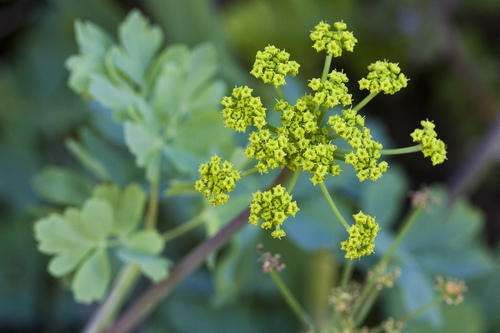
Lomatium californicum
Wild celery-parsley, California lomatium
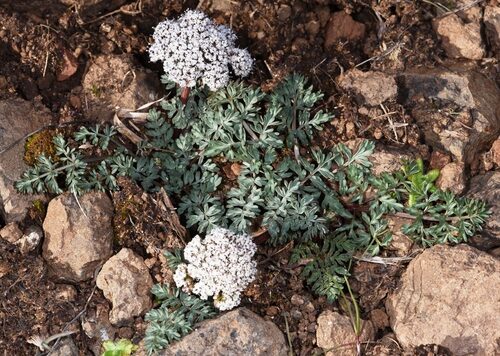
Lomatium canbyi
Biscuitroot, Canby's biscuitroot
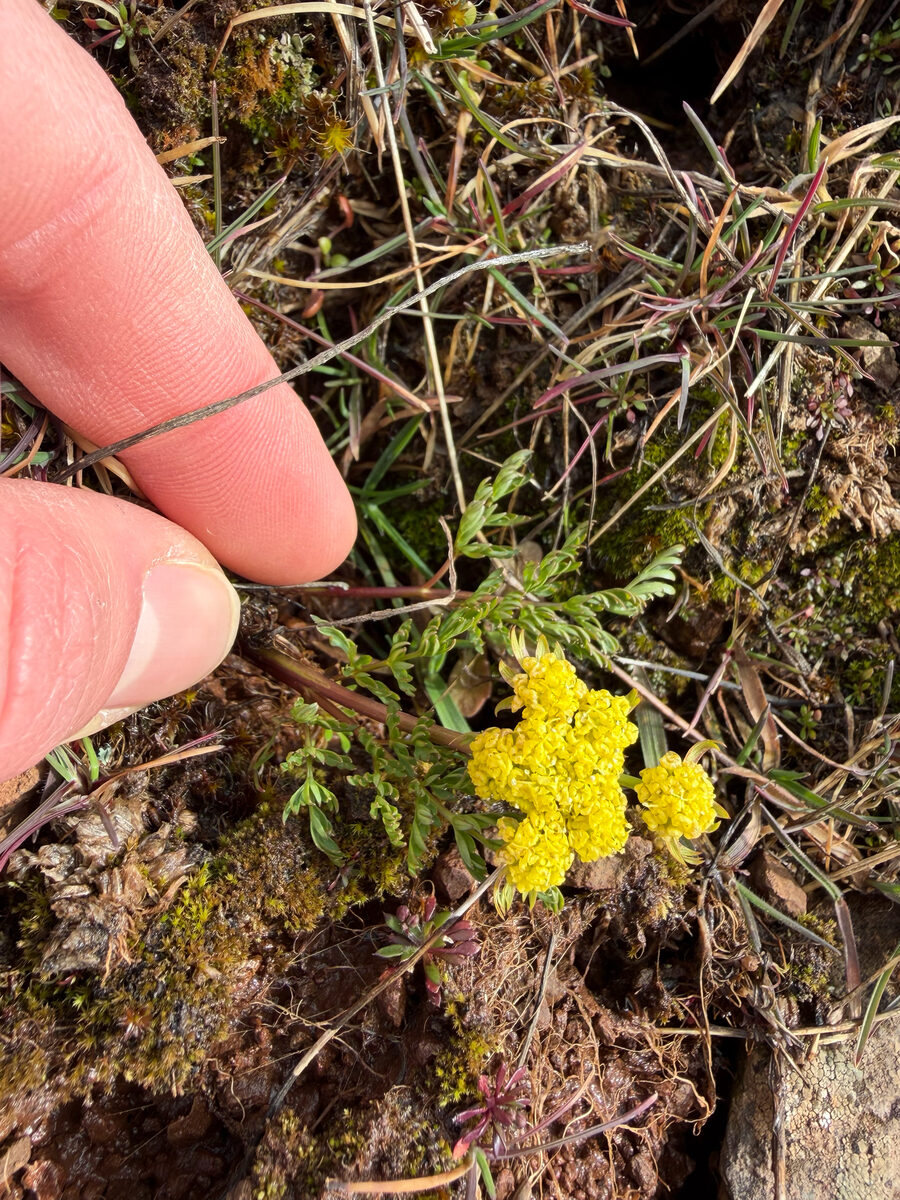
Lomatium cous - (Watson.)Coult.&Rose.
Biscuitroot, Cous biscuitroot
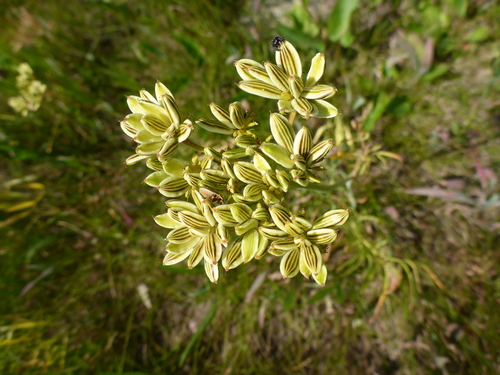
Lomatium dissectum var. multifidum
Carrot leaf biscuit root
Lomatium eurycarpum - .
Lomatium farinosum - (Hook.)Coult.&Rose.
Northern Biscuitroot, Hamblen's biscuitroot