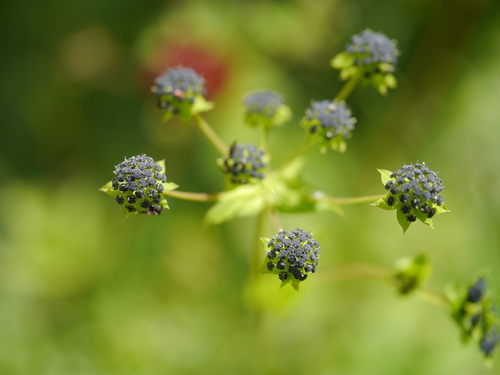
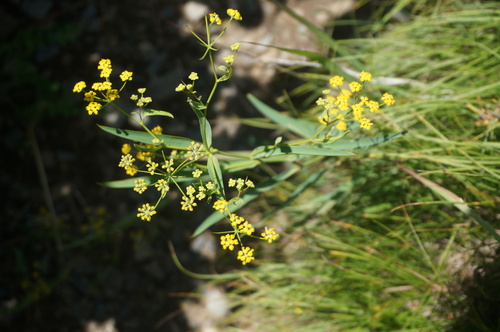
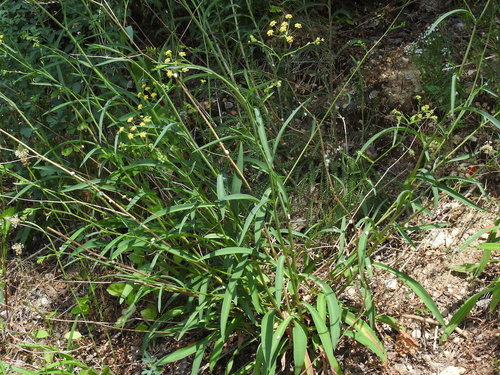
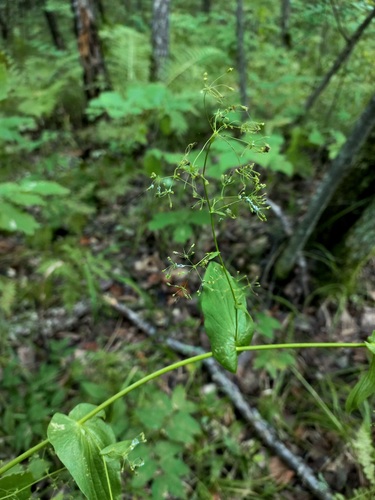
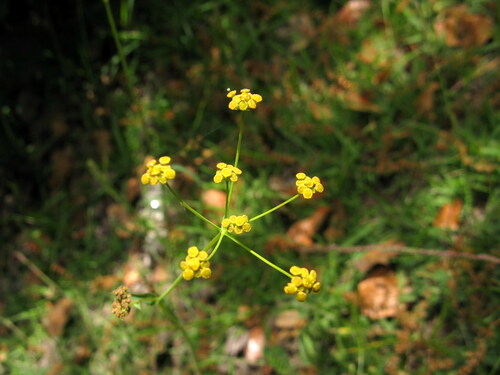
Foeniculum vulgare azoricum - (Mill.)Thell.
(Mill.)Thell.
Florence Fennel
gbif· cc-by-nc
Uriah Resheff
gbif· cc-by-nc
Uriah Resheff
gbif· cc-by-nc
Uriah Resheff
Description
Foeniculum vulgare azoricum is a PERENNIAL growing to 1.5 m (5ft). See above for USDA hardiness. It is hardy to UK zone 7 and is not frost tender. It is in flower from August to October, and the seeds ripen from September to October. The species is hermaphrodite (has both male and female organs) and is pollinated by Insects. The plant is self-fertile. Suitable for: light (sandy), medium (loamy) and heavy (clay) soils and prefers well-drained soil. Suitable pH: mildly acid, neutral and basic (mildly alkaline) soils. It cannot grow in the shade. It prefers dry or moist soil. The plant can tolerates strong winds but not maritime exposure.
Edible Uses
Condiment. Leaves - raw or cooked. A delicious aniseed flavour, the young leaves are best since older ones become tough. They make a very nice addition to mixed salads. Leaf stalks and stem base - raw, cooked or used as a flavouring in soups etc. A strong, aniseed flavour. They are often blanched before being eaten. Very low in carbohydrates, proteins and fats. Seeds raw or cooked. They have a delicious aniseed flavour and are used as a flavouring in cakes, bread etc. Root - cooked. The flavour is somewhat parsnip-like. A herb tea can be made from the seeds or the leaves.
Medicinal Uses
Analgesic Antiinflammatory Antispasmodic Aromatic Carminative Diuretic Emmenagogue Expectorant Galactogogue Hallucinogenic Stimulant Stomachic Urinary. Fennel is a commonly used household remedy, being useful in the treatment of a variety of complaints, especially those of the digestive system. The seeds, leaves and roots can be used, but the seeds are most active medicinally and are the part normally used. An essential oil is often extracted from the seed for medicinal use, though it should not be given to pregnant women. The plant is analgesic, anti-inflammatory, antispasmodic, aromatic, carminative, diuretic, emmenagogue, expectorant, galactogogue, hallucinogenic, laxative, stimulant and stomachic[4, 7, 9, 21, 147, 165, 176, 192, 238]. Fennel is often added to purgatives in order to allay their tendency to cause gripe, and also to improve the flavour. An infusion of the root is used to treat urinary disorders. An essential oil obtained from the seed is used in aromatherapy. Its keyword is 'Normalising'. The essential oil is bactericidal, carminative and stimulant. Some caution is advised, see notes above on toxicity.
Known Hazards
Skin contact with the sap or essential oil is said to cause photo-sensitivity and/or dermatitis in some people. Ingestion of the oil can cause vomiting, seizures and pulmonary oedema.
Distribution
A cultivar of F. vulgare.
Where It Grows
Coming Soon
Cultivation
Succeeds in most soils but prefers a sunny dry position. A cultivated form of F. vulgare, grown for its edible swollen leaf bases, there are some named varieties. This is the genuine Florence fennel. Attracts bees and hoverflies. Fennel is a poor companion plant in the garden, it inhibits the growth of nearby plants, especially beans, tomatoes and kohl rabi. It is itself inhibited by wormwood and coriander.
Propagation
Seed - best sown in early spring in situ. Division in March as the new growth appears.
Other Uses
Dye Essential Repellent Strewing. The seed yields up to 5% of an essential oil. This is used medicinally, as a food flavouring, in toothpastes, soaps, perfumery, air fresheners etc. The flavour of fennel oil depends upon its two main constituents. 'Fenchone' is a bitter tasting element whilst 'anethole' has a sweet anise-like flavour. The proportions of these two ingredients varies according to strain and region. Plants growing in the Mediterranean and southern Europe usually have a sweet oil whilst plants growing in central and northern Europe usually produce a more bitter oil. The quality of the oil also depends upon how well the seed has been dried - the oil from fully ripened and dried seeds being much sweeter and more fragrant. The dried plant is an insect repellent, the crushed leaves are effective for keeping dogs free of fleas. The plant was formerly used as a strewing herb. Yellow and brown dyes are obtained from the flowers and leaves combined.